The Importance Of Earthing Solar Panel Frames


Pleas note: This document describes only the earthing of solar panels frames, not the connection of solar conductors to ground - that is a separate and unrelated topic.


Reasons for earthing appliances / general electrical installations


If an active conductor comes into contact with part of an appliance that can be touched, such as a fridge, the appliance also becomes active. This ‘touchable’ voltage is deadly. When talking about electricity, ‘active’ describes a potential for significant current flow from an active conductor to another conductor.
Normally, this other conductor is the neutral conductor.


However, because the neutral conductors in your house are connected to the earth bar of the switchboard (which is also connected to the ground, through an earth stake), the ground you stand on is also just as attractive to electrical current as the neutral cables would normally be - this is where the danger for electrocution comes from.


This connection arrangement, called a Multiple Earth Neutral (MEN), is done for a very important safety reason - to provide a very low resistance path for fault current to return to the switchboard. The instant a fault occurs, this low resistance results in a very high current flow - immediately tripping the circuit breaker or fuse in the switchboard. When the breaker is tripped, there is no more voltage and therefore no more potential for danger.


How does this apply to solar panels?


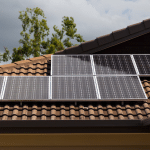
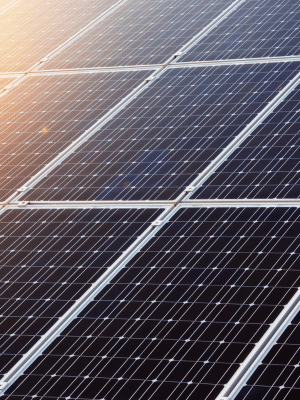
A solar panel is just an appliance - a ‘single insulated’ device installed on your roof, along with your air conditioner. Your fridge downstairs is very similar too. If a wire leading to the motor in your fridge is chewed by a rat and the wire touches the metal side of the fridge - the entire body of the fridge becomes active and immediately dangerous. Luckily, the MEN will trip very quickly, reducing the time the appliance is live, and therefore reducing the risk of electrocution.


In addition to the NEM, there is a further protective measure in common use - residual current device (RCD) protection. In your house, the residual current device commonly built in to the circuit breakers can save your life even before the NEM system has achieved enough current to trip the circuit breakers.


This additional layer of protection is important because it only takes a small amount of current to kill a person - a figure of no more than 30mA is commonly agreed on. This is about the same amount of current flow as you would find through a tiny LED light on a TV etc., not much - and certainly not enough to have tripped the NEM circuit breaker.


An RCD measures the difference between current entering and existing a circuit. If everything is working correctly, the current in should equal the current out. However, if there is a ‘leak’ or partial short to earth/ground (for example; broken glass on a solar panel allowing current to flow to the frames through water), the RCD will see the difference between the ‘in’ and ‘out’ currents, and will immediately shut down the system.


How does the RCD system apply to solar installs?


Quite simply, most inverters have a built-in RCD in case someone accidentally touches the solar conductors while standing or touching ground. The RCD will detect the leakage to ground, and will immediately disconnect the solar array from the inverter, removing the connection to the switchboard, and therefore the connection to ground. This means that there will no longer be a potential for dangerous current flow from the solar conductors to ground and therefore protecting the person touching the conductors from electrocution


How does earthing the array aid the function of the inbuilt RCD? 


Surprisingly, because of their large surface area and close proximity to the roof, solar panels are capable of acting as capacitors. A capacitor stores charge when a voltage is applied, and, inevitably, when the voltage source is removed, releases the charge in the form of current flow in the reverse direction to which is was charged. The greater the applied voltage, the greater the stored charge.


The problem facing transformerless inverters is that because they are connected to the mains directly, they are affected by a an AC waveform ‘floating’ on top of their normal operating DC voltage on the panel conductors. This voltage is very high - often around half the grid voltage. Because of this high voltage, the energy stored between the roof and solar panels in this capacitive effect is significant.


When the mains frequency changes direction (it does so 100 times per second), the ‘capacitor’ (solar array in close proximity to the roof surface) discharges the stored energy back into the inverter circuit, and in larger arrays, this discharge (reactive) current is registered by the built-in inverter RCD as a leakage current.


This is where the problem becomes apparent. The inverter can only detect the difference in current entering and leaving the solar array, and the difference is seen by the inverter as current differential = (capacitive discharge current + leakage current). If the capacitive discharge current is high enough, the inverter will shut down mistakenly thinking the capacitive discharge current was in fact the dangerous leakage current imbalance.


This is not a dangerous scenario - but is will certainly result in unwanted system shutdown and an ineffective solar system. It is a good example of function earthing.


Protective earthing Vs functional earthing


All earthing is designed to serve a purpose for either a protective reason (the prevention of danger to life) or a functional reason (to benefit the performance of the system)


Functional Earthing as described by the Australian wiring standards:


5.2.2 Functional earthing:


Equipment may be required to be connected to the earthing system for purposes of correct operation rather than the safety conditions associated with protective earthing.” (AS NZS 3000_2007 Electrical Installations Standards).


It is important to recognize that just because some earthing requirements are purely functional in their purpose does not mean the earth connection can be ignored. There will still be the critical need to provide a safe electrical installation through the correct connection of the MEN connection to the panels.


More important reasons to earth solar frames


Industry parties such as the Clean Energy Council have flagged other very important reasons to earth solar panel frames.


Clearing noticeable voltages from the solar array


Through static and capacitive coupling, it is possible for solar panels to accumulate a relatively high voltage on their isolated surface. If someone touches the solar array during servicing of other roof work, the small static shock could cause them to lose their footing and fall if surprised.


If the solar array is properly earthed there is less chance of a static charge building up between it and the partially/fully-earthed roof. This reason is most likely to apply to steel roofs. Where there is a greater possibility a roof is grounded, there is therefore a greater opportunity for accumulated static to discharge across a person standing on it.


Lightning issues


Earthing a solar array frame has nothing to do with lightning protection. In most cases, the high voltage imposed by lightning will see a roof on a house as just attractive a connection to ground as the earthed solar array. The difference between the resistance of each is so small when compared to the extremely high lightning voltage, it is unlikely the existence of an earthed solar array will increase the attraction of a building to lightning.


Serving Canberra, Sydney, Melbourne, Adelaide, Perth, Brisbane, Hobart, most Australian cities and regional areas. Registered Electrical Contractor 
License Details: Victoria : 17899 | Queensland : 72514 | New South Wales: 241672C | South Australia: PGE 200959 | Tasmania : 1167162 | ACT : 20101309