


Australia now has more than 4.1 million rooftop PV systems installed with over 26 GW of capacity. An estimated roughly 30 % of Australian homes have rooftop solar, giving the country among the highest residential solar-adoption rates globally.
Energy storage via a solar battery is a great option to make the most of your high-value solar PV system. Energy Matters can help you make an informed decision on the suitability of a solar battery for your home and needs with our Solar Power and Battery Storage Calculator.
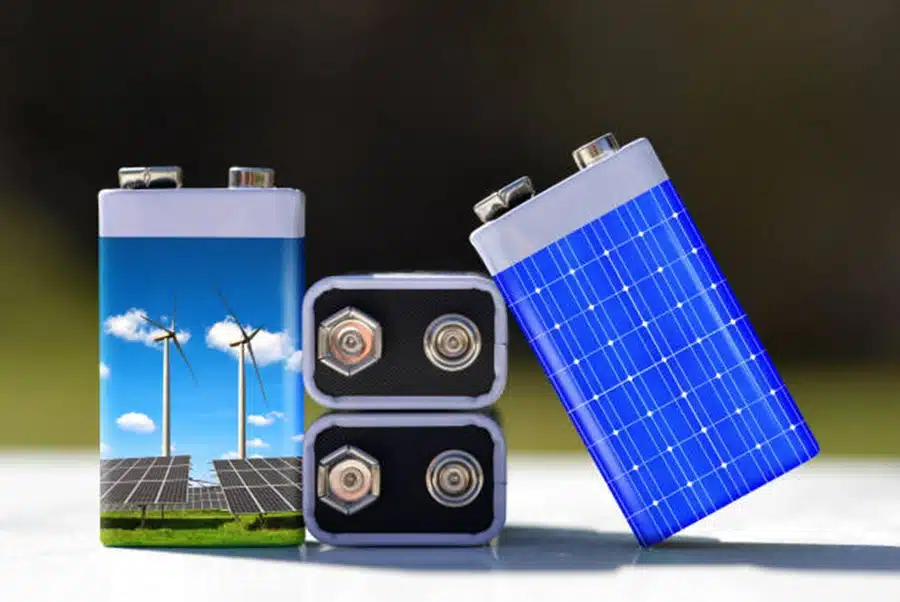
Two primary sources of solar rebates or incentives are available in Australia.
- State governments (some, but not all)
- Electricity retailer (on occasion – retailer dependant)
On this page
Are there any federal rebates or incentives for battery storage installations?
As of 1 July 2025, the federal government will provide financial incentives for the installation of home battery storage for residential homes and small businesses. The program funds a discount of around 30% off the upfront cost of eligible battery systems (5kWh to 100kWh usable capacity), delivered via Small-scale Technology Certificates (STCs). In December 2025, the government announced a major expansion of the program, from an original $2.3 billion estimate to around $7.2 billion over four years, aiming to support more than 2 million battery installations by 2030. Alongside this expansion, changes to how the discount is calculated took effect from 1 May 2026: the STC factor now steps down twice a year instead of annually, and for larger systems only the first 50kWh of usable capacity attracts the incentive (systems up to 100kWh remain eligible, but the discount tapers above 50kWh). The roughly 30% discount level itself has been maintained under the new settings, though the exact dollar value continues to decline gradually over time as battery prices fall. Find out more about the Federal Battery Rebate by following the link below.


Feed-in Tariff (FiT)
When you export excess electricity from your solar installation to the grid, you are compensated with a solar Feed-in Tariff, or FiT, from your electricity retailer.
The feed-in tariff’s value varies between states and among electricity retailers. The government introduced FiTs as a financial incentive to increase demand for solar PV systems. Feed-in tariff rates have significantly decreased as the solar industry has expanded, and solar panel costs have fallen by roughly 80%.
Maximising your savings with solar battery rebates
Navigating the landscape of solar battery rebates can significantly reduce the upfront cost of your energy storage solution. Understanding these incentives is crucial for homeowners looking to optimise their investment in sustainable energy.
When considering a solar panel and battery package, exploring the various rebate programs available in your region is essential. These rebates are designed to encourage the adoption of clean energy technologies, making installing a comprehensive system more affordable.
- Understanding solar battery storage
- Understanding how solar battery storage systems work is essential to fully leveraging the benefits of a solar battery rebate. These systems store excess energy generated by your solar panels, allowing you to use them during periods of low sunlight or power outages, which enhances energy independence and reduces reliance on the grid. A well-designed solar battery storage system can provide substantial long-term savings and increased energy efficiency resilience with available rebates. Learn more about solar battery storage.
- Determining the right solar panel system size
- The size of your solar panel system heavily influences the effectiveness of your solar panel and battery package. To maximise your solar battery rebate, install a solar panel system sized appropriately for your energy consumption and storage capacity. Calculating the ideal solar panel system size ensures you generate enough power to charge your battery and meet your household’s energy needs, optimising your savings and the return on your investment. Find out how to size your home solar system.
By taking advantage of available solar battery rebates and carefully planning your solar panel and battery package, you can save significantly while contributing to a sustainable energy future.
Learn more about the Cheaper Home Batteries Programs on our comprehensive page.
State solar battery rebates and subsidies in Australia
Solar battery systems traditionally have not enjoyed the same solar rebates in Australia. But some recent government solar battery rebates, and solar battery subsidies, are available to support the purchase of solar batteries. There are currently no state government incentives for solar batteries if you live in Queensland or Tasmania.
Victoria (VIC): Solar battery rebates and incentives
Solar battery loans
Solar Victoria is no longer accepting applications for interest-free loans to install battery systems.
If you have already applied, you will need to wait for eligibility confirmation before starting financial checks, complete a credit check, submit your financial documents, and wait for loan approval and your QR code. Installation must be completed within 120 days of loan approval, after which you will begin monthly repayments over four years and pay any remaining balance directly to your retailer.
As part of the process, applicants must provide a recent credit report, complete a financial self-declaration, and submit proof of income to meet responsible lending requirements. Separate credit checks and declarations are needed for each applicant.
Updated for 2026
From 1 July 2025, eligible households have been able to access the federal Cheaper Home Batteries Program, which provides a point-of-sale discount of around 30 per cent on approved battery systems. This national program replaced Victoria’s former battery loan scheme and is now the primary battery incentive available to Victorian households.
Separately, Solar Victoria’s Solar Homes Program income eligibility threshold reduced from $210,000 to $150,000 per year, effective 1 July 2026. This applies to solar panel (PV) and hot water rebates and the associated interest-free loans, not to the federal battery program. Applications submitted before 30 June 2026 were still assessed under the previous $210,000 cap. Anything submitted from 1 July 2026 onward is assessed under the new $150,000 cap. According to Solar Victoria, more than 80% of existing Solar Homes customers still qualify under the lower threshold, and rebate amounts themselves haven’t changed, only who’s eligible to apply. This does not affect eligibility for the federal Cheaper Home Batteries Program.
Victorian households considering a solar and battery installation should review the latest eligibility requirements before proceeding, particularly if they intend to combine state and federal incentives.
New South Wales (NSW) : Solar battery rebates and incentives
The NSW battery installation discount has ended.
However, the Federal Government’s Cheaper Home Batteries Program is now underway, offering:
- Up to 30% off the cost of installing a home battery system
- Support for low-income and vulnerable households
- Expansion of the Small-scale Renewable Energy Scheme to include batteries
From 1 May 2026, the rebate structure has moved to a tiered system based on usable capacity. This approach is designed to keep smaller, more affordable battery systems within reach for everyday households, rather than concentrating incentives on larger installations.
In practice, the full rebate rate applies to the first 14kWh of usable capacity, a reduced rate applies between 14kWh and 28kWh, and only a small residual rate applies from 28kWh up to the 50kWh program cap.
The initiative’s funding has grown well beyond its original $2.3 billion estimate. In December 2025, the Federal Government announced an expansion to around $7.2 billion over four years, extending the program’s funding through to 2030, as part of the Albanese Government’s plan to reach 82% renewables by 2030.
The $2.3 billion initiative forms part of the Albanese Government’s plan to reach 82% renewables by 2030.
The NSW Government has increased its incentive for connecting batteries to a Virtual Power Plant (VPP), and this can be combined with the Australian Government’s battery discount. From 1 July 2026, the pool of batteries eligible for this VPP incentive widened, with systems now able to be as large as 50kWh (up from a previous 28kWh limit). The incentive payment itself is still calculated only on usable capacity up to 28kWh, so larger batteries qualify to participate but don’t receive a bigger payment for the extra capacity. From the same date, rooftop solar is no longer a requirement, a battery can qualify for the VPP incentive on its own as long as it’s enrolled with an eligible VPP provider.
For more information on NSW solar battery rebates, visit our NSW Battery Incentive page.
Australian Capital Territory (ACT): Solar battery rebates and incentives
Sustainable Household Scheme
From 1 July 2025, the Sustainable Household Scheme has introduced changes. All new loans under the Scheme now have a 3% interest rate. Solar panels are no longer covered by Scheme loans, though eligible concession card holders can still access zero-interest loans for solar through the Home Energy Support Program. Any installations approved before 30 June 2025 must be completed by 1 November 2025, or the loan may be reviewed.
Northern Territory (NT): Battery storage rebates and incentives
Home and Business Battery Scheme
The Home and Business Battery Scheme (HBBS) has reached its $6 million funding limit and is now closed to new grant applications.
Applications already submitted but not yet approved, as well as any new ones received, will only be assessed if funds become available, with no guarantee of approval.
Applicants can still choose to install batteries at their own cost, but only installations with formal HBBS grant approval will receive funding. If work is carried out without prior approval, applicants will need to cover all costs themselves.
With the state scheme closed, the main support remaining for NT households is the federal Cheaper Home Batteries Program. It’s worth noting the NT sits in the highest STC pricing zone nationally, so the federal per-kWh rebate is worth somewhat more there than in most other states, even with no state-level top-up currently available.

Tasmania (TAS): Solar battery rebates and incentives
Tasmania's Energy Saver Loan Scheme
The Energy Saver Loan Scheme, which offered interest-free loans of $500 to $10,000 for energy-efficient upgrades—including solar panels, battery storage, EV chargers, and more—has now closed, effective 1 September 2025 at 11:59 pm. Applications received after 28 August 2025 were only assessed if funding remained available, and approvals were not guaranteed. All inactive referrals have now expired, and approved loans must be settled and installations completed by 30 November 2025.
Queensland (QLD): Solar battery rebates and incentives
There are currently NO solar rebates or incentives in Queensland.
South Australia (SA): Solar battery rebates and incentives
South Australians do have access to solar battery incentives in 2026. While the state’s standalone Home Battery Scheme has closed, federal and state-linked incentives are still available.
Homeowners can access the federal Cheaper Home Batteries Program, which reduces the upfront cost of eligible home battery systems. The value of this rebate changes over time and gradually steps down through 2026.
In addition, South Australia offers a state-linked incentive through approved Virtual Power Plants (VPPs) under the Retailer Energy Productivity Scheme (REPS). Households that connect a VPP-compatible battery may receive a cash incentive, depending on the retailer and availability. This incentive has become less reliable to count on through 2026: REPS sets annual energy-saving targets for retailers rather than guaranteeing a fixed rebate pool, and funding for “non-priority group” households ran out earlier in the year, leaving the VPP incentive available mainly to priority-group households (such as concession card holders) for the remainder of the year. Funding is expected to reset again in 2027.
These incentives can be combined, helping reduce the overall cost of installing a home battery. Availability and eligibility can vary by retailer and program limits may apply.
Western Australia (WA): Solar battery rebates and incentives
WA Residential Battery Scheme
The WA Residential Battery Scheme launched on 1 July 2025, offering rebates and no-interest loans to support households installing approved home battery systems. The scheme has been expanded to cover up to 100,000 households, far exceeding the original target of 20,000.
Eligible households can receive state rebates of $130 per kWh for Synergy customers (up to $1,300) or $380 per kWh for Horizon Power customers (up to $3,800). These state rebate amounts are unaffected by the federal program changes below and remain the same.
When combined with the federal Cheaper Home Batteries Program, which began on the same date, total rebates were able to reach around $5,000 for Synergy households and up to around $7,500 for Horizon Power households on a 10kWh system installed before 1 May 2026. Since then, the federal component has been calculated under a new tiered structure (the full rate applies only to the first 14kWh, with reduced rates above that), and the per-kWh federal rate has also stepped down as scheduled. As a result, the combined total for a 10kWh system installed today is somewhat lower than the original $5,000 / $7,500 figures, closer to $3,800 to $4,400 for Synergy households, with Horizon Power households still seeing meaningfully higher combined totals given their larger state-rebate component. It’s worth getting an up-to-date quote from an installer rather than relying on a fixed combined figure, since the federal rate continues to move.
This state initiative complements the federal scheme, helping to reduce upfront costs, improve energy resilience, and support the transition to a clean, reliable energy system.

Ready to upgrade your solar systems and take your energy savings to the next level?
Embrace the energy efficiency revolution by upgrading your solar systems and adding a battery or solar inverters with Energy Matters.
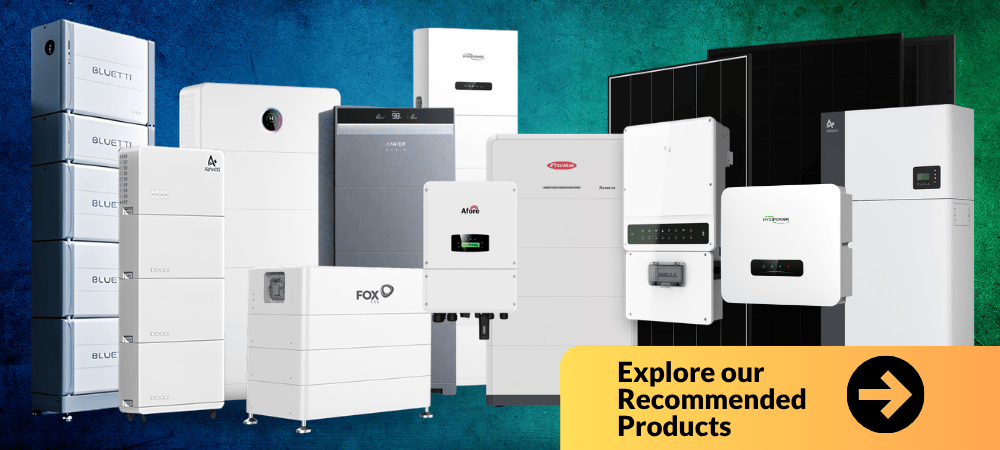
Check our page for our recommended solar products.
With our 3 free solar quotes, you can compare plans from pre-qualified and vetted installers in your area and find the perfect solution for your home and business. Harness the sun’s power and save money on electricity bills while reducing environmental impact. Let Energy Matters guide you towards a brighter, more sustainable future.