


Electricity costs continue to rise, placing increasing pressure on Australian businesses to reduce operating expenses while maintaining productivity and competitiveness. At the same time, more businesses are investing in rooftop solar, electric vehicles, and electrification to lower emissions and future-proof their operations.
Commercial battery storage has become a key part of that transition.
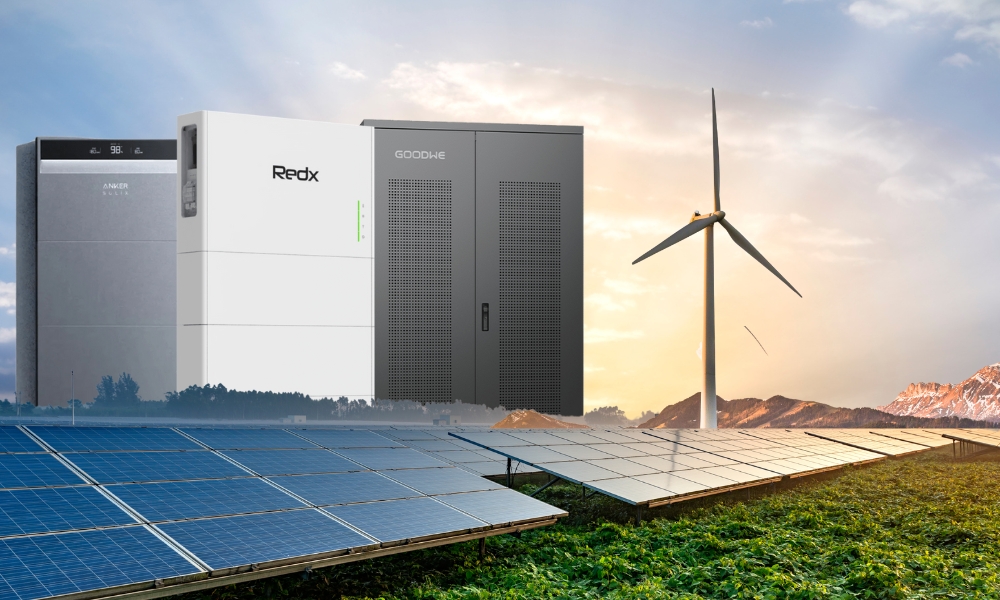
By storing excess electricity for use when it’s needed most, a commercial battery energy storage system (BESS) can help reduce electricity costs, increase the value of rooftop solar, manage peak demand, improve energy resilience, and support business growth.
Whether you’re operating a warehouse, manufacturing facility, shopping centre, school, office, farm, or commercial building, battery storage can provide greater control over how and when your business uses electricity.
On this page
Commercial solar works by converting sunlight into electricity using photovoltaic (PV) panels installed on commercial buildings. The electricity powers your business first, reducing electricity purchased from the grid. Any excess electricity may be stored in batteries or exported to the grid, depending on your system configuration and energy retailer.
- Commercial solar reduces daytime electricity costs.
- Battery storage allows businesses to use more of their own solar energy.
- Modern energy management systems automatically optimise electricity usage.
Commercial battery storage explained
A commercial battery energy storage system (BESS) stores electricity for later use. The electricity may come from rooftop solar, the electricity grid, or both, depending on how the system has been designed.
Instead of relying solely on grid electricity during periods of high demand or expensive electricity prices, businesses can draw on stored energy when it delivers the greatest financial or operational benefit.
Modern commercial battery systems work alongside solar generation, smart inverters, energy management software, and monitoring platforms to automatically optimise energy usage throughout the day.
A commercial battery energy storage system can help businesses:
- Store excess solar energy instead of exporting it.
- Reduce electricity purchased during peak pricing periods.
- Lower peak demand charges.
- Improve energy resilience during grid outages when backup capability is installed.
- Support electric vehicle charging and business electrification.
- Reduce carbon emissions and improve sustainability performance.
What is a commercial battery energy storage system (BESS)?
A Battery Energy Storage System (BESS) is much more than a collection of batteries.
Modern commercial battery systems combine several technologies that work together to safely store, manage, and supply electricity when required.
A typical commercial BESS includes:
Battery modules
Battery modules store electrical energy until it is required. Most commercial battery systems installed today use lithium iron phosphate (LFP) battery technology because it offers excellent safety, long service life, and high efficiency.
Battery management system (BMS)
The battery management system continuously monitors battery health, temperature, voltage, and performance to ensure the battery operates safely and efficiently.
Power conversion system
The inverter or power conversion system converts electricity between direct current (DC) and alternating current (AC), allowing stored energy to power your business or recharge the battery.
Energy management system (EMS)
The energy management system acts as the intelligence behind the installation. It automatically decides when to charge or discharge the battery based on electricity demand, solar generation, tariffs, and site requirements.
Monitoring platform
Modern battery systems include cloud-based monitoring that allows businesses to track battery performance, electricity consumption, solar generation, and energy savings in real time.
Together, these components create an intelligent energy storage solution that helps businesses use electricity more efficiently while reducing operating costs.
How commercial battery storage works
Commercial battery storage works by storing electricity when it is readily available and supplying it when it provides the greatest benefit.
For many Australian businesses, the process looks like this:
Step 1. Solar panels generate electricity
During daylight hours, rooftop solar panels generate electricity for the business.
The building uses this electricity first, reducing the amount purchased from the electricity grid.
Step 2. Excess electricity charges the battery
When solar production exceeds the building’s electricity demand, the surplus energy charges the battery instead of being exported to the grid.
This allows the business to store clean, renewable electricity for later use.
Some businesses may also choose to charge their battery from the grid during periods of lower electricity pricing, depending on their energy tariff and operating strategy.
Step 3. Stored energy powers the business
As solar production decreases or electricity demand increases, the battery begins supplying stored electricity back to the building.
This helps reduce electricity purchased from the grid during expensive peak pricing periods while increasing the amount of renewable energy consumed on site.
Step 4. Smart software optimises energy usage
The energy management system continuously monitors electricity demand, battery capacity, solar production, and electricity pricing.
Rather than relying on manual control, the system automatically determines the most efficient time to charge or discharge the battery, helping maximise financial savings while maintaining reliable operation.
Why Australian businesses are investing in commercial battery storage
Battery storage is no longer reserved for large industrial facilities.
Falling battery costs, rising electricity prices, improved technology, and expanding government incentives have made commercial battery storage an increasingly attractive investment for businesses of all sizes.
Commercial battery systems can help businesses:
Reduce electricity costs
Stored electricity can be used during periods when electricity prices are highest, reducing reliance on expensive grid energy.
Increase solar self-consumption
Without battery storage, excess solar energy is often exported to the grid for a relatively low feed-in tariff.
A battery allows businesses to store that energy and use it later, increasing the financial return from their solar investment.
Reduce peak demand charges
Many commercial electricity tariffs include demand charges based on the highest level of electricity drawn from the grid over a billing period.
Battery storage can reduce these peaks by supplying stored electricity during periods of high demand, lowering ongoing electricity costs.
Improve energy resilience
Battery systems designed with backup capability can continue supplying electricity to selected equipment or, in some cases, the entire site during a grid outage.
This can help minimise downtime and protect critical business operations.
Support business electrification
As more organisations adopt electric vehicle fleets, electric heating, and electric process equipment, battery storage provides greater flexibility to manage increasing electricity demand without placing unnecessary pressure on the grid.
Improve sustainability performance
Using more self-generated renewable energy reduces reliance on grid electricity and helps lower operational carbon emissions.
Commercial battery storage can also support corporate sustainability goals, ESG reporting, and broader decarbonisation strategies.
New NSW commercial battery incentives
From 1 September 2026, businesses in New South Wales may benefit from new battery incentives under the Peak Demand Reduction Scheme (PDRS).
Known as BESS3, BESS4, and BESS5, these new activities are designed to encourage battery adoption, reduce peak electricity demand, improve grid reliability, and maximise the value of renewable energy.
BESS3
BESS3 supports eligible apartment and strata battery installations, helping shared residential developments capture and use more renewable energy on site.
BESS4
BESS4 provides incentives for eligible small to medium commercial battery installations.
The activity is designed for businesses such as offices, warehouses, retail stores, schools, farms, hospitality venues, and other commercial premises looking to reduce electricity costs and improve energy independence.
BESS5
BESS5 supports larger commercial and industrial battery systems for organisations with higher electricity consumption.
Manufacturing facilities, logistics centres, shopping centres, industrial sites, and large commercial buildings may all benefit from battery storage that reduces demand charges while increasing operational resilience.
Businesses considering battery storage should assess these incentives as part of their overall project, alongside available solar rebates, network requirements, and long-term electricity usage.
As eligibility requirements and incentive values can vary, it’s important to seek advice from an experienced commercial battery installer who understands the latest program requirements.
What size commercial battery does my business need?
There is no one-size-fits-all commercial battery system.
The right battery size depends on how your business uses electricity, when electricity is consumed, how much solar energy is generated, and whether backup power is required.
A professional commercial battery assessment typically considers:
- Annual electricity consumption
- Half-hourly or interval electricity data
- Maximum demand charges
- Existing or proposed solar generation
- Electricity tariff structure
- Operating hours
- Critical loads requiring backup power
- Future business growth
- Electric vehicle charging requirements
Rather than selecting the largest battery available, the goal is to install a system that delivers the greatest financial return while supporting your operational requirements.
Understanding battery capacity: kW vs kWh
One of the most common misconceptions about battery storage is the difference between kilowatts (kW) and kilowatt-hours (kWh).
Although they sound similar, they measure two very different things.
| Term | What it measures | Simple explanation |
|---|---|---|
| kW | Power | How much electricity the battery can supply at one time. |
| kWh | Energy | How much electricity the battery can store. |
For example, a battery with 200 kWh of storage and a 100 kW power output can theoretically supply 100 kW for around two hours before requiring recharging.
Understanding both figures is essential when designing a commercial battery system, particularly for businesses with high peak loads or critical equipment.
AC-coupled vs DC-coupled battery systems
Commercial battery systems can generally be installed using either an AC-coupled or DC-coupled design.
The best option depends on whether the battery is being added to an existing solar installation or installed alongside a new commercial solar system.
AC-coupled battery systems
AC-coupled systems are commonly used when adding battery storage to an existing commercial solar installation.
They offer excellent flexibility and can often integrate with existing solar infrastructure without replacing the original inverter.
DC-coupled battery systems
DC-coupled systems are typically installed as part of a new solar and battery project.
Because electricity is stored before being converted into alternating current, DC-coupled systems can offer improved efficiency while reducing equipment requirements.
The most suitable configuration depends on the site’s electrical design, existing infrastructure, and future expansion plans.
Can commercial battery storage work without solar?
Yes.
Although battery storage is commonly paired with rooftop solar, commercial batteries can also operate independently of a solar system.
Some businesses use batteries to:
- Charge from the grid during lower-cost tariff periods.
- Discharge during expensive peak pricing periods.
- Reduce maximum demand charges.
- Improve energy resilience.
- Support backup power requirements.
When combined with rooftop solar, however, businesses generally achieve greater long-term value by storing excess renewable energy rather than exporting it to the grid.
Can a commercial battery power a business during a blackout?
It can, but not every battery system is designed to provide backup power.
Backup capability depends on several factors, including:
- The battery inverter.
- Backup switching equipment.
- System configuration.
- Available battery capacity.
- Maximum power output.
- The electrical loads being supported.
Some systems provide backup power to essential circuits only, while others can supply power to an entire facility, provided the system has been specifically designed for whole-site backup.
Businesses with critical operations should discuss backup requirements during the design stage to ensure the battery system meets operational needs.
Commercial battery safety and compliance
Commercial battery storage systems are designed to meet strict Australian safety standards and should always be installed by qualified professionals.
A properly designed commercial battery system considers:
- Battery location.
- Ventilation.
- Thermal management.
- Fire safety requirements.
- Electrical protection.
- Emergency isolation.
- Network connection approvals.
- Ongoing monitoring.
Professional installation helps ensure the system operates safely, efficiently, and in accordance with all applicable Australian Standards and local network requirements.
How much does commercial battery storage cost?
The cost of a commercial battery system depends on much more than battery capacity alone.
Factors influencing project costs include:
- Battery size.
- Power output.
- Installation complexity.
- Existing electrical infrastructure.
- Switchboard upgrades.
- Solar integration.
- Backup capability.
- Site access.
- Network connection requirements.
- Energy management software.
Government commercial incentives may also reduce upfront costs for eligible projects, particularly where commercial battery programs are available.
Rather than focusing solely on purchase price, businesses should evaluate the total lifetime value of the system through reduced electricity costs, improved energy resilience, and lower operating expenses.
Is commercial battery storage worth it?
For many Australian businesses, commercial battery storage has become an increasingly attractive investment.
Whether a battery delivers strong financial returns depends on how electricity is used across the site.
Commercial battery storage may be particularly beneficial where a business:
- Pays significant demand charges.
- Exports large amounts of unused solar energy.
- Operates outside daylight hours.
- Experiences frequent electricity price spikes.
- Requires backup power.
- Is expanding electric vehicle charging.
- Wants to reduce carbon emissions.
A professionally modelled feasibility assessment can estimate expected savings, battery cycling, demand charge reductions, and overall return on investment using your business’s actual electricity consumption data.
Choosing the right commercial battery storage system
Selecting the right battery system involves much more than choosing a manufacturer.
A quality commercial battery solution should be designed around your business’s energy requirements today while allowing flexibility for future growth.
Important considerations include:
- Battery chemistry.
- Capacity and power output.
- Warranty.
- Expandability.
- Solar compatibility.
- Energy management capabilities.
- Monitoring platform.
- Backup power options.
- Manufacturer support.
- Installer experience.
An experienced commercial battery installer will assess your electricity usage, site conditions, future plans, and available incentives before recommending the most appropriate solution.
Frequently asked questions
What is a commercial battery energy storage system?
A commercial battery energy storage system (BESS) stores electricity for later use. It helps businesses reduce electricity costs, improve solar self-consumption, manage peak demand, and increase energy resilience.
Can a commercial battery work without solar panels?
Yes. Commercial batteries can charge directly from the electricity grid and discharge during periods of higher electricity prices or increased energy demand.
What is the difference between kW and kWh?
Kilowatts (kW) measure power, while kilowatt-hours (kWh) measure stored energy. Both figures are important when selecting the right battery system.
Can commercial batteries reduce demand charges?
Yes. Many businesses install battery storage specifically to reduce peak demand charges by supplying stored electricity during periods of maximum electricity consumption.
Can a commercial battery provide backup power?
Many commercial battery systems can provide backup power, provided they are designed with appropriate backup functionality and switching equipment.
How long do commercial batteries last?
Most modern lithium iron phosphate commercial batteries are designed to provide many years of reliable operation. Battery life depends on system design, operating conditions, and charging cycles.
Are government incentives available for commercial battery storage?
Eligible businesses may be able to access Federal and state-based incentives, including the NSW Peak Demand Reduction Scheme (PDRS), which includes the BESS3, BESS4, and BESS5 battery activities.
Should I install solar and battery storage together?
Installing solar and battery storage together often provides the greatest long-term value, allowing businesses to store excess renewable energy and reduce reliance on electricity purchased from the grid.
Key takeaways
Commercial battery storage has become an important tool for Australian businesses looking to reduce electricity costs, improve energy resilience, and maximise the value of renewable energy.
Modern battery energy storage systems do much more than store electricity. They intelligently manage energy flows between solar panels, the electricity grid, electric vehicle chargers, and business operations to improve efficiency and lower operating costs.
Whether you’re installing a battery alongside a new commercial solar system or adding storage to an existing installation, a professionally designed solution can help reduce demand charges, increase solar self-consumption, and prepare your business for an increasingly electrified future.
Ready to explore commercial battery storage?
Energy Matters can connect you with experienced commercial battery installers across Australia. Complete the enquiry form below to compare tailored battery storage solutions designed around your business’s electricity usage, operational requirements, and long-term energy goals.