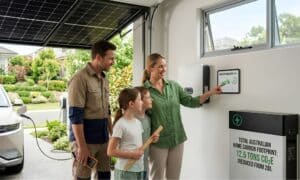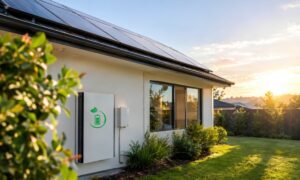

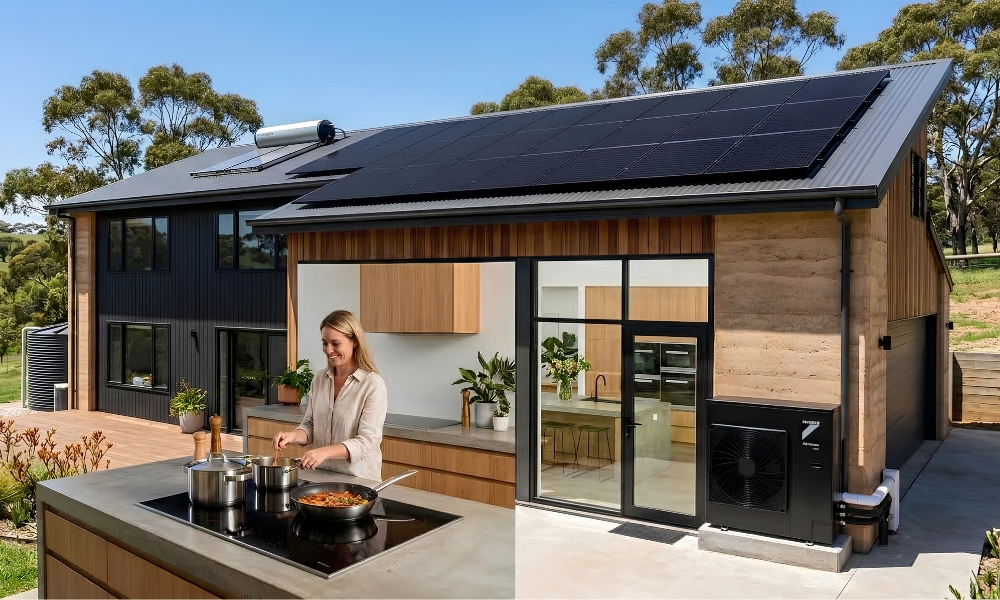
Home energy efficiency upgrades are essential to reduce energy consumption, lower energy bills, and improve comfort. By investing in upgrades such as air-conditioning, LED lights, heat pump hot water systems, and induction cooktops, homeowners can significantly reduce heat loss and gain, ensuring more stable indoor temperatures year-round. These improvements not only enhance living conditions but also lessen reliance on fossil fuels, leading to substantial savings on energy bills over time.
Moreover, energy-efficient upgrades contribute to environmental sustainability by reducing greenhouse gas emissions associated with energy consumption. Overall, prioritising energy efficiency upgrades is a prudent investment that improves home value, increases comfort and delivers long-term financial benefits through reduced energy costs.
On this page
Key takeaways
- Substantial bill savings: Energy efficiency upgrades can reduce annual household energy consumption by up to 60%.
- Heat pump payback: Upgrading to a heat pump water heater offers one of the fastest financial payback periods.
- Abundant government rebates: Federal STCs and state schemes in NSW, VIC, ACT, SA, and TAS significantly reduce upfront appliance costs.
- Health and comfort: Induction cooktops and split systems eliminate gas combustion pollutants, improving indoor air quality.
- Enhanced property value: Energy-efficient residences consistently command higher market valuations across Australia.
Why invest in energy efficiency upgrades?
Household energy costs remain a major expense for Australian families. According to the Australian Energy Market Operator (AEMO), optimising residential demand through energy efficiency upgrades reduces grid load and directly lowers electricity charges for consumers.
Investing in modern technology reduces reliance on gas networks. By removing gas connections, homeowners avoid paying daily supply charges that can add hundreds of dollars to annual utility costs.
Key energy efficiency upgrades at a glance
Upgrade Type | Average Annual Savings | Primary Benefit | Government Rebate Availability |
Heat pump water heating | $400 – $800 | Uses up to 70% less electricity than standard hot water systems | High (Federal STCs + State Schemes) |
Split system air conditioning | $300 – $600 | Efficient reverse-cycle heating and cooling per zone | High (NSW, VIC, ACT, SA) |
Induction cooktops | $100 – $200 | Precise heating, zero indoor air pollutants, fast cooking | Moderate (ACT, VIC) |
LED lighting conversion | $100 – $250 | Uses up to 80% less power than halogen bulbs | High (NSW, SA, VIC) |
Home insulation & sealing | $300 – $500 | Prevents heat gain in summer and heat loss in winter | Moderate (ACT, VIC) |
Top energy efficiency upgrades for Australian homes
You may have already upgraded your shower heads or even some LED lights, but new technology and affordable appliances make it even easier to save money. Choosing the right energy-efficiency upgrades helps you get the best return on investment. The following technologies deliver the highest efficiency gains for Australian residences. Check out the latest products via the links below.

Air conditioning
Split system air conditioning offers efficient cooling and heating with customisable room-by-room temperature control.

Solar Hot Water
Solar hot water systems harness the sun’s energy to heat water, offering energy savings and reducing reliance on traditional energy sources.
Heat Pump Hot Water Systems
Heat pump hot water systems use ambient heat to efficiently heat water, providing energy savings and reducing carbon emissions compared to conventional water heaters.

Induction Cooktops
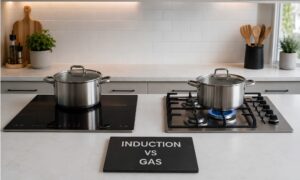
Induction cooktops use electromagnetic technology to heat pots and pans directly, offering precise control, faster heating times, and energy efficiency.

LED Lighting
LED lighting uses light-emitting diodes to produce light, offering energy efficiency, longer lifespan, and versatility in design and colour options compared to traditional lighting technologies.
State and federal incentives and rebates for energy efficient products
Our government on all levels has an invested interest in energy efficiency products and appliances. As we inch closer to our country’s emission target deadlines, finding new ways to encourage Australians to switch to renewables and energy-efficient products becomes paramount. Let’s take a look at the current rebates and incentives available by state.
Australia-wide
The Small-scale Renewable Energy Scheme offers STC discounts on a select number of small renewable products, such as heat pumps and solar hot water systems.
New South Wales (NSW)
NSW’s Household Energy Saving Upgrades program offers free upgrades or co-payments for energy-efficient products. The program covers LED lights, hot water systems, air conditioners, and pool pump upgrades.
Victoria (VIC)
The Victorian Energy Upgrades program offers discounts on a wide range of energy-efficient products and appliances. From heat pump hot water systems to televisions and home insulation, the program helps Victorians save hundreds to thousands on their bills each year.
Australian Capital Territory (ACT)
The Home Energy Support program offers rebates up to $2,500 for upgrades of reverse cycle heating and cooling, hot water heat pumps, electric stove tops and ovens, and ceiling insulation. In addition, the Home Energy Efficiency Program is available to eligible Cranberrians and offers a free home energy assessment and guidance to improve your home’s energy efficiency.
South Australia (SA)
The South Australian Retailer Energy Productivity Scheme offers residential and commercial properties with free or discounted energy efficiency upgrades for LED lights, hot water systems, shower heads (residential) and LED lighting and shower heads (commercial).
Tasmania (TAS)
The Energy Saver Loan Scheme provides 0% interest loans to eligible applicants to fund the purchase price and installation of energy-efficient products. Although the release date has not yet been released, Tasmanians will soon benefit from the Homes Tasmania Energy Efficiency Program which will provide discounts on the purchase of energy-efficient products.
Western Australia (WA)
The Energy Ahead program is available to Synergy customers experiencing financial hardship and looking for a free energy assessment and coaching to save on electricity bills.
Northern Territory (NT)
There are currently no state programs of schemes available for Territorians to upgrade their appliances.
Queensland (QLD)
There are currently no state programs of schemes available for Queenslanders to upgrade their appliances.
Local councils
Many local councils offer incentives to make the switch to energy-efficient products. Contact your local council today. Please note that the ACT has no councils.
Step-by-step home electrification strategy
Electrification requires clear planning to maximise return on investment. Follow this structured roadmap to implement your energy efficiency upgrades efficiently.
- Assess current energy usage: Review your annual utility bills to identify peak consumption periods and gas connection costs.
- Seal the thermal shell: Block draft gaps around doors, windows, and skirtings to reduce space-conditioning needs.
- Prioritise high-impact upgrades: Replace aging hot water heaters and main living area space heaters first, as they consume the most power.
- Leverage government rebates: Combine federal STCs with state-specific incentives to minimise out-of-pocket setup costs.
- Integrate rooftop solar: Power your new electric appliances using clean energy generated directly from your roof.
Expert tips
- Audit before you upgrade: Before buying new appliances, conduct a home thermal leakage check or request an energy assessment. Sealing air gaps around doors and windows ensures your new heating or cooling units do not waste energy conditioning leaked air.
- Check the energy rating label: When selecting a split system air conditioner, look for models with a high Zoned Energy Rating Label (ZERL) appropriate for your climate zone. Higher star ratings indicate superior seasonal efficiency.
- Verify electrical capacity: Before replacing a gas stove with a high-powered induction cooktop, ask your electrician to check whether your switchboard requires an upgrade to support the higher amperage.
- Plan upgrades before appliances fail: Do not wait for your hot water system or air conditioner to break down completely. Planning your energy efficiency upgrades in advance lets you secure quotes, claim government rebates, and choose top-rated models.
Frequently asked questions (FAQs)
What are the most cost-effective energy efficiency upgrades for homes?
Replacing an old electric hot water system with a heat pump and swapping legacy halogen lights for LEDs typically offer the fastest return on investment. These upgrades reduce electricity bills immediately and qualify for substantial government rebates.
How much money can energy efficiency upgrades save annually?
An Australian home that transitions from gas appliances to an all-electric setup with a heat pump, reverse-cycle air conditioning, and solar power can save between $1,000 and $2,500 annually on combined energy bills.
Can I claim state government rebates along with federal STCs?
Yes, in most cases you can combine federal Small-scale Technology Certificates (STCs) with state-specific incentives like the VEU in Victoria or ESS in NSW. Accredited installers usually apply these combined discounts directly at the point of sale.
Are heat pump hot water systems effective in cold climates?
Modern heat pump systems operate reliably in low ambient temperatures, even down to sub-zero levels. They extract ambient heat from the air using advanced refrigerants, making them suitable for southern Australian regions like Tasmania and the ACT.
How does an induction cooktop save energy compared to gas?
Induction cooktops use electromagnetic energy to heat pots directly, achieving approximately 85% to 90% thermal efficiency. Gas cooktops transfer only around 40% of their thermal energy to the cookware, wasting the rest as ambient heat.