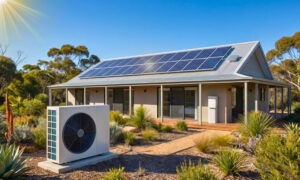






Australia continues to grapple with extreme weather events, shifting grid dynamics, and rising energy costs. Understanding the carbon footprint Australian home environments generate is no longer just an environmental consideration; it is an economic necessity. Recent reports from ABC News and the Australian Energy Market Operator (AEMO) highlight that residential energy use accounts for nearly 12% of Australia’s national greenhouse gas output. Exploring options like an all-electric home in Australia provides a practical pathway toward greater energy independence.
Ready to see what your roof could save? Energy Matters helps households take control of their power bills and reduce their home emissions. Get a free solar quote from Energy Matters today.
Quick answer
- Average emissions: The average Australian household generates approximately 15 to 20 tonnes of carbon dioxide equivalent (CO2e) every year, placing Australia among the highest per capita residential emitters globally.
- Primary drivers: Household electricity use, fossil-fuel space heating, gas hot water systems, and transport account for over 75% of a typical dwelling’s total carbon output.
- Impactful solutions: Switching to rooftop solar, electrifying water and space heating, and adopting home battery storage can cut a household’s carbon footprint by up to 80% while significantly reducing energy bills.
What is the carbon footprint of an Australian home, and why should homeowners care?
A household carbon footprint measures the total greenhouse gas emissions generated by a home’s activities over a year. Expressed in tonnes of carbon dioxide equivalent (tCO2e), this metric captures direct emissions alongside indirect power grid emissions. Use Energy Matters’ carbon footprint calculator to estimate your household and business’s direct emissions.
The key facts
- National average: Australia’s household carbon footprint averages 15 to 20 tonnes of CO2e annually across all consumption categories.
- Direct energy impact: Electricity and gas consumption alone contribute approximately 7 to 10 tonnes of CO2e per average detached dwelling.
- Global ranking: On a per capita basis, Australian residential emissions remain among the highest in the developed world due to historical reliance on coal-fired power.
- Thermal performance: Over 60% of existing Australian homes were built before the introduction of minimum 6-Star NatHERS thermal efficiency standards.





Why this matters right now in Australia
The electricity system is becoming increasingly renewable, while households are electrifying heating, hot water, cooking, transport and other energy services.
That creates an opportunity. Replacing fossil-fuel energy with efficient electric technologies, supplied by rooftop solar or an increasingly renewable grid, can reduce operational emissions without requiring homeowners to change how they live dramatically.
The Climate Change Authority reported that built-environment emissions fell by 0.7 million tonnes of CO2-e, or 3%, in 2025. It also identified electrification as a key opportunity to decarbonise buildings faster.
Expert insight: Upgrading your home’s energy profile is no longer just an environmental choice; it is the single most effective hedge against retail electricity inflation. Homes that integrate solar and electrification routinely slash operational costs while insulating themselves from grid volatility.
How the carbon footprint of an Australian home works: The current state
The basic calculation is simpler than it sounds.
You identify how much energy your household consumes, determine the appropriate emissions factor and multiply the two figures. You can express the result as kilograms or tonnes of carbon dioxide equivalent, or CO2-e.
Technical explanation
The Australian Government’s 2026 National Greenhouse Accounts Factors provide the current methodology for individuals and organisations estimating greenhouse gas emissions. The basic principle is:
Energy consumed × emissions factor = estimated emissions
For electricity, the 2026 location-based factors vary substantially between states because each electricity system has a different generation mix. The factors include emissions associated with electricity generation and relevant electricity losses.
| State or grid | 2026 electricity Scope 2 factor | Scope 3 factor | Combined factor |
| NSW and ACT | 0.60 kg CO2-e/kWh | 0.07 | 0.67 kg/kWh |
| Victoria | 0.74 | 0.11 | 0.85 kg/kWh |
| Queensland | 0.65 | 0.11 | 0.76 kg/kWh |
| South Australia | 0.21 | 0.03 | 0.24 kg/kWh |
| WA SWIS | 0.45 | 0.10 | 0.55 kg/kWh |
| Tasmania | 0.23 | 0.03 | 0.26 kg/kWh |
| Australia national factor | 0.59 | 0.10 | 0.69 kg/kWh |
Source: DCCEEW, National Greenhouse Accounts Factors 2026.
This means the same 5,000 kWh of annual grid electricity can have a substantially different estimated emissions footprint depending on where the home is located.
For example, using the combined factors above, 5,000 kWh of grid electricity equates to approximately 4.25 tonnes CO2-e in Victoria, compared with about 1.2 tonnes in South Australia.
Where applicable, include natural gas. The 2026 NGA Factors use a direct combustion factor of approximately 51.53 kg CO2-e per gigajoule for distributed natural gas, with additional upstream Scope 3 emissions varying by state.
Australian examples and data
Consider two otherwise identical homes consuming 5,000 kWh of electricity annually.
A Victorian home will generally have a higher electricity-related carbon footprint than a South Australian home because Victoria’s grid remains more emissions-intensive. This illustrates why national averages can hide important differences.
Solar changes the calculation because electricity generated and consumed directly from a rooftop system avoids buying the equivalent amount of grid electricity. The emissions from manufacturing and installing solar panels are separate from the home’s operational carbon footprint.
What does reducing your footprint mean for your electricity bills?
Reducing your residential carbon output can deliver immediate, meaningful financial benefits for Australian households.
Short-term impact
The quickest opportunities are often behavioural and operational:
- Run washing machines and dishwashers during daylight when solar generation is available.
- Set air-conditioning efficiently rather than relying on extreme temperature settings.
- Replace inefficient lighting with LEDs.
- Turn off unnecessary standby loads.
- Maintain air-conditioners and heat pumps.
- Use smart controls to avoid unnecessary peak-period consumption.
- Heat water during periods of strong solar production where the system allows it.
Eliminating gas supply charges saves households $300 to $500 annually, before accounting for actual gas usage costs. Replacing gas appliances with energy-efficient electric heat pumps reduces overall energy consumption by up to 70%.
Installing a 6.6kW rooftop solar system can instantly cut annual power bills by $1,000 to $1,800, depending on feed-in tariffs and self-consumption rates. Reviewing the carbon savings of solar panels demonstrates how quick payback periods have become across Australian capital cities.
The next step is improving the building itself. Insulation, shading, draught sealing, efficient windows and appropriate glazing can reduce the amount of heating and cooling required.
Energy Matters recommends switching to energy-efficient appliances now for smarter savings and a more environmentally friendly lifestyle.
Long-Term Implications
Long-term savings increase significantly when solar panels are paired with home battery storage and electric vehicle (EV) charging. Households that fully electrify eliminate both retail gas bills and external petrol costs, saving thousands of dollars per year.
Powering up your EV with solar
If you’re thinking of buying an EV, adding an EV charger to your solar system is a smart way to “fuel” your car with clean, renewable energy.
Over 10 years, a fully electrified Australian home with rooftop solar and battery storage can save over $30,000 in energy and fuel costs. This transition shields homeowners from long-term fossil fuel tariff increases and carbon compliance penalties.
| Strategy / Upgrade | Estimated Annual CO2 Reduction | Average Annual Bill Savings | Typical Payback Period |
| 6.6kW Rooftop Solar System | 4.5 to 6.0 tonnes | $1,000 – $1,800 | 3 – 5 years |
| Heat Pump Water Heater | 1.8 to 2.5 tonnes | $400 – $800 | 2 – 4 years |
| Reverse-Cycle AC (Replacing Gas) | 2.0 to 3.5 tonnes | $500 – $900 | 4 – 6 years |
| 10kWh Home Battery Storage | 1.5 to 2.5 tonnes | $600 – $1,200 | 6 – 9 years |
| Draught Proofing & Insulation | 0.8 to 1.5 tonnes | $250 – $500 | 1 – 2 years |
Use Energy Matters’ easy-to-use solar power and solar battery storage system calculator to determine the right size for your solar system with storage. Our solar calculator will generate performance information and potential savings.
We can send this information to 3 pre-vetted, trusted local installers in your area so they can provide obligation-free solar quotes and help you take the first step toward true energy independence!

Expert insight: Energy efficiency is the foundation. Solar and batteries work best when the underlying home is reasonably efficient, and the system is sized to the household’s actual energy profile.
How to reduce your carbon footprint at home: what Australian homeowners can do right now
Actionable steps
These steps are ordered roughly by impact. Work down as your budget allows.
- Start with gas. Replace gas hot water and heating with a heat pump hot water system and a reverse-cycle air conditioner, which deliver far more heat per unit of electricity.
- Seal and insulate. Draught-proofing, ceiling insulation and good curtains cut heating and cooling demand.
- Install rooftop solar. A 6.6 kW system making about 9,000 kWh a year could displace roughly 5.8 tonnes on the NSW grid. The federal Small-scale Renewable Energy Scheme cuts the upfront cost.
- Add a right-sized battery. The Cheaper Home Batteries Program discounts eligible batteries by around 30%, but support tapers above roughly 14 kWh from 1 May 2026. See our Cheaper Home Batteries Program changes guide and home battery storage options.
- Shift your usage. Run the dishwasher, washing machine, pool pump and EV charger in the midday solar window.
- Electrify your driving. Battery electric cars outsold petrol cars in new sales for the first time in August 2026. At 18 kWh per 100 km, 11,100 km uses about 1.3 tonnes on the NSW grid versus 2.8 tonnes for a petrol car.
- Renting or in an apartment? Choose efficient appliances, ask about Solar Sharer plans and consider accredited GreenPower.

Questions to ask your installer or retailer
- Are you Solar Accreditation Australia (SAA) accredited, and are all products on the Clean Energy Council (CEC) approved list?
- What system and battery size suit my actual kWh use?
- How many kWh will it generate in my postcode, and how much will I use myself?
- Is the battery VPP-compatible, and which state incentives apply?
- What product and performance warranties apply?
- Can the system grow later for an EV charger or heat pump?
Expert insight: Do not chase the biggest battery or system. Size to your real usage, because oversizing adds cost and manufacturing emissions without cutting much more carbon.
State-by-state considerations for VIC, NSW, QLD, SA and WA
Your grid and state schemes shape which upgrade cuts the most carbon. Here is how the five biggest states compare as at October 2026.
| State | Grid factor | What stands out | Support to check |
| VIC | 0.78 | Highest grid emissions and gas use, so electrifying heating and hot water pays off most. New homes needing a planning permit have been all-electric since 1 January 2024. | Solar Homes rebate of up to $1,400 for panels, with an interest-free loan option. Midday Power Saver from 1 October 2026. State battery rebate closed. |
| NSW | 0.64 | Strong solar uptake and a free-power window from 11 am to 2 pm. | Solar Sharer Offer. Peak Demand Reduction Scheme incentive for VPP-connected batteries. Income-tested Home Energy Saver loans. |
| QLD | 0.67 | Excellent solar yields. Solar Sharer covers south-east Queensland only. | Federal programs apply. The Battery Booster has closed. |
| SA | 0.22 | Cleanest grid, so gas and petrol are the bigger carbon targets. | Solar Sharer (12 pm to 3 pm). REPS-approved VPP incentive of up to $2,050. State battery scheme closed. |
| WA | 0.50 | Separate SWIS grid, not the NEM, and no Solar Sharer yet. | Residential Battery Scheme (from 1 July 2025) stacks with the federal discount. No-interest loans of up to $10,000. |
In Victoria, Queensland and NSW, prioritise solar and gas replacement. In South Australia, start with gas, transport and a VPP-ready battery. Scheme details change often, so confirm eligibility before you buy.
Expert insight: State incentives can materially change the upfront cost of solar, batteries and electrification. Always check the current government programme before relying on figures from older articles or installer advertising.
Build your home energy resilience with battery storage: Check your state or territory programme before signing a contract, as eligibility, rebate values and technical requirements can change.
Expert predictions for 2027 and beyond
As Australia advances toward its 2030 national emissions target of a 43% reduction below 2005 levels, residential energy management will evolve rapidly.
By 2027, automated Home Energy Management Systems (HEMS) will become standard in Australian residences. These systems leverage artificial intelligence to optimise battery charging, appliance schedules, and EV charging based on real-time weather forecasts and spot electricity prices.
Furthermore, dynamic grid tariffs will penalise unmanaged peak-hour grid consumption while rewarding households that export power during evening peaks. Gas distribution networks will face rising operational surcharges as customer bases contract, accelerating the financial case for complete home electrification.
How to reduce your home’s carbon footprint: a practical checklist
Use this sequence if you want a straightforward starting point:
- Measure: Collect 12 months of electricity and gas bills.
- Calculate: Apply current Australian emissions factors.
- Identify: Find the biggest sources of household energy consumption.
- Improve: Address insulation, shading, heating, cooling and inefficient appliances.
- Electrify: Consider heat-pump hot water and efficient electric heating when it’s time to replace.
- Generate: Assess whether rooftop solar is suitable.
- Store: Consider a battery based on actual consumption and solar generation.
- Shift: Run flexible appliances during periods of strong solar generation.
- Transport: Consider an EV where it suits your driving needs.
- Review: Recalculate your household footprint each year.

Frequently asked questions
What is the carbon footprint of an average Australian home?
No single official number represents every Australian home because household emissions vary by location, energy consumption, gas use, building efficiency, and transport. For electricity alone, the 2026 Australian emissions factors range from 0.24 kg CO2-e/kWh in South Australia to 0.85 kg CO2-e/kWh in Victoria when Scope 2 and Scope 3 factors are combined.
How do I calculate my household carbon footprint in Australia?
Collect 12 months of electricity and gas consumption, then multiply each energy source by the appropriate Australian Government emissions factor. Add direct fuel use where relevant. For a more comprehensive footprint, include transport, waste and selected consumption categories, but keep operational home emissions separate from embodied emissions in construction and products.
Does solar reduce a home’s carbon footprint?
Yes. Rooftop solar reduces the electricity a household needs to buy from the grid. The emissions benefit depends on the electricity grid it displaces, how much solar electricity is used directly, how much is exported, and the lifecycle emissions from manufacturing and installing the solar system.
Does a home battery reduce carbon emissions?
A battery can reduce emissions by letting a household use more rooftop solar and buy less grid electricity during higher-emissions periods. Its impact depends on how it is charged and operated. Batteries can also support the wider electricity system by providing flexible demand and participating in virtual power plants.
What is the fastest way to reduce a home’s carbon footprint?
Start with the largest sources of energy use. Improve insulation and efficiency, replace inefficient appliances when they reach the end of their useful life, electrify gas appliances where appropriate, install solar if suitable and consider battery storage where the economics and household consumption profile support it.
Is an all-electric home always lower carbon?
Not automatically. An efficient all-electric home supplied by solar or a low-emissions electricity grid can have a substantially lower operational carbon footprint than a gas-dependent home. However, insulation, appliance efficiency, electricity consumption and the local grid mix still matter. Energy Matters’ all-electric home guide provides further context.
Key takeaways
- Measure before upgrading: Electricity and gas bills provide the foundation for calculating your household emissions.
- Location matters: Grid electricity emissions intensity varies significantly between Australian states.
- Efficiency comes first: Insulation, efficient appliances, and efficient heating, cooling, and hot-water systems can reduce energy demand.
- Solar and batteries work together: Solar can reduce grid electricity purchases, while batteries can increase solar self-consumption after sunset.
- Plan for electrification: EVs, heat pumps, induction cooking, solar and smart energy management are increasingly interconnected parts of the Australian home-energy system.
Get a Free Solar + Battery Quote From SAA-Accredited Installers
The carbon footprint of the average Australian home is big, but most of it sits in three places you can change: your electricity, your gas connection and your car. Measure your numbers, electrify the gas, add solar and a right-sized battery, and use the midday window. Each step cuts bills and emissions.
Energy Matters makes the transition to clean energy seamless and straightforward. Partner with accredited solar experts to secure your property’s energy independence today.
Energy Matters helps Australians compare solar and battery options with confidence. Our guides, state-by-state rebate updates and SAA-accredited installers make the next step simple.
Sources and References
- DCCEEW National Greenhouse Accounts Factors 2026
- ABS Energy Account, Australia 2023-24
- ABS household solar electricity analysis
- AEMO 2026 Integrated System Plan
- Clean Energy Council 2026 rooftop solar and battery report
- Clean Energy Council consumer resources
- ABC News battery and virtual power plant coverage
- The Guardian, Australian household energy efficiency coverage
- Victorian Solar Homes Program
- NSW Climate and Energy Action battery incentives
- Queensland Government energy and solar programmes
- South Australian energy and battery information
- WA Residential Battery Scheme