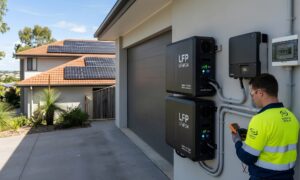





With over 3.4 million Australian homes equipped with rooftop panels, mastering your home’s energy storage performance is the key to energy freedom. Maximising the lifespan of solar battery storage Australia-wide requires a solid understanding of how these chemical storage cells age. Over time, all cells gradually lose capacity, limiting how much solar power you can store for the evening. By understanding solar battery degradation and managing operational factors, you can protect your financial return.
Quick summary
- Most solar batteries in Australia last 8 to 15 years, or roughly 6,000 to 10,000 charge cycles for LiFePO4 chemistries.
- Heat, deep discharging and poor ventilation are the biggest accelerators of capacity fade.
A battery reaches “end of life” once it drops to around 60 to 70 per cent of its original capacity, not when it stops working entirely.
What is solar battery degradation?
Every time a battery charges and discharges, tiny chemical changes occur inside its cells. Over thousands of cycles, this wears down the internal structure and gradually reduces the amount of energy the battery can store — a process known as capacity fade.
This is completely normal and expected. It is why manufacturers quote a warranty in years and cycles rather than promising the battery will perform at 100 per cent forever.
Expert tip
Ask your installer for the manufacturer’s degradation curve, not just the headline lifespan figure. A battery that fades slowly and predictably is a safer long-term bet than one with a longer headline number but a steeper early drop-off.



How long does a solar battery last in Australia?
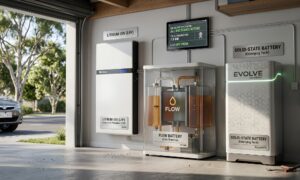
Solar battery lifespan in Australia varies mainly by chemistry. Here is what each type typically delivers under normal residential use:
Lithium iron phosphate (LiFePO4) batteries
- Typical lifespan of 10 to 15 years, with cycle life often between 6,000 and 10,000 cycles.
- The most common chemistry in new Australian installations thanks to strong thermal stability in hot climates.
Nickel manganese cobalt (NMC) batteries
- Typical lifespan of 8 to 12 years, with cycle life around 3,000 to 6,000 cycles.
- Higher energy density but more sensitive to heat stress than LiFePO4.
Lead-acid batteries
- Typical lifespan of 3 to 7 years, largely replaced by lithium chemistries in modern systems.
- Still used in some off-grid setups where the upfront cost outweighs longevity concerns.
What affects the lifespan and degradation of solar batteries?
Several factors determine whether a battery reaches the top or bottom of its expected range:
- Ambient temperature — heat accelerates the chemical reactions that cause capacity fade, a particular issue in inland and northern Australia.
- Depth of discharge — regularly draining a battery close to empty stresses the cells more than shallow, partial cycles.
- Cycling frequency — a battery cycled once daily wears differently from one cycled several times a day for arbitrage or backup use.
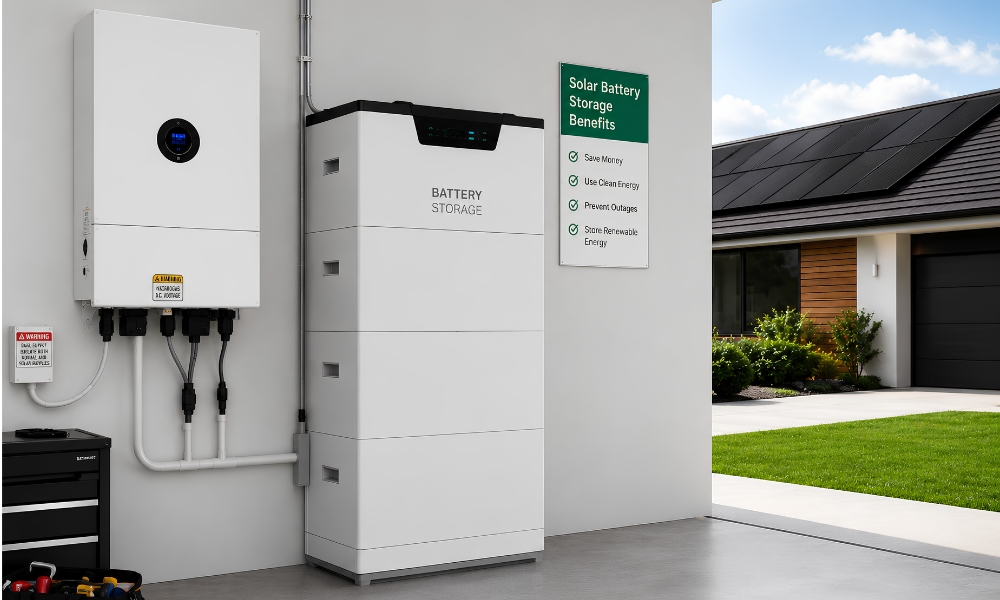
- Installation location — a shaded, ventilated position performs better than direct sun or an unventilated garage.
- Battery management system quality — a well-tuned BMS protects cells from overcharging and excessive heat, directly supporting lifespan.
Solar battery lifespan in Australia at a glance
| Chemistry | Typical lifespan | Cycle life | Capacity at 10 years |
| LiFePO4 (lithium iron phosphate) | 10-15 years | 6,000-10,000 cycles | ~70-80% |
| NMC (nickel manganese cobalt) | 8-12 years | 3,000-6,000 cycles | ~60-70% |
| Lead-acid | 3-7 years | 500-1,500 cycles | Below 50% |
What does Australian testing tell us about battery degradation?
The most detailed independent data on solar battery lifespan in Australia comes from the ARENA-funded Battery Test Centre, run by ITP Renewables at the Canberra Institute of Technology. The program has cycled dozens of residential battery packs since 2016 under real climate conditions.
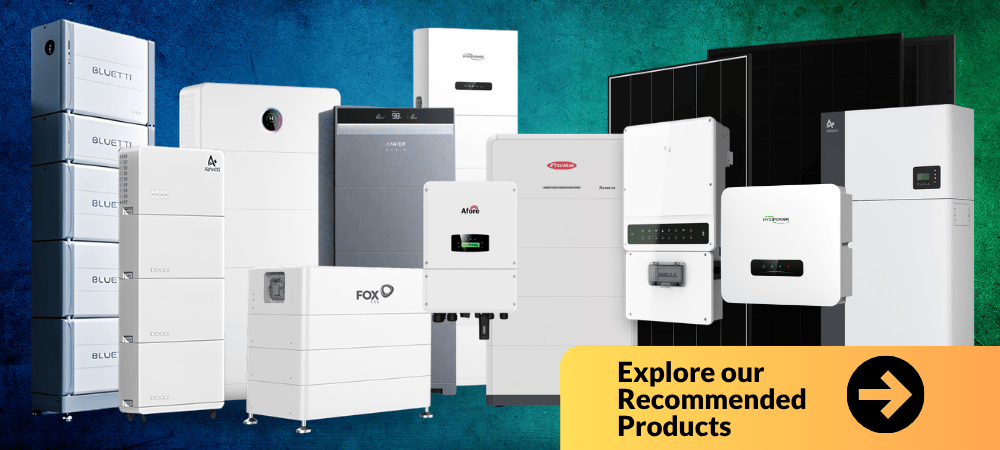
The results show clear capacity fade across all packs tested, with meaningful variation between brands and models, even within the same chemistry. Check our page for our recommended solar battery products.
How to extend your solar battery’s lifespan
- Avoid full discharges where possible — keep usage within the manufacturer’s recommended depth of discharge.
- Install in a shaded, ventilated space away from direct sun and damp areas.
- Choose a Solar Accreditation Australia (SAA)-approved installer who follows current safety and placement guidelines.
- Keep firmware and monitoring software up to date so the battery management system operates as intended.
- Review your usage pattern periodically — a system sized correctly for your household cycles less aggressively than an undersized one.
Warranties, degradation guarantees and your rights
Most Australian battery warranties run for 10 years and guarantee the unit will retain a set percentage of its original capacity, commonly 60 to 70 per cent, whichever condition is reached first. Some warranties are instead capped by total energy throughput rather than a fixed number of years.
Beyond the manufacturer’s warranty, Australian Consumer Law guarantees that products must last a reasonable time and perform as advertised, regardless of whether a formal warranty applies. The Australian Competition and Consumer Commission outlines these consumer guarantees in detail for anyone facing a premature battery failure.
Expert tip
Keep your installation paperwork and monitoring data from day one. If a capacity dispute arises later, clear records of your battery’s performance history make any warranty or consumer law claim far easier to resolve.

Frequently asked questions
What is a normal solar battery lifespan in Australia?
Most home batteries last 8 to 15 years, with lithium iron phosphate units at the longer end. Actual lifespan depends on chemistry, climate, installation quality and how often the battery cycles. Warranties typically reflect 10 years or a set cycle count, whichever comes first.
When should I replace my solar battery?
Replacement is generally worthwhile once capacity falls below 60 to 70 per cent of the original rating, or when it can no longer cover your typical evening usage. The battery may still technically function below this point, albeit with reduced storage capacity.
Does Australian heat shorten solar battery life?
Yes. High ambient temperatures accelerate the chemical reactions that drive capacity fade, which is why installation location and ventilation matter so much in Australian conditions, particularly in hotter inland and northern regions.
Is LiFePO4 better than NMC for Australian homes?
LiFePO4 generally performs better in Australian heat, with a longer cycle life and a more stable degradation curve than NMC. NMC offers higher energy density but tends to be more heat-sensitive over the long term.
Is it worth buying a solar battery in 2026?
With expanding virtual power plant (VPP) networks and falling wholesale battery prices, storage offers excellent financial returns for homes with high evening usage. Consuming your own stored solar power remains the most effective defence against volatile time-of-use retail electricity tariffs.
Key takeaways
- Most solar batteries in Australia last 8 to 15 years, with LiFePO4 chemistries typically outperforming NMC and lead-acid.
- Capacity fade is normal and gradual; a battery is considered end-of-life at around 60 to 70 per cent of its original capacity.
- Heat, deep discharging, and poor ventilation are the primary drivers of degradation in Australian conditions.
- Independent ARENA-funded testing confirms real-world capacity fade, with performance varying between brands even within the same chemistry.
- A well-sized system, quality installation and Australian Consumer Law protections all support getting the full expected lifespan from your battery.

Get the right battery for your home
Use Energy Matters’ easy-to-use solar power and battery storage calculator to determine the size of your solar system with storage! Our solar calculator will generate performance information and potential savings.
We can send this information to 3 of our pre-vetted, trusted local installers in your area so they can provide obligation-free solar quotes and take the first step toward true energy independence!

Receive your free, no-obligation solar battery quotes from our trusted local network today!
The lifespan of a solar battery in Australia depends on its chemistry, climate, and how the system is installed and used day-to-day. LiFePO4 batteries generally offer the longest lifespan and the most predictable degradation curve, while heat and deep discharging remain the biggest threats to capacity nationwide.
Are you ready to take complete control of your energy future and eliminate shock electricity bills for good? The solar experts at Energy Matters are standing by to design the ultimate energy storage system tailored to your household needs. Don’t leave your long-term savings to chance with uncertified installers.