Australia’s love affair with rooftop solar continues to grow. According to the Clean Energy Council’s 2026 Clean Energy Australia report, more than 4.3 million Australian households now have rooftop solar, making it an increasingly important part of the country’s electricity supply. However, installing solar panels is only the beginning. Regular solar maintenance helps protect your investment, maintain electricity generation and identify potential safety issues before they become costly problems.
This solar panel inspection checklist guide for Australia explains what homeowners should check every year, which tasks require a qualified electrician, and how to keep a solar system operating efficiently. If you’re considering an upgrade, explore Energy Matters’ home solar systems for expert guidance.
Quick answer: What should you check every year?
The Australian Government recommends regular solar system maintenance, while the Clean Energy Regulator advises homeowners to arrange an annual safety check by an appropriately accredited professional. An annual solar inspection helps Australian homeowners identify problems before they become expensive repairs.
- Solar panels: Look for cracks, discolouration, dirt accumulation, loose mounting and shading.
- Electrical components: Have a qualified professional inspect wiring, isolators, connectors, inverter performance and safety equipment.
- System performance: Review electricity generation, monitoring data, inverter fault codes, and battery performance (if installed).


What is an annual solar panel inspection and why does it matter?
An annual solar inspection is a systematic assessment of your solar photovoltaic (PV) system to determine whether its components remain safe, secure and operational.
Although solar panels are designed to withstand Australia’s challenging weather conditions, they are constantly exposed to heat, rain, wind, dust, wildlife and airborne debris.
Over time, these conditions can affect electrical connections, mounting equipment, panel surfaces and inverter performance.
Expert insight: The Clean Energy Regulator recommends having solar installations checked annually by a licensed electrician accredited by Solar Accreditation Australia. This is particularly important because electrical faults can develop without obvious external warning signs.
Key terminology
Understanding a few common solar maintenance terms makes inspection reports easier to follow.
- Solar PV panels: Modules that convert sunlight into electricity.
- Inverter: Converts the direct current (DC) electricity produced by panels into alternating current (AC) electricity used by household appliances.
- Isolator switches: Safety devices that disconnect electrical circuits for maintenance or emergencies.
- Solar monitoring: Software or hardware that tracks electricity generation and system performance.
- Performance degradation: The gradual reduction in a solar panel’s electricity-generating capacity over time.
Why this matters right now in Australia
The growing number of Australian solar installations makes ongoing maintenance increasingly important.
The Clean Energy Council’s February 2026 reporting highlighted the significant expansion of Australia’s rooftop solar and battery market. Its earlier reporting also showed that rooftop solar had reached 28.3 GW of installed capacity by the end of 2025.
As more households rely on solar to manage electricity costs, keeping existing systems in good condition is as important as installing new technology.
ABC News has also reported on the growing influence of rooftop solar and household batteries on Australia’s electricity market. As the shift toward energy storage grows, monitoring both solar generation and battery operation becomes increasingly important.
Solar panel inspection checklist Australia: How the inspection works
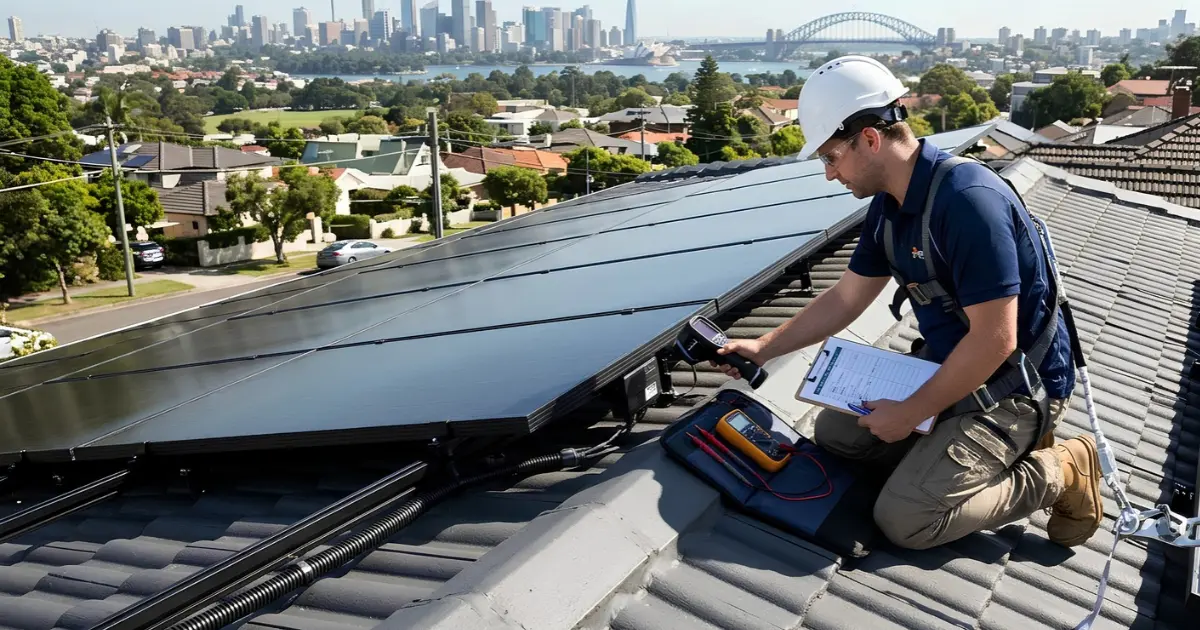
A proper inspection involves more than looking at the panels from the ground or checking whether the inverter is switched on. It combines visual assessments, electrical testing, performance analysis and a review of the system’s overall condition.
Our solar panel maintenance guidance recommends having an accredited solar installer or qualified electrician carry out servicing.
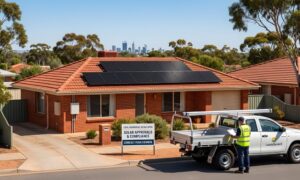
Book an annual solar health check? Your solar panels work hard through Australia’s changing seasons. Give your system the attention it deserves with a professional inspection. Energy Matters can help you connect with trusted, accredited solar professionals across Australia. We partner with Solar Service Guys, who can conduct solar system health checks.
Technical explanation
A professional inspection generally covers the following components.
1. Solar panel condition
The inspector checks for:
- Cracks, chips or damaged glass.
- Discolouration or signs of moisture ingress.
- Dirt, leaves, bird droppings and other debris.
- Loose or damaged mounting hardware.
- Signs of corrosion or deterioration.
2. Mounting structures and roof condition
Panels must remain securely attached to the roof. The inspection should identify loose brackets, deteriorating seals, corrosion, damaged mounting rails and potential water ingress around roof penetrations.
3. Inverter operation
The inverter is one of the most important components of a solar installation. The electrician should check its operating condition, recorded fault history, ventilation, connections and any visible signs of overheating.
4. Wiring and electrical connections
Cables, connectors, switches and isolators should be checked for damage, deterioration, corrosion and secure attachment. Electrical testing should be undertaken by an appropriately qualified professional.
5. Battery performance
For households with battery storage, the inspection should also assess charging and discharging behaviour, fault history, ventilation and the condition of accessible connections.
Use Energy Matters’ easy-to-use solar power and solar battery storage system calculator to determine the right size for your solar system with storage. Our solar calculator will generate performance information and potential savings.
We can send this information to 3 pre-vetted, trusted local installers in your area so they can provide obligation-free solar quotes and help you take the first step toward true energy independence!

Australian examples and data
Different Australian jurisdictions provide guidance on inspection frequency. Queensland recommends annual inspections as a general guide, while Victoria’s Solar Homes guidance recommends professional servicing at least every two years.
The Australian Government’s energy department also suggests that a service every two years may be appropriate, depending on the installation and its maintenance requirements. These recommendations demonstrate why homeowners should follow their manufacturer’s instructions and obtain advice based on their property’s conditions.
Expert insight: A solar system in a dusty regional location or near the coast may require more frequent attention than an installation in a sheltered suburban environment.
What does a solar inspection mean for your electricity bills?
A poorly maintained solar system can generate less electricity than expected. When generation falls, households may need to purchase more electricity from their retailer, increasing their energy expenses.
Regular solar system checks help identify performance problems and let homeowners address them before they significantly affect household savings.
Short-term impact
Identifying these problems early can help restore electricity generation and reduce unnecessary grid consumption. Some problems can reduce solar generation immediately. Examples include:
- Heavy dust or debris covering panel surfaces.
- New shading from growing trees.
- Inverter faults.
- Damaged electrical connections.
- Panel damage following severe weather.
Long-term implications
Solar panels gradually lose generating capacity as they age. This is normal, although excessive performance losses may indicate an underlying problem. Regular inspections help distinguish normal degradation from preventable faults.
For homeowners considering additional energy improvements, combining solar maintenance with better home energy efficiency can help maximise the value of household electricity.
Energy Matters recommends switching to energy-efficient appliances now to save money and live more sustainably.
Expert insight: Solar maintenance should go beyond keeping panels clean. Electrical safety, inverter reliability and accurate performance monitoring are equally important.
Solar panel inspection checklist Australia: Costs and savings
Inspection costs depend on the system’s size, age, accessibility, location, and condition. No single price applies nationally for an annual solar inspection. Homeowners should request itemised quotes before arranging professional servicing.
Upfront costs
The following table outlines the main maintenance activities and their typical cost considerations.
| Maintenance activity | Cost consideration | Frequency |
| Monitoring system performance | Usually included with monitoring access | Monthly |
| Ground-level visual inspection | No professional fee if checking safely from the ground | Every few months |
| Professional solar inspection | Depends on system size and electrician’s rates | Annually as a general safety guide |
| Panel cleaning | Depends on roof access and cleaning requirements | As needed |
| Inverter servicing or repairs | Depends on fault and replacement parts | As required |
| Battery inspection | Depends on battery type and service requirements | According to manufacturer guidance |
Savings calculation
The actual financial impact depends on how much electricity the household would otherwise purchase from the grid, its electricity tariff and the value of exported electricity.
An inspection does not automatically reduce an electricity bill. Its financial value comes from identifying faults, preventing avoidable generation losses and maintaining safe operation. For example, consider a household solar system that normally generates 25 kWh per day. If an undetected problem reduces generation by 15%, the household loses approximately:
- 3.75 kWh of generation per day.
- 112.5 kWh over 30 days.
- 1,368.75 kWh over a 365-day year.
Payback period
Unlike a new solar installation, an inspection does not have a straightforward payback period. Assess its value against the potential cost of unresolved faults, lost generation, equipment damage, and electrical safety risks.
Keeping records of generation and maintenance expenses also makes it easier to identify changes in system performance over time.
Expert insight: The Australian Government’s solar consumer guidance recommends regularly reviewing system performance and contacting your installer or an accredited professional if generation falls unexpectedly.
State-by-state considerations for Australian homeowners
Solar maintenance requirements and government assistance vary by jurisdiction. The following considerations can help homeowners plan their annual maintenance.
| State | Solar maintenance considerations | Relevant government support or policy |
| Victoria (VIC) | Follow Solar Victoria’s professional servicing guidance, generally at least every two years. | Solar Homes Program and available battery assistance. |
| New South Wales (NSW) | Monitor system performance and arrange qualified electrical inspections. | Home Energy Saver and eligible battery incentives, including applicable VPP arrangements. |
| Queensland (QLD) | Annual inspection is recommended as a general guide. Pay particular attention to storm damage, heat and vegetation. | Federal Cheaper Home Batteries Program and eligible state energy-saving incentives. |
| South Australia (SA) | Coastal conditions can increase corrosion risks. Monitor export arrangements and inverter performance. | Federal battery incentives and applicable local sustainability incentives. |
| Western Australia (WA) | Consider dust, heat and coastal exposure when planning maintenance. | Distributed Energy Buyback Scheme and federal battery assistance. |
Solar panel inspection checklist Australia: Comparing maintenance options
Homeowners can monitor their solar systems themselves, but qualified professionals should handle electrical inspections and repairs. A DIY check cannot replace a professional inspection.
| Maintenance option | What it covers | Best suited to |
| DIY visual check | Ground-level observations and monitoring data | Routine household monitoring |
| Professional inspection | Electrical safety, panels, inverter and connections | Annual system health assessment |
| Professional cleaning | Removal of accumulated dirt and debris | Heavily soiled panels |
| Full solar service | Detailed inspection, testing and maintenance | Older systems or systems with recurring faults |
Expert insight: Queensland’s Electrical Safety Office specifically warns homeowners against attempting electrical repairs themselves. Solar installations can remain energised even when household electricity has been switched off.
What Australian homeowners can do right now?
A simple maintenance routine can help prevent small problems from becoming major repairs.
Actionable steps
Never climb onto your roof or open electrical enclosures to carry out these checks yourself. Use this practical solar system maintenance checklist year-round.
Every month:
- Check your solar monitoring application.
- Review daily generation figures.
- Look for inverter fault notifications.
- Monitor battery charging and discharging if applicable.
Every three to six months:
- Look at your panels from the ground.
- Check for obvious shading from trees or nearby structures.
- Look for visible damage, debris or displaced equipment.
- Check for changes in inverter indicator lights.
Every year:
- Arrange a professional solar safety inspection.
- Request an electrical system assessment.
- Review inverter performance and recorded faults.
- Check mounting equipment and accessible wiring.
- Review battery performance and safety where applicable.
- Update maintenance and warranty records.
Ready to give your solar system a health check?
Regular solar maintenance is essential to protect system safety, reliability, and long-term performance. A structured inspection routine, combined with qualified professional servicing, helps Australian homeowners get more value from their solar investment.
Questions to ask your installer or retailer
Before booking a service, ask:
- Are you licensed and appropriately accredited for solar inspection work?
- Does the inspection include electrical testing?
- Will you check the inverter and battery fault history?
- Does the inspection include panel mounting equipment and roof penetrations?
- Will I receive a written inspection report?
- Are any repairs covered under my existing product or workmanship warranties?
You can also explore Energy Matters’ solar panel selection guide if you’re considering replacing ageing equipment.
Common mistakes to avoid
If your system is damaged or behaving unusually, contact your installer or a licensed electrician rather than attempting repairs yourself. Even well-maintained solar systems can experience problems when homeowners overlook basic maintenance. Avoid these common mistakes:
- Ignoring inverter warnings: Fault notifications can indicate problems that require professional attention.
- Cleaning panels incorrectly: Abrasive products, high-pressure equipment and inappropriate cleaning methods can damage panel surfaces.
- Climbing onto the roof: Roof work presents serious fall and electrical hazards.
- Overlooking shading: Growing branches can gradually reduce solar generation.
- Ignoring damaged cables: Deteriorated insulation and exposed wiring can create electrical hazards.
- Assuming solar panels are maintenance-free: Although solar systems require relatively little maintenance, they still need periodic checks.
- Forgetting warranty documents: Missing service records can make warranty discussions more difficult.

Frequently asked questions
How often should solar panels be inspected in Australia?
Annual inspections are a useful safety guideline, with the Clean Energy Regulator recommending annual checks by an appropriately accredited professional. However, the Australian Government suggests servicing every two years may suit some systems. Follow manufacturer recommendations and consider local environmental conditions.
What should an annual solar inspection include?
A professional inspection should assess panel condition, mounting equipment, inverter operation, electrical connections, wiring, isolator switches and system fault history. Battery systems should also receive appropriate checks. Homeowners should request a written report outlining completed checks, identified problems and recommended repairs.
Can I inspect and clean my solar panels myself?
You can monitor generation and visually inspect panels from the ground. However, climbing onto the roof, opening electrical equipment and performing electrical repairs can be dangerous. The Australian Government recommends using qualified professionals for panel cleaning and maintenance to minimise electrical and fall risks.
How do I know if my solar panels are not working properly?
Common warning signs include unexpectedly low electricity generation, inverter fault codes, damaged panels, unusual indicator lights and reduced battery performance. Compare monitoring data with previous periods while accounting for seasonal weather changes. Contact your installer or a qualified electrician if you notice persistent problems.
Does solar panel maintenance affect my warranty?
Maintenance records can help support warranty claims by documenting the system's condition and servicing history. However, warranty requirements differ by manufacturer and installer. Check your product and workmanship warranties before arranging maintenance, and use appropriately qualified professionals to avoid potentially affecting warranty coverage.
Protect your solar investment with regular inspections
Your solar system is a valuable household asset, and keeping it in good condition helps protect its long-term performance, safety and financial benefits.
Following a solar panel inspection checklist that Australian homeowners can use throughout the year makes it easier to identify problems, arrange professional servicing and maintain reliable electricity generation.
At Energy Matters, we believe informed homeowners are better equipped to make the most of Australia's clean energy transition. Don't wait for a fault to affect your electricity bills. Explore Energy Matters' solar solutions, compare trusted installers and take the next step towards a safer, more efficient solar-powered home.
Key takeaways: What homeowners should remember?
- CSP uses mirrors and heat to generate electricity, unlike rooftop PV.
- Thermal storage can allow CSP to generate electricity after sunset.
- South Australia is a key location for CSP development in Australia.
- CSP suits utility-scale electricity generation better than individual homes.
- Rooftop solar and batteries remain the practical household options today.
Protect your rooftop renewable setup
Protecting your rooftop renewable setup ensures clean energy generation for decades. Take control of your home energy performance today. Get free solar quotes from SAA-accredited installers via Energy Matters to upgrade your clean energy setup.
Sources and References
- Clean Energy Regulator: Solar photovoltaic systems and maintenance
- Australian Government: Look after your solar system
- Clean Energy Council: Clean Energy Australia 2026
- Queensland Government: Household solar system maintenance and inspections
- Solar Victoria: How to clean and maintain solar panels
- ABC News: Battery demand surges as rooftop solar passes its peak
- The Guardian Australia: Our place in the sun, Australia's uptake of solar panels
- Australian Financial Review: Australia's home battery bonanza is fuelling a solar revival.