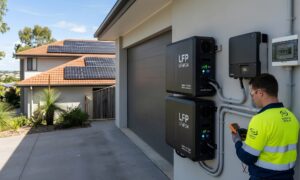





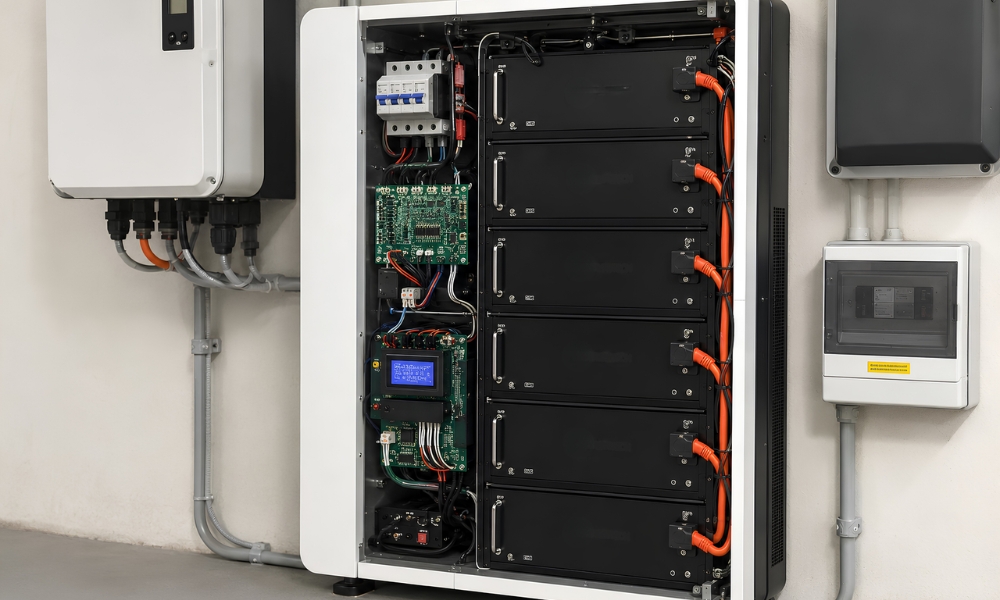
Have you ever wondered what keeps your home solar battery running safely and efficiently? The secret lies in a smart, hidden component known as a battery management system (BMS). For homeowners looking at energy storage, having a battery management system explained in Australia is the best way to understand how your investment is protected.
A reliable BMS acts as the brain of your energy storage setup. It constantly monitors every single battery cell to ensure optimal performance. Let’s dive into what a BMS is and why it is a non-negotiable feature for your home.
What is a Battery Management System (BMS)?
A battery management system is a small electronic controller built into every modern solar battery. Think of it as the battery’s brain.
It watches every cell inside the pack, every second of the day. It steps in the moment something drifts outside a safe range. Without a BMS, a lithium battery would have no protection against overcharging, overheating, or uneven cell wear. That’s why every quality home battery relies on one.
So, what is BMS in practical terms? It’s the difference between a battery that quietly manages itself for a decade and one that degrades fast or becomes a safety risk.
It helps to separate the three main parts of a home battery system. The battery cells store the energy. The inverter converts that stored energy into usable power. The battery management system sits between them, deciding how and when energy moves safely.
This distinction matters when you’re comparing quotes. Two batteries can use the same cells yet perform very differently simply because one has a smarter, more responsive BMS.




Use Energy Matters’ easy-to-use solar power and battery storage calculator to determine the size of your solar system with storage! Our solar calculator will generate performance information and potential savings.
We can send this information to 3 of our pre-vetted, trusted local installers in your area so they can provide obligation-free solar quotes and take the first step toward true energy independence!

How a Battery Management System (BMS) works in a home solar system
A BMS solar battery setup constantly measures and adjusts. It never really switches off.
Here’s what it’s doing behind the scenes, at all times:
- Voltage monitoring checks that each cell stays within safe upper and lower limits.
- Cell balancing keeps all cells at the same charge level, so one weak cell doesn’t drag down the whole pack.
- Temperature control: throttles charging when things get too hot and pauses charging in extreme cold.
- Current control limits how quickly the battery charges or discharges, protecting it during periods of high demand.
- State-of-charge tracking estimates how much usable energy is left, so your app shows an accurate percentage.
- Inverter communication: shares real-time data with your inverter, so the whole system responds as one.
These functions run quietly in the background. You’ll rarely notice the BMS at all until something goes wrong and it quietly stops a bigger problem before it starts.
Cell balancing deserves a closer look because it’s often the biggest difference between a cheap BMS and a good one. Battery packs are built from many individual cells. Over time, small differences appear between them.
A passive BMS simply slows down the strongest cells so weaker ones can catch up. An active BMS directly shifts energy between cells, which is more efficient and puts less strain on the pack overall. If you’re after long-term value, active balancing is worth asking about.
Why a Battery Management System matters for Australian homes
Australian conditions are tough on batteries. Summer heat, sudden storms, and long blackout risks all add extra strain on your system. A battery management system for a home solar setup needs to cope with:
- Days over 40°C without overheating or shutting down
- Voltage swings, especially when every house on the street exports solar at once
- Fast, seamless switching to backup power during an outage
- Virtual Power Plant (VPP) participation, where your battery talks to the grid in real time.
A strong BMS also protects your investment. Poor cell balancing or heat damage can shorten a battery’s usable life by years, costing you thousands in early replacement costs.
There’s a financial angle here too. A well-managed battery retains more of its original capacity for longer, so more of your stored solar energy goes toward your household bills rather than the grid. Over a ten-year warranty period, that difference adds up.
Battery management system functions at a glance
The table below summarises what a battery management system does and why each function matters for Australian households.
| Function | What It Does | Why It Matters in Australia |
| Voltage monitoring | Keeps each cell within safe charge limits | Prevents damage during voltage spikes from local solar exports |
| Cell balancing | Equalises charge across all cells | Extends battery life in hard daily-cycling conditions |
| Temperature control | Throttles charging in heat or cold | Protects against thermal runaway on 40°C+ days |
| Current control | Limits the charge and discharge speed | Handles heavy loads like air conditioners safely |
| State of charge tracking | Estimates the remaining usable energy | Gives an accurate reading for evening and blackout planning |
| Inverter communication | Shares live data with the inverter | Keeps VPP and backup-power switching smooth and fast |
Signs your battery’s BMS may need attention
Most homeowners never think about their BMS until something feels off. A few warning signs are worth knowing.
- Your battery’s usable capacity keeps shrinking faster than the warranty suggests it should.
- The app shows a state of charge that doesn’t match real-world performance.
- The battery pauses charging or discharging more often than usual, even in mild weather.
- You notice unusual heat around the battery enclosure during normal use.
None of these signs is common in a well-designed BMS. If you notice them, it’s worth contacting your installer or manufacturer promptly, since early attention usually protects your warranty and your safety.
BMS and Australian safety standards
You don’t need to assess battery safety yourself. Australia already has a system for that.
Reputable batteries are tested against the Clean Energy Council’s approved battery list, alongside the installation standard AS/NZS 5139. In October 2025, Standards Australia also released SA TS 5398, a new safety specification that’s gradually replacing the older Battery Safety Guide.
A compliant BMS is a required safety feature under these standards. Only batteries with one can can appear on the CEC-approved list.
This matters for your wallet too. Federal and state rebates, including the Cheaper Home Batteries Program, only apply to CEC-listed batteries. No compliant BMS means no rebate, no matter how good the battery cells themselves might be.
It’s also worth checking installation rules alongside product approval. A battery can be CEC-listed and still be installed incorrectly, so ask your installer to confirm both the battery listing and the AS/NZS 5139 installation requirements before work begins.
If you’re weighing up total system cost, it’s worth reading our guide to heat pump installation costs in Australia for a sense of how other home energy upgrades compare, and our explainer on Tier 1 solar panels for background on component quality more broadly.

How to choose a solar battery with a reliable BMS
- Confirm the battery appears on the Clean Energy Council-approved battery list.
- Ask whether the BMS uses active cell balancing rather than just passive balancing.
- Check the battery’s operating temperature range against your local climate.
- Look for clear inverter compatibility and easy-to-read app monitoring.
- Compare warranty length. A stronger BMS usually means a longer, more confident warranty.
- Ask your installer how the BMS behaves during a blackout, as backup switching speeds vary by brand.
A qualified solar installer can walk you through these points and match a battery to your home’s actual usage pattern, rather than a generic recommendation.
Frequently asked questions
What is BMS in a solar battery, in one sentence?
It’s the built-in controller that keeps every cell inside your battery safe, balanced, and performing well.
Is a battery management system explained the same way for every battery, or does BMS mean something different from brand to brand?
The core job is similar across brands, but quality varies widely, especially in cell balancing and thermal protection.
Does a BMS affect my rebate eligibility?
Yes. CEC-approved batteries must include a compliant BMS to qualify for federal and state incentives, including the Cheaper Home Batteries Program.
Can I upgrade or replace a faulty BMS?
In most cases, the BMS is built into the battery pack, so a fault usually means a warranty claim rather than a simple part swap.

Learn more with Energy Matters
Choosing the right battery involves more than comparing kilowatt-hours.
A battery management system might be hidden inside your battery, but it decides how safe, efficient, and long-lasting your solar storage really is. Before you invest, make sure your battery’s BMS is CEC-approved and built for Australian conditions.
Ready to choose a solar battery you can trust? Contact Energy Matters today for expert advice, or request your free, obligation-free quote online. Our team will help you compare CEC-approved batteries with a genuinely reliable BMS.
At Energy Matters, we help Australians understand every part of a solar battery system—from Battery Management Systems and battery chemistry to installation, rebates, and long-term performance. Explore our related guides, including:
- Solar battery storage
- Solar panel systems
- Virtual Power Plant (VPP) offers
- Solar rebates and incentives
- Hybrid solar systems
Speak with our solar experts today to compare trusted battery brands and find the right solution for your home.