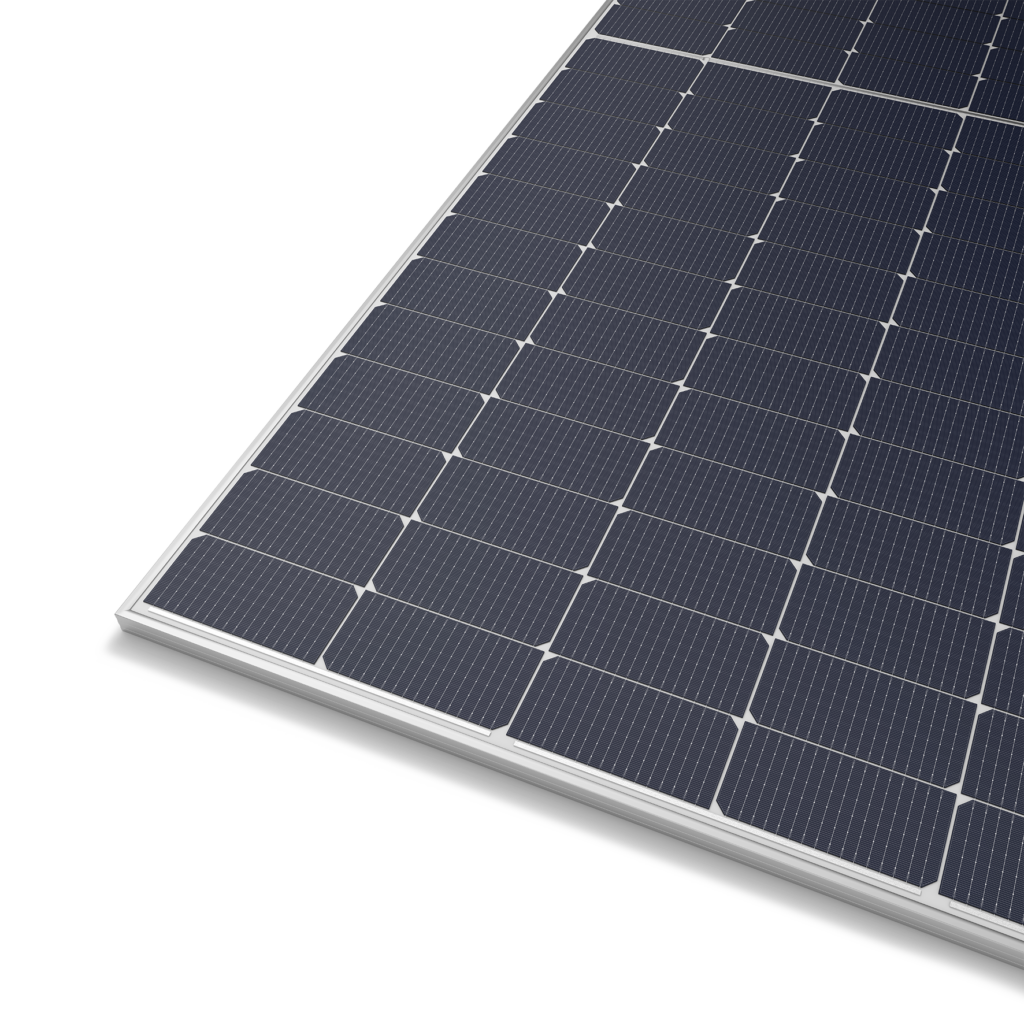
The Yingli Solar PANDA 470-495 W (N-type TOPCon Bifacial Module) stands out as a high-performance, durable, and technologically advanced solar panel for the Australian market.
For homeowners and businesses seeking to future-proof their energy solution, the PANDA series is a wise investment that aligns with Australia’s growing demand for cutting-edge renewable energy technology.
Key features of the Yingli Solar PANDA 470-495 W
N-type TOPCon, bifacial cells enabling meaningful rear-side energy on bright rooftops, light-colored gravel, or reflective ground covers.
Double-glass, 30 mm frame construction for durability, Class A fire rating, IP68 junction box, and Staubli EVO2 / Yitong / Renhe connectors.
Temperature coefficient –0.29%/°C and strong low-light response to extend morning/evening production.
Australian warranty pack: 12-year product warranty and 30-year linear power warranty. Australian Consumer Law supplement included.
Specifications of the Yingli Solar PANDA 470-495 W
Cell technology: N-type monocrystalline TOPCon
Power output: 470 W to 495 W
Module efficiency: Up to 22.8%
Bifaciality: Up to 80% bifaciality
Temperature coefficient (Pmax): Approximately -0.29%/°C, which is excellent for performance in high temperatures.
Mechanical load: Designed to withstand high static loads from the front (e.g., snow) and back (e.g., wind).
Dimensions and weight: The dimensions and weight can vary depending on the specific model within the 470-495W range, but the double-glass construction contributes to a robust build.
Yingli Solar PANDA 470-495 W warranty
Yingli Solar offers a competitive warranty package, including a 12-year product warranty and a 30-year linear power warranty, providing long-term assurance for homeowners and businesses alike.
Pros of the Yingli Solar PANDA 470-495 W
High front-side efficiency (up to 22.9%) helps reach target kWh with fewer modules—functional where roof space is tight.
Bifacial gain potential (typical bifaciality ~80%) can lift energy yield on reflective surfaces; Yingli illustrates +5% to +25% rear-side scenarios.
Tough double-glass build with an IP68 junction box and Class A fire rating suits coastal heat, dust, and UV over decades.
Better hot-weather behaviour thanks to a –0.29%/°C Pmax coefficient, reducing summer performance losses.
Extended warranties (12-yr product / 30-yr power) with an Australian supplement for the claims process and ACL rights.
Standard 1500 V rating supports longer strings and lower BOS costs on commercial systems.
Cons of the Yingli Solar PANDA 470-495 W
Heavier module (~27.3 kg) than glass-backsheets, which can slow installs and may exceed some residential handling preferences.
Rear-side yield is site-dependent; without reflective surroundings or adequate spacing, bifacial benefits shrink.
Moderate mechanical load spec (1600 Pa) is fine for most roofs, but some premium modules advertise higher snow/wind ratings for severe sites.
Double-glass requires careful racking/contact points; not every low-cost clamp system is ideal—follow the manual closely.
Applications for the Yingli Solar PANDA 470-495 W
Residential roofs seeking high energy density per square metre; the 120-cell format fits many Aussie rafters while N-type TOPCon boosts dawn/dusk production.
Commercial & industrial rooftops where 1500 V strings, bifacial gain (from bright membranes/car parks), and long warranties can improve LCOE.
Ground-mount arrays & carports using light gravel, concrete, or reflective paints to unlock rear-side yield; design for adequate row spacing and albedo.
Agrivoltaic Systems: By raising bifacial panels above crops, farmers can create a dual-purpose system that generates electricity while providing shade for plants, reducing water usage and protecting against heat stress.