





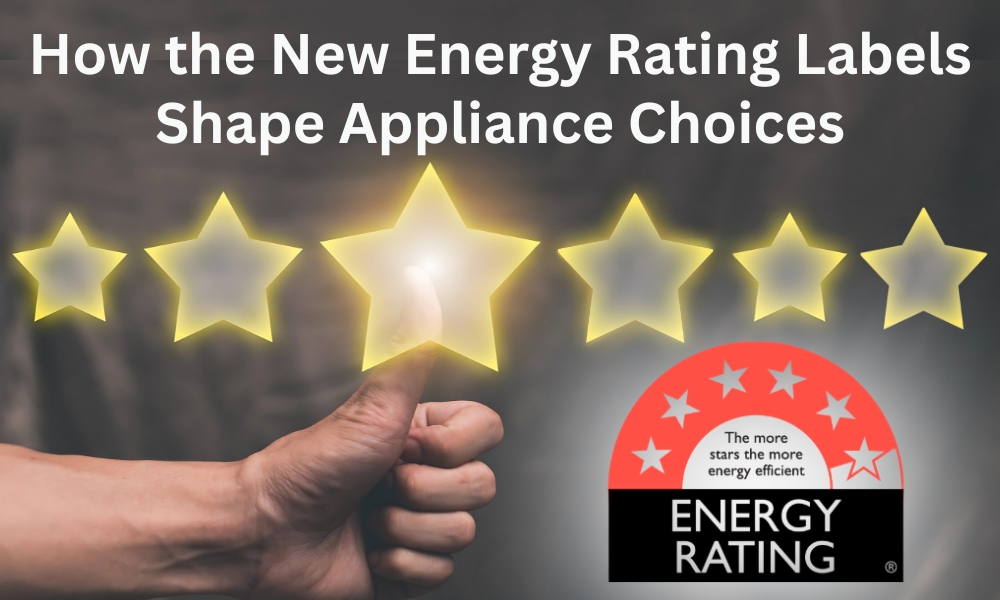
Making informed decisions about home appliances just became simpler, thanks to the rollout of new energy ratings. These updated labels are designed to offer clearer and more detailed information about the energy efficiency of appliances, enabling Australians to select products that not only meet their needs but also cut energy use and save money over time.
What are the new energy rating labels?
Australia has overhauled its Energy Rating labels under the Greenhouse and Energy Minimum Standards (GEMS) and Equipment Energy Efficiency (E3) programs. They now use:
- A star rating system from 1 to 6, or up to 10‑star super‑efficient models
- Annual energy consumption in kWh/year, allowing buyers to estimate running costs
Australia has long been a leader in energy efficiency labelling. However, as technology has advanced, the old star rating system needed an update to reflect the efficiency of modern appliances better. The new energy ratings system, rolled out gradually across different appliance categories, aims to provide a more detailed and accurate assessment of energy performance.
The most significant change is the transition from a 1- to a 6-star rating system, accompanied by a more detailed one. This new system often includes a band of stars, from 1 to 10, along with a comparative energy consumption indicator. This indicator compares the appliance’s energy consumption to that of other models of a similar size and type.
This shift provides a more nuanced understanding of home appliance efficiency. Consumers can now differentiate more easily between highly efficient models, even within the top-rated categories. The previous system often resulted in many appliances being clustered at the top end, making it challenging to identify the most efficient options.



Appliance-specific impacts
Refrigerators & freezers
- These account for about 10% of household energy bills.
- Opting for higher-star models significantly cuts electricity use.
- Select an appropriate size and verify the annual kWh rating for optimal long-term savings.
Dishwashers & washing machines
- Many appliances now require both energy and water rating labels.
- Models with higher star ratings and lower water use cost less to run and require fewer resources.
Air conditioners & pool pumps
- Air conditioners display a Zoned Energy Rating Label to reflect performance in different Australian climates.
- New standards for pool pumps now include 10‑star ratings, pushing efficiency higher.

Making the most of new energy ratings in Australia
To effectively utilise the new energy ratings in Australia when choosing appliances, consider the following:
- Identify your needs: Determine the size and features you require in an appliance before focusing on the energy rating.
- Compare star ratings: Look for models with higher star ratings within your chosen category. Remember that even a one-star difference can translate to significant energy savings over time.
- Check the comparative energy consumption: Pay close attention to the estimated annual energy consumption in kWh. This figure provides a direct indication of running costs.
- Scan the QR code: Utilise the QR code to access detailed product information and compare specifications across different models.
- Consider long-term costs: Factor in the potential energy savings over the appliance’s lifespan when making your purchasing decision. A slightly more expensive, energy-efficient model may be cheaper in the long run.
- Look for additional information: Some new energy ratings labels in Australia may provide additional information, such as water consumption for washing machines and dishwashers. Consider these factors based on your individual needs and priorities.
By taking these steps, you can leverage the new energy ratings in Australia to make informed choices that benefit both your wallet and the environment by improving the efficiency of your home appliances.
Key benefits of the new energy rating labels
- Clarity and choice: Buyers can compare energy use across brands and sizes.
- Financial savings: Lower running costs accumulate over the appliance’s lifespan.
- Environmental impact: Reducing energy consumption helps cut greenhouse gas emissions.
- Government support: Rebates and incentives are available for high‑efficiency purchases.
Sources: Energy Rating – Understand the Energy Rating Label | Department of Climate Change, Energy, the Environment and Water (DCCEEW) – Improving energy efficiency standards of more appliances for consumers

The future of home appliance efficiency in Australia
The implementation of the new energy ratings in Australia marks an important step towards promoting greater home appliance efficiency and reducing overall energy consumption. It encourages manufacturers to innovate and develop more energy-efficient products to appeal to increasingly informed consumers.
As the new energy ratings system continues to roll out across all appliance categories, consumers will have a consistent and reliable framework for comparing the energy performance of appliances. This will drive demand for more efficient appliances and contribute to a more sustainable future for Australia.
Ready to save on running costs?
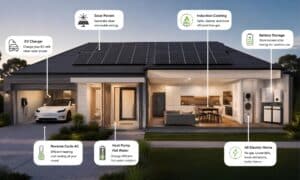
Energy Matters believes that understanding and utilising these new energy ratings in Australia is a crucial step towards a greener home. By prioritising home appliance efficiency, you can reduce your energy bills and minimise your environmental footprint. Take control of your energy consumption today! Explore our resources and make the switch to energy-efficient appliances.
Energy Matters recommends switching to energy-efficient appliances now for smarter savings and a more environmentally friendly lifestyle.