




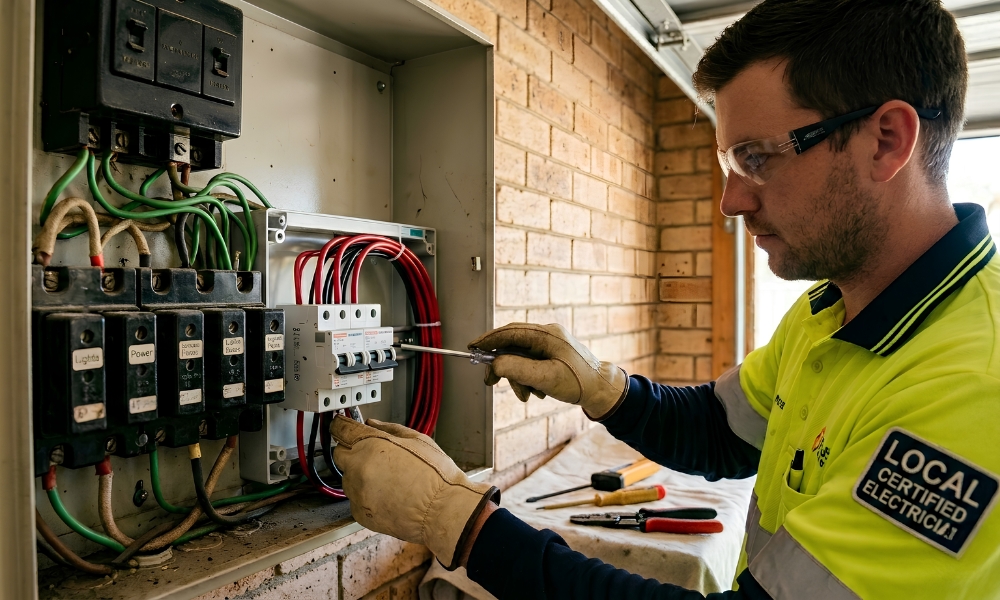
More Australians are going all-electric — adding solar panels, battery storage, EV chargers, and heat pumps to their homes every year. But there is one thing many homeowners overlook: the humble switchboard. A switchboard upgrade for electrification in Australia is often the first step to a safe, future-ready home. If your home was built before the 1990s, your old fuse box may not be up to the job. Read on to find out why.
Why the push for home electrification is growing fast
Australia is in the middle of a major energy shift. As of December 2025, the country had over 4.29 million rooftop solar installations with a combined capacity of 45.1 GW. Falling prices, state rebates, and rising gas costs are all pushing homeowners to ditch fossil fuels and go electric.
The 2025 National Construction Code now requires new homes to be electrification-ready. That means switchboards must be set up to handle EV chargers and batteries from the outset.
Powering up your EV with solar
If you’re thinking of buying an EV, adding an EV charger to your solar system is a smart way to “fuel” your car with clean, renewable energy.
But what about older homes? Millions of Australians live in houses that were built long before this shift was even imagined. And many of those homes are still running on switchboards that are 30, 40, or even 50 years old.
Signs your switchboard needs an upgrade for electrification
Not sure if your switchboard is up to scratch? If any of these common warning signs apply to you, it is worth talking to a licensed electrician. In Australia, all switchboard work must be carried out by a licensed professional — it is not a DIY job.
- Circuit breakers trip regularly, especially when running multiple appliances
- You still have ceramic fuses or a porcelain fuse box instead of modern breakers
- Your switchboard has no safety switches (RCDs)
- Lights flicker or dim when large appliances switch on
- Your home is more than 25 years old and has never had an electrical upgrade
- Your board has an asbestos backing panel — common in homes built before the 1980s
- You want to install solar, a battery, a heat pump, or an EV charger, but your sparky says the board is too old
Ready to take control of your energy bills and switch to solar? Contact Energy Matters today, and we’ll connect you with up to 3 FREE solar quotes from trusted local solar installers!
The risks of keeping an outdated switchboard
Electrical fire risk
Old fuse boxes and outdated wiring are one of the leading causes of house fires in Australia. Without modern safety switches and circuit breakers, a fault in your wiring can go undetected until it is too late.
Ceramic fuses can also be over-fused — meaning someone may have inserted a fuse with a higher rating than the wire can handle. This is a serious fire risk that many homeowners are unaware of.
Insurance problems
Many home insurers now require electrical safety certificates as part of their policy conditions. If your switchboard does not meet current Australian Standards (AS/NZS 3000:2018), you could find your claim denied after an electrical fault.
An outdated board can also make it harder to sell your home, as buyers and conveyancers increasingly ask for proof of electrical compliance.
Blocked installs
Want to install solar panels, a home battery storage, or an EV charger? In most cases, your installer or electrician will require a switchboard upgrade before they can safely complete the work. Skipping this step is not an option.
Use Energy Matters’ easy-to-use solar power and battery storage calculator to determine the size of your solar system with storage! Our solar calculator will generate performance information and potential savings.
We can send this information to 3 of our pre-vetted, trusted local installers in your area so they can provide obligation-free solar quotes and take the first step toward true energy independence!

What does a switchboard upgrade for electrification involve?
A modern switchboard upgrade is a straightforward process for a licensed electrician. Here is what typically happens:
- Safety inspection: Your electrician assesses your current board, wiring, and load requirements.
- Quote and planning: You receive a fixed-price quote. Any necessary permits are arranged.
- Disconnection: Power is safely switched off. The old board is removed.
- New board installation: A modern board is fitted with circuit breakers, RCDs, surge protection, and clearly labelled circuits.
- Testing and certification: The new system is tested, and you receive a Certificate of Compliance for your records.
Most standard residential upgrades take between four and eight hours. More complex jobs in older homes may take longer. Expect to pay between $1,000 and $2,500 for a typical residential upgrade, though costs vary by state and complexity.

Choosing the right amperage for an electrified home
The most common upgrade is from a 40–100 amp service to a 200-amp switchboard, which is now the industry standard for Australian homes. A 200-amp board gives you plenty of headroom to add solar, batteries, an EV charger, and more — without needing another upgrade down the track.
Some homes going for full electrification with three-phase power may need even more capacity. Your electrician will advise based on your specific setup.
Ready to save on running costs? Energy Matters believes that understanding and utilising these new energy ratings in Australia is a crucial step towards a greener home. By prioritising home appliance efficiency, you can reduce your energy bills and minimise your environmental footprint.
Energy Matters recommends switching to energy-efficient appliances now for smarter savings and a more environmentally friendly lifestyle.
Single phase vs. Three phase
Most Australian homes run on single-phase power. This is fine for most electrification goals. However, if you want to run a large EV charger at 22 kW or install a large solar-battery system, upgrading to three-phase power alongside your switchboard gives you much more flexibility.
Three-phase upgrades cost more — typically $2,000 to $7,000 or more, depending on your property — but they future-proof your home for the long term.
Switchboard upgrades and solar: What you need to know
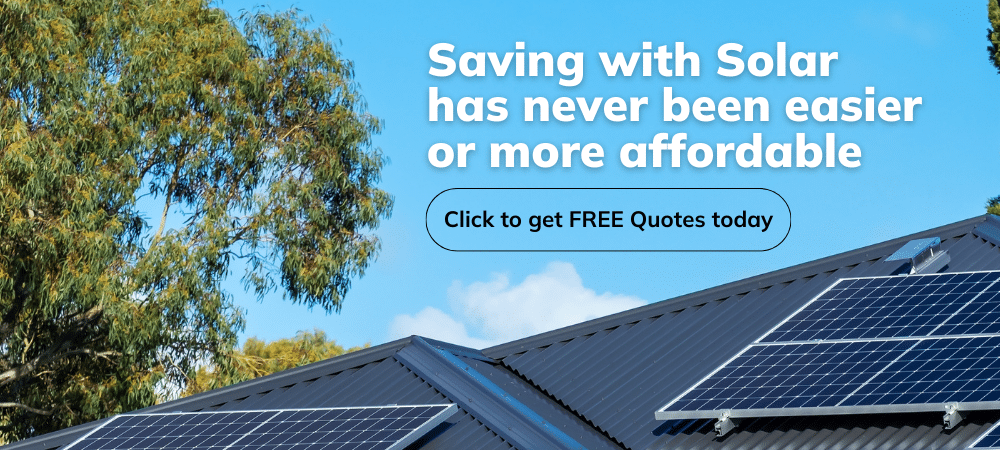
If you are planning to install solar panels, a switchboard upgrade is often part of the package. Your solar inverter needs its own dedicated circuit, and many older boards simply lack the spare capacity or the necessary safety features to support it.
A modern all-electric Australian home generally needs a 10-15 kW solar system to power all its appliances comfortably. That is a significant step up from the older 6.6 kW standard — and it requires a switchboard capable of handling the load.
The same applies to home battery storage. Battery systems connect directly to your switchboard, and an older board may not have the space or safety devices needed for a compliant installation.
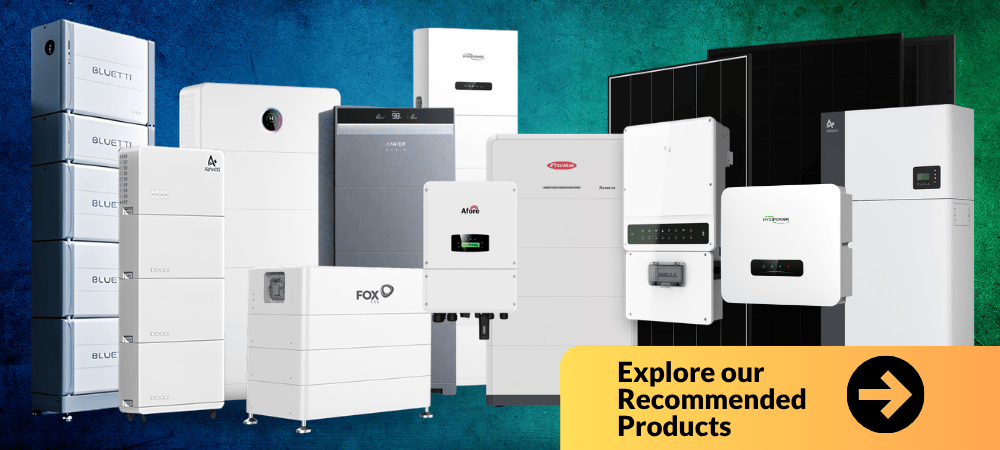
Check our page for our recommended solar products.



How to plan your switchboard upgrade alongside electrification
The smartest approach is to plan your switchboard upgrade as part of a broader electrification plan. Rather than upgrading appliances one by one and revisiting the switchboard each time, do it right the first time. Here is a simple checklist to get started:
- Get a licensed electrician to assess your current switchboard and load capacity
- List all the electrification upgrades you plan — solar, battery, EV charger, heat pump, induction cooktop
- Ask your electrician to size your new board for all current and future loads
- Check whether three-phase power would benefit your setup
- Confirm your new board meets AS/NZS 3000:2018 and any state-specific requirements
- Get a certificate of compliance after installation

Why work with Energy Matters?
Energy Matters helps Australians transition to smarter energy solutions. Our experienced partners can assess your home’s needs and recommend suitable solutions. Whether you’re considering:
- Solar panels
- Battery storage
- EV charging
- Home electrification
Sources and Resources
- Australian Standard AS/NZS 3000:2018 — Wiring Rules
- National Construction Code 2025 — Electrification Guidance (DCCEEW)
- Home Electrification in 2025 — Solar Directory
- Electrical Switchboard Upgrade Costs 2024 — EA Electrics
- Switchboard Upgrade NSW: 2026 Compliance Guide — AIM Local