




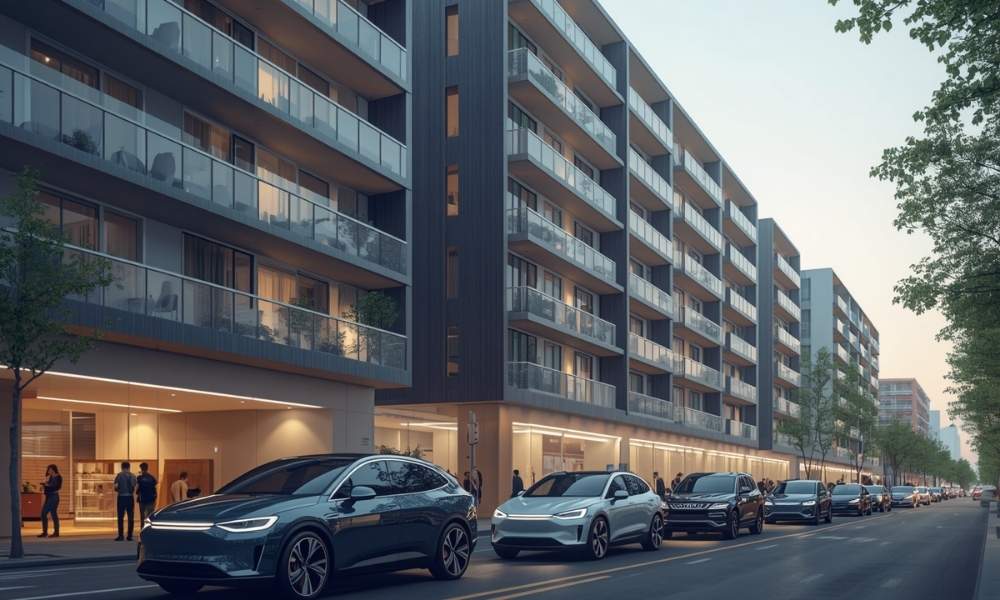
The most common reason apartment dwellers give for not considering an electric vehicle is not because of price, but rather, how they will charge it. They don’t have a driveway, no garage, and no obvious way to plug in overnight. Looking at it that way, most apartment dwellers think that EVs are for people with houses.
Sure, that might be a feat worth accepting in 2023, but things have changed now, and it’s worth revisiting.
What has actually been built
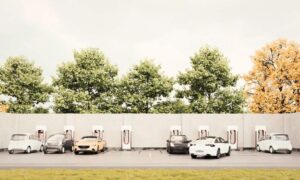
The federal budget has committed $40 million over 4 years to fast-track kerbside and regional EV chargers. As of late 2025, 4,000 public EV charging points operate across approximately 1,300 locations nationally. That number is growing, although not evenly. The councils moving faster are in the inner suburbs of Sydney and Melbourne, which are also where most apartment dwellers live.
Sydney and NSW
NSW government-supported programs have funded more than 1,000 charge ports across 38 councils. This shows that the infrastructure exists and can be used today.
Inner West Council is rolling out 136 public chargers in partnership with EVX. Mosman Council has adopted a resident-led policy framework where privately-owned kerbside charging infrastructure can be proposed and assessed on a case-by-case basis. Residents who want a charger outside their building can apply, instead of waiting for the council to install one.
Melbourne and Victoria
Merri-bek City Council is trialling elevated charging systems that let residents charge street-parked EVs without trialling cables across footpaths. They are also running a separate trial of pole-mounted public chargers. City of Port Phillip has expanded its kerbside charging program beyond the original Kerb Charge system. Residents can now apply for a range of approved charging options, including kerb-integrated systems and elevated charging devices.
What it costs to charge without a driveway
Most apartment dwellers who have ruled out an EV have never checked this number.
Public DC fast chargers on major Australian networks currently charge between 45 and 65 cents per kWh. At 50 cents per kWh, the cost per kilometre works out at roughly 10-15 cents. Petrol at current prices runs at 18-22 cents per kilometre for a typical passenger car. Public charging is more expensive than home charging, but it is still 30-50% cheaper than petrol on a per-kilometre basis.
AC destination chargers at shopping centres, workplaces, and hotel car parks are a separate category. These charge at slower speeds but are often free or carry a flat session fee of $2 to $5. For someone who works in a CBD office building with chargers in the car park, or who shops regularly at a centre with free charging, the economics change further.
The NSW government puts the annual fuel saving from switching to an EV at up to $3,000. That figure accounts for public charging costs, not just home charging.
How to find out what is available where you live
PlugShare maps public chargers by suburb and is updated in real time by every driver who logs charger availability and condition. The NRMA’s EV charging map covers NSW specifically and is searchable by location. Search your council’s website for “kerbside EV charging” or “EV charging program” to find local programs that may not appear on national maps yet.
If your council does not have a program, check whether a neighbouring council does. Most programs cover multiple postcodes, and the councils that have launched programs tend to be clustered in the same areas.
A UNSW study of more than 27,000 charging sessions across Sydney’s eastern suburbs proposed a planning benchmark of one kerbside charging space for every 70 locally parked EVs. As EV numbers grow in a suburb, the case for more chargers in that suburb strengthens. Checking local EV uptake data, which some councils publish, gives a rough sense of when infrastructure is likely to follow.
Check out Energy Matters’ EV charging station map here.





What has not changed
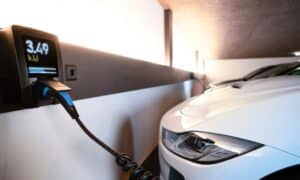
For some apartment dwellers, public kerbside charging works well as a primary charging method. However, it’s a different story for others. If you commute by car and rely on a charger being available when you return home every night, the current network in most suburbs does not yet provide the reliability of a private home charger. If you work from home, drive infrequently, or have reliable access to workplace or destination charging, the gap between home charging and public charging is smaller.
Victoria’s strata approval process for in-building chargers remains more difficult than NSW. No right-to-charge legislation is in place in Victoria. Melbourne apartment owners who want a charger in their building’s car park are still navigating body corporate approval processes that have not meaningfully changed.
The infrastructure is improving faster in some postcodes than others. The honest answer to “can I own an EV in my apartment” in mid 2026 is: it depends on which suburb you live in and how you drive.
The check worth doing before deciding
The assumption that apartment living rules out EV ownership was accurate in 2023. In mid-2026, checking what is available in your postcode takes 5 minutes and may produce a different answer than the one you have been carrying.
Open PlugShare, enter your suburb, and see how many chargers are within 500 meters of where you park. Check your council’s website for any kerbside charging program. Run the numbers on public charging costs against your current petrol spend.
For apartment dwellers who end up with home charging access through strata approval, a building upgrade, or a future move, solar and a home charger together bring the cost of EV ownership down to near zero for daily charging. That calculation starts with the panels, not the car.