




Standby power creep is one of the hidden reasons Australian households pay more for electricity. Many appliances continue using electricity even when they appear to be switched off. Understanding standby power creep can help households cut waste, lower bills, and improve energy efficiency.
Although each appliance uses only a small amount of electricity, the combined effect can add up over the year. This hidden energy use is often called “vampire power” or phantom load.
If you want to take control of your energy costs, it is time to look at your solar options. You can easily request solar quotes from Energy Matters to discover how solar power can offset these hidden household expenses. Understanding how this hidden energy drain affects your monthly utility bills can help you make smarter choices. Let us look closely at which items are the biggest culprits in your home.
What is standby power creep?
The term standby power creep refers to the passive electricity consumption by devices when turned off. It is also frequently referred to as vampire power or phantom load. Many modern electronic devices never truly switch off unless you pull the plug. Instead, they wait in a standby state so they can turn back on instantly.
This continuous draw of electricity might seem very small for a single device. However, when you multiply it across dozens of items, the total numbers become quite large. Research shows that standby power creep accounts for roughly 3% to 10% of an average Australian household’s electricity usage. This means hundreds of dollars are wasted every year on appliances that no one actually uses.



The worst offenders: Appliances that drive standby power creep
Entertainment and home theatre
Home theatre setups are among the biggest contributors to standby power creep in Australian homes.
- Smart TVs: 1–5W on standby, more when waiting for voice commands
- Set-top boxes and TV decoders: 10–17W on standby — often more than many devices use while active
- Gaming consoles (PS5, Xbox): 1–2W in rest mode, but older consoles can reach 15W
- Surround sound systems: 2–5W on standby
- Streaming sticks (Chromecast, Apple TV, Fire Stick): 1–3W
Set-top boxes are particularly problematic because they’re almost never fully turned off — they need to stay active to receive program guide updates.
Kitchen appliances
The kitchen is a hotspot for standby power creep, largely because so many appliances have digital displays or smart features.
- Microwave ovens: 2–3W just to display the clock
- Dishwashers with digital controls: 1–2W
- Coffee machines with timers or displays: 1–5W
- Smart fridges: 1–4W for connected features, on top of normal running costs
- Electric ovens with digital clocks: 1–2W
Home office and technology
With more Australians working from home, the home office has become a significant source of phantom load.
- Desktop computers in sleep mode: 3–10W
- Computer monitors on standby: 1–3W
- Printers: 1–5W on standby, up to 10W if they have Wi-Fi scanning features active
- Routers and modems: 6–10W (these run 24/7, so they’re not really standby — but worth noting)
- Laptop chargers left plugged in with no laptop: 0.1–0.5W each
Laundry and bathroom
- Washing machines with digital displays: 1–2W
- Dryers with smart features: 1–3W
- Electric toothbrush charging stands: 0.5–2W
Other common sources
- Phone and tablet chargers plugged in without devices: 0.1–0.5W each
- Smart home hubs and voice assistants: 2–4W
- Garage door openers: 2–7W
- Electric blankets (on standby between uses): 1–2W
- Old-style plasma TVs (if still in use): 10–30W on standby
How to measure standby power creep in your home
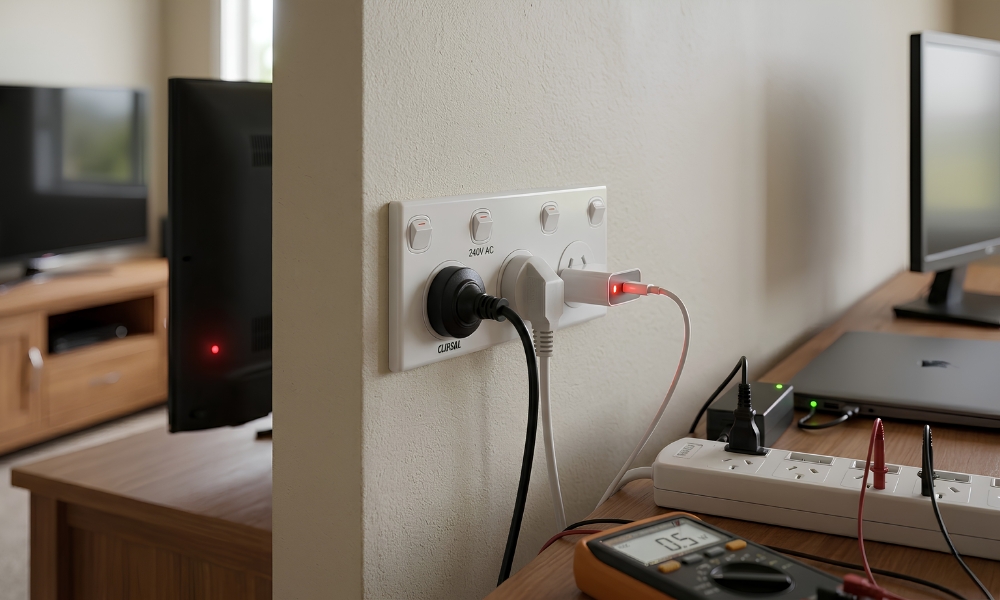
You don’t have to guess. A plug-in energy monitor (also called a power meter or watt meter) lets you measure exactly how much any device draws at any time.
To use one: plug the monitor into the wall, then plug your appliance into the monitor. The device will display watts in real time. Switch the appliance to standby or turn it off at its own power button and watch what the display reads.
Apps like the Australian Government’s Energy Rating app also let you compare the running costs of different appliance models before you buy, helping you avoid high-standby products in the first place.
Practical ways to reduce standby power creep
Use powerboards with individual switches
A switchable powerboard lets you cut power to an entire entertainment unit or desk setup with one flick. This is the most practical solution for most households. Look for powerboards with energy-monitoring features that show you what’s being drawn in real time.
Switch off at the wall
This sounds obvious, but most people don’t do it consistently. Get into the habit of turning off at the wall before bed or leaving the house — especially for your TV setup, gaming console, and home office equipment. The savings are immediate.
Unplug chargers when not in use
Phone, laptop, and tablet chargers all draw a small amount of power when plugged in with no device attached. Individually, they’re minor, but a household with four or five chargers always plugged in adds up over time.
Choose energy-efficient appliances
When replacing appliances, check the energy rating label. Higher star ratings indicate lower running costs, and better-designed products tend to have lower standby draw too. The Australian Energy Star ratings website lists standby power figures for registered products.
Ready to save on running costs? Energy Matters believes that understanding and utilising these new energy ratings in Australia is a crucial step towards a greener home. By prioritising home appliance efficiency, you can reduce your energy bills and minimise your environmental footprint.
Energy Matters recommends switching to energy-efficient appliances now for smarter savings and a more environmentally friendly lifestyle.
Use smart plugs and home automation
Smart plugs can be set to cut power on a schedule or controlled remotely via an app. This is particularly useful for devices you regularly forget to turn off, like gaming consoles or desktop computers. Some can also track usage over time, giving you clear data on where your power is going.
Consider a solar battery system
If you already have solar panels — or are considering getting them — a home battery storage system means standby power creep draws from your stored solar energy rather than the grid. The cost impact essentially disappears. You’re using power you generated yourself.
How standby power creep connects to your solar strategy
If you’re already generating solar power or planning to, reducing standby load makes your system work more efficiently. Every watt your home draws unnecessarily from the grid is a watt your solar system didn’t offset. Lower baseline consumption means more excess solar you can export or store.
Homes with solar panels and batteries are best positioned to manage standby power creep — the energy is free and clean. But reducing the load still matters, because it extends battery life and keeps your home running longer on stored power during overcast days or at night.
Use Energy Matters’ easy-to-use solar power and battery storage calculator to determine the size of your solar system with storage! Our solar calculator will generate performance information and potential savings.
We can send this information to 3 of our pre-vetted, trusted local installers in your area so they can provide obligation-free solar quotes and take the first step toward true energy independence!

State-specific notes for Australian homeowners
Electricity rates and consumption patterns vary across Australia, which affects how much standby power creep costs you specifically.
- Queensland and NSW: Average rates around 28–33c/kWh mean standby savings are meaningful but not enormous per device. The aggregate across a full home matters most.
- Victoria: Higher average rates (around 30–35c/kWh) make reducing standby loads more financially worthwhile.
- South Australia: With some of the highest electricity prices in the country (35–45c/kWh in many tariffs), SA households have the most to gain from tackling standby power creep.
- Western Australia: Synergy tariffs vary, but households on time-of-use plans can further reduce costs by ensuring standby devices don’t draw power during peak periods.
Regardless of your state, the strategy is the same: reduce baseline consumption first, then layer solar or battery storage on top to maximise the benefit.

Take charge of your energy future
Eliminating standby power creep is an excellent first step toward reducing your electricity bills. However, if you want to make a massive impact on your power costs, transitioning to renewable energy is the ultimate solution. Installing a solar panel system allows you to generate your own clean electricity, effectively neutralising the cost of any minor phantom loads in your home.
Are you ready to see how much money you can save with a customised solar solution? Do not wait for your next expensive electricity statement to arrive. Receive up to 3 free solar quotes from trusted local installers through Energy Matters today and take absolute control of your household energy budget.
Sources and References:
- Australian Energy Regulator – Standing offer prices and household usage
- Energy.gov.au – Standby power fact sheet
- Sustainability Victoria – Home energy efficiency guide
- Australian Energy Foundation – Reducing phantom loads