






Tesla billionaire Elon Musk has weighed into the electric car debate saying Australia can reach 50 per cent electric car sales well before Labor’s 2030 deadline.
The founder of Tesla EV company responded to a tweet by Australian Atlassian CEO Michael Cannnon-Brookes. He asked Musk if Labor’s EV plan could succeed.
“No question,” Musk tweeted back. The last time the two billionaires debated renewables, South Australia’s ‘mega battery’ was born. With the global EV revolution underway, Musk and Cannon-Brookes could help kick-start it here.
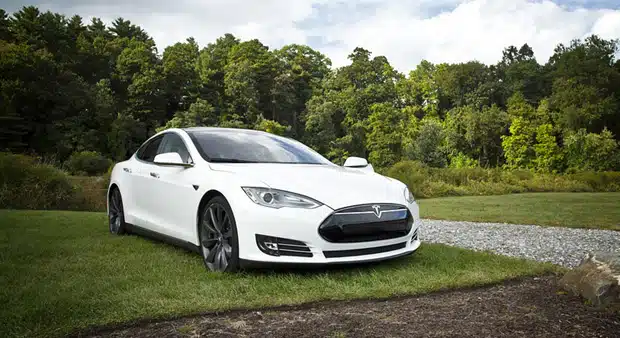
Norway already close to 60% electric car sales.
According to Prime Minister Scott Morrison, Labor’s pledge to make 50 per cent of all new car sales be electric car sales by 2030 will destroy tradie livelihoods and “end the weekend” for four-wheel drivers.
In response, the head of software giant Atlassian gave his heated verdict on the Coalition’s dissing of electric cars.
This is “batshit insane”, Cannon-Brookes tweeted this week. He then asked Musk for his opinion.
“No question Australia could do this in far fewer than 11 years,” Musk responded. He pointed to the Norway model to support his case.
According to the Norwegian Road Federation (NRF), close to 60 per cent of all new cars sold in Norway last month were fully electric car sales.
Australia gets EV booby prize for ‘world worst”
Australia has a long way to go before it embraces an electric future. We trail the global field when it comes to EV uptake and infrastructure.
A 2019 study by GoCompare shows Australia is the worst-performing country in the world on two counts.
Australia has the lowest number of charging points per 100km – that’s 0.05 charging points compared to the Netherlands topping the list with 23.25.
We also have the lowest proportion of charging points against petrol stations – 7 per cent against countries like Finland with 31 per cent. This reflects the traditional Aussie preference – echoed by Scott Morrison this week – for fuel-hungry utes and SUVs which increase emissions and drive climate change.
Solar power perfect EV companion: Slash emissions, bills
Solar panels in Australia have a major role to play in the transport revolution. That’s because electric cars can be charged at home when the sun shines. They can also be charged overnight using stored electricity from solar battery storage.
The CEO of Energy Networks Australia told Radio National Breakfast this week that electric cars could also help reduce Australian electricity prices across the board.
Andrew Dillon says the grid often operates at only 50 per cent capacity. EV owners can then charge their cars during off-peak hours to balance the grid and cut power costs.
Solar power can therefore help this scenario. Electricity produced during off-peak daylight hours can be used or stored for evening or overnight charging.