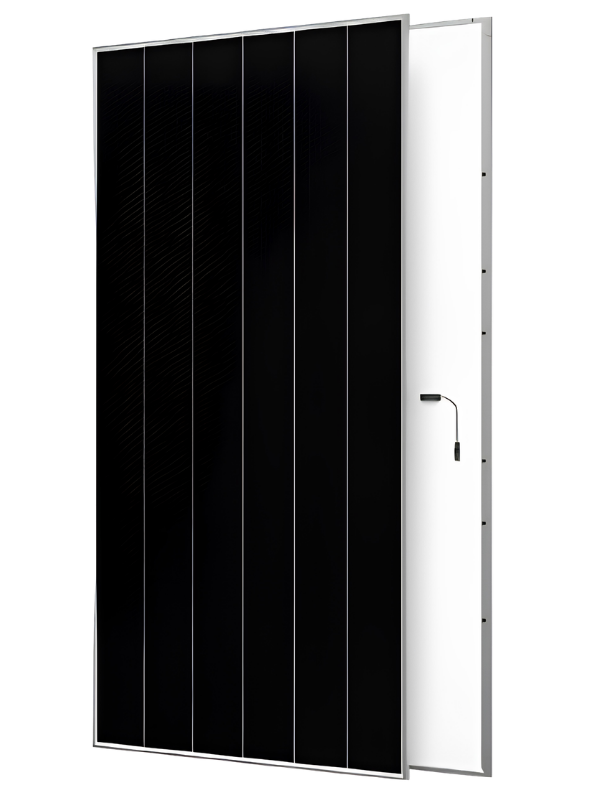
The AIKO COMET 3N72 Mono-Glass 660W-690W is a high-output solar module designed for large commercial and industrial projects. Its combination of up to 25.5% efficiency, N-type ABC technology, a -0.26%/°C power temperature coefficient and a 30-year performance warranty makes it a compelling option for suitable Australian sites.
For businesses with substantial, relatively open roof space, the biggest attraction is the ability to install significant system capacity with fewer high-wattage modules. However, the large physical format, module weight and electrical characteristics mean professional system design remains essential.
Did you know Energy Matters is Australia’s largest renewable news, blog and educational resource? Subscribe to Energy Matters’ weekly newsletter and keep updated even with incentives, rebates and recommended solar product offers.
The AIKO COMET 3N72 Mono-Glass 660W-690W is a third-generation Comet Series module that targets high output and low balance-of-system (BOS) costs. Its main strengths come from the N-type ABC cell design and a large 144-cell layout.
Here are the features that matter most for Australian projects:
High power range: Outputs run from 660W to 690W in 5W steps, so you need fewer panels to reach a target system size.
N-type ABC cells: All contacts sit on the back of the cell, removing front-side busbars and giving the panel a sleek, uniform look.
Efficiency up to 25.5%: AIKO lists a top module efficiency of 25.5%, which is high for a panel this size.
Partial shading optimisation: The design aims to limit power loss when part of the panel is shaded.
Better temperature coefficient: A Pmax coefficient of -0.26%/°C helps the panel hold output in Australian summer heat.
Micro-crack resistance: AIKO lists micro-crack resistance as a core feature, supporting long-term reliability.
Specifications of the AIKO COMET 3N72 Mono-Glass
The datasheet shows a big, robust module designed for 1500V systems. The table below summarises the key specifications of the AIKO COMET 3N72 Mono-Glass 660W-690W.
Specification
AIKO COMET 3N72 Mono-Glass 660W-690W
Power output
660W to 690W (AIKO-A660 to AIKO-A690-MDE72Mw)
Cell type
N-type ABC (all-back contact)
Number of cells
144 (6 x 24)
Module efficiency
Up to 25.5%
Dimensions
2382 x 1134 x 30 mm
Weight
28.2 kg (±3%)
Glass and frame
3.2 mm tempered glass, anodised aluminium frame
Junction box
IP68, 3 bypass diodes
Temperature coefficient (Pmax)
-0.26%/°C
Operating temperature
-40°C to +70°C
Maximum system voltage
1500V DC
Maximum static load
5400 Pa (front), 2400 Pa (back)
Hail test
25 mm hail at 23 m/s
Fire rating
IEC Class C
Degradation
≤1% in year one, ≤0.35% per year after
AIKO COMET 3N72 Mono-Glass Warranty
AIKO backs the AIKO COMET 3N72 Mono-Glass 660W-690W with a two-part warranty covering build quality and long-term output. Both parts are among the more generous on the market.
15-year product warranty: Covers defects in materials and workmanship and can be extended to 25 years.
30-year linear performance warranty: Guarantees output over time, with no more than 1% degradation in the first year and 0.35% per year afterwards.
Warranty terms can vary by region and installer, so ask for the Australian warranty document before you sign. Check how claims are handled locally and who services them.
Pros of the AIKO COMET 3N72 Mono-Glass
The AIKO COMET 3N72 660W-690W has several characteristics that make it particularly interesting for commercial and industrial solar applications.
Very high power output: With up to 690W per module, the COMET 3N72 can deliver substantial nameplate capacity with fewer modules than lower-wattage alternatives.
High module efficiency: Up to 25.5% efficiency is a strong specification for projects with limited available roof area.
N-type ABC technology: The back-contact architecture is designed to improve utilisation of the module’s active front surface and support high efficiency.
Strong temperature coefficient: The -0.26%/°C Pmax coefficient is well suited to hot Australian conditions.
Long performance warranty: The 30-year linear performance warranty provides a long-term framework for evaluating expected module output.
Potentially lower module count and BOS requirements: Higher wattage can reduce the number of panels needed to reach a particular system capacity, potentially helping with some balance-of-system considerations. AIKO itself positions the COMET series around higher returns and lower BOS costs.
Cons of the AIKO COMET 3N72 Mono-Glass
Despite its impressive specifications, the AIKO COMET 3N72 is not automatically the best option for every Australian solar project.
Large physical size: At 2382 × 1134mm, the module requires careful planning around roof geometry, mounting rails and installer handling.
Relatively high module weight: At approximately 28.2kg, it is heavier than many residential-format solar panels. This can matter on difficult roofs or projects with structural limitations.
Electrical compatibility requires careful design: The module’s high current and voltage characteristics mean installers should check inverter, string, and MPPT compatibility during system design.
Less suited to many small residential rooftops: A 660W-690W commercial-format module can be excessive for small homes where roof layout, access, and handling matter more than maximum watts per panel.
Applications for the AIKO COMET 3N72 Mono-Glass
The AIKO COMET 3N72 Mono-Glass is primarily positioned for commercial and industrial solar applications. AIKO categorises the COMET range under its C&I scenario products, emphasising higher returns within the same payback period. Potential applications include:
Commercial rooftops: Warehouses, factories, retail buildings and office facilities often have substantial roof areas that can accommodate large-format modules. The COMET 3N72’s high wattage can help build large-capacity systems with fewer modules than a lower-wattage design.
Industrial solar installations: Large industrial sites can have significant electricity consumption during daylight hours. High-efficiency modules such as the COMET 3N72 can help make productive use of available roof space.
Agricultural and rural projects: Large sheds and agricultural buildings may provide expansive roof areas suitable for high-output modules. Site-specific structural assessment remains essential before installation.
Commercial solar car parks: The high power output can also make the module worth considering for suitably engineered solar carport projects, although the physical dimensions must match the mounting structure.
Utility-scale and larger ground-mounted systems: The module’s 1,500V system-voltage rating, high power and large format can be relevant to larger PV arrays. However, final suitability depends on tracker or fixed-tilt design, inverter selection, environmental conditions and project economics.
For a typical Australian homeowner, the answer may not be. A 660W-690W commercial-format module is physically large, and residential solar projects may benefit more from smaller modules that provide greater flexibility around roof obstructions, multiple orientations and limited roof sections.
However, for a business with a large, relatively unobstructed roof, the calculation becomes more interesting. The AIKO COMET 3N72 Mono-Glass 660W-690W combines high power, high efficiency, N-type ABC technology, and long-term performance specifications, making it a strong candidate for C&I solar.
Consider the COMET 3N72 if:
Your project has a large commercial or industrial roof.
Roof area is limited, and you want high watts per module.
Your installer can accommodate large-format modules.
The selected inverter supports the module’s electrical characteristics.
You want a module with a 30-year performance warranty.
Long-term energy yield matters more than the upfront panel price.
Consider another module if:
Your roof is small or heavily obstructed.
You need a compact panel format for multiple roof orientations.
Your installer or mounting system is not suited to large-format modules.
Your project has structural constraints that make heavier panels unsuitable.
A lower-wattage panel can lead to a better overall system design or financial return.
The key point is that you shouldn’t evaluate panel wattage in isolation. A solar installer should assess roof area, structural capacity, shading, string design, inverter compatibility, installation costs, expected energy consumption and the project’s overall financial return.