

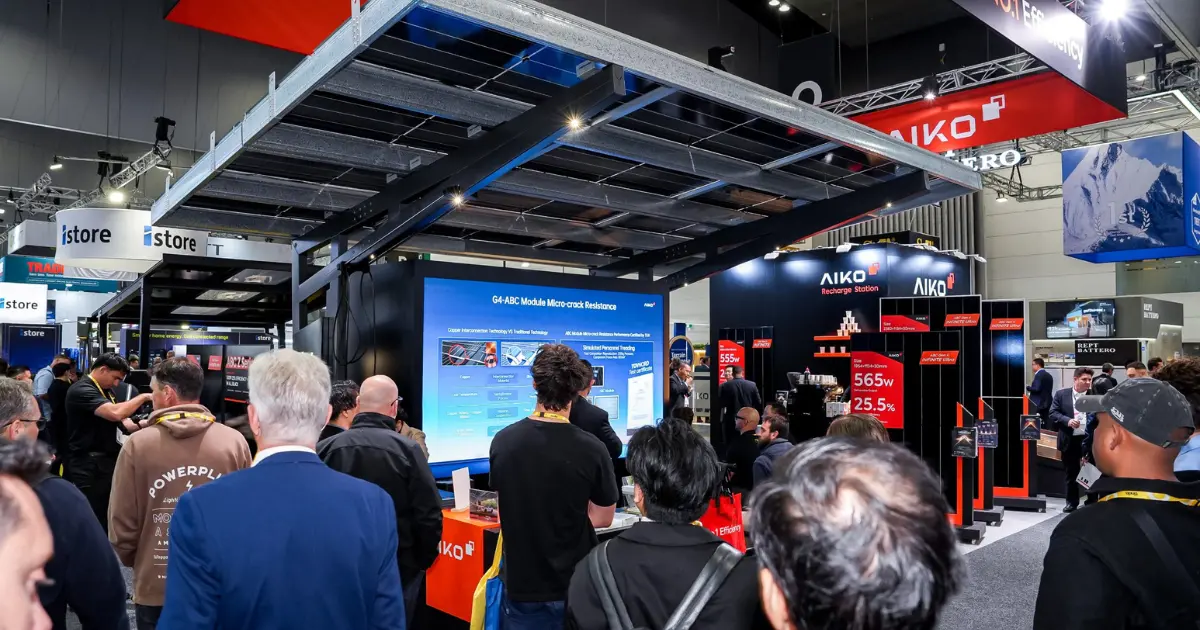
More solar power from the same roof space, without bigger or heavier panels. That’s the promise behind AIKO’s new Gen 4 range, unveiled at All Energy Australia in Melbourne. The launch also delivered a significant commercial milestone. AIKO signed 1 GW of Gen 4 agreements with Australian distribution partners, matching the capacity it has already delivered locally.
Together, the announcements point to AIKO’s next Australian chapter: higher-performing panels, broader commercial applications, and an expanding local support team.
For households, the headline is 500 W all-black panels that combine a clean appearance with high efficiency. For businesses, larger formats and a solar carport partnership offer more ways to put available space to work.
TL;DR
- AIKO unveiled its Gen 4 back-contact solar range at All Energy Australia.
- The range delivers up to 20 W more per panel than corresponding previous-generation models, without increasing size or weight.
- Residential options include 500 W all-black panels and a 510 W white-backsheet panel.
- AIKO signed 1 GW of Gen 4 agreements with Australian distribution partners.
- General Australian availability will follow Clean Energy Council listing. The premium Z Series is expected locally in 2027.
- The company is expanding local support and showcased a solar carport with Australian business Canyon Solar.
More power without taking over more roof
Solar panels have become more powerful, but higher wattage sometimes comes with a larger panel. That can complicate installation, particularly on smaller or awkwardly shaped roofs.
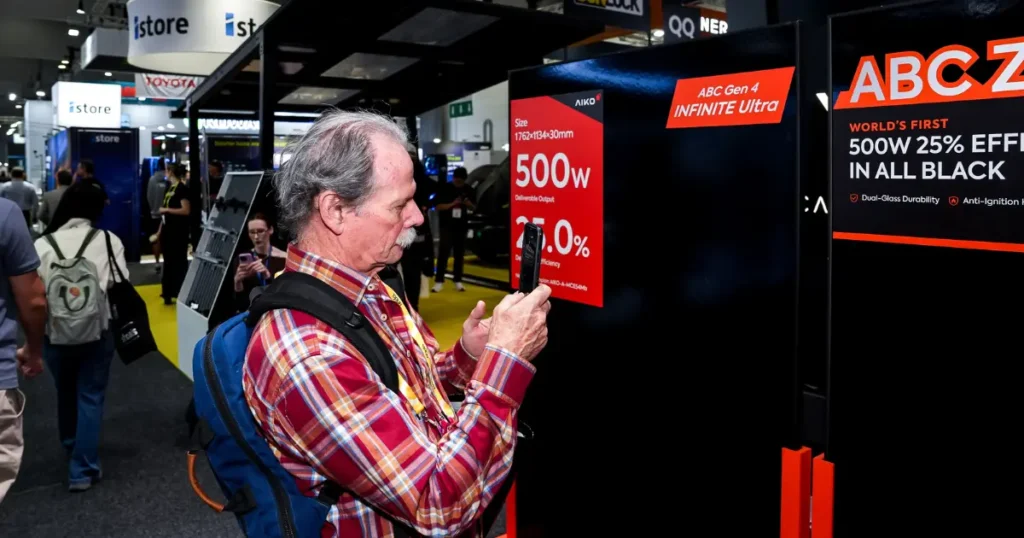
AIKO’s Gen 4 range takes a different approach. Built around its ABC 4.0 INFINITE Ultra cell technology, the panels increase output while retaining their corresponding predecessors’ dimensions and weight.
ABC stands for all-back-contact. The design moves electrical contacts to the rear of the cells, leaving more of the front available to absorb sunlight. For Gen 4, AIKO has also reduced gaps between cells and introduced hidden rear connections. These changes reduce inactive space across the panel.
The result is up to 20 W more output per panel compared with the equivalent previous-generation format.
For homeowners, that could mean fitting more solar capacity within the same usable roof area. Actual generation still depends on orientation, shading, system design, and local conditions.
A better-looking option for Australian homes
Not every homeowner wants solar panels to become their roof’s main architectural feature. AIKO’s new all-black options aim to blend in while delivering 500 W and 25% panel efficiency.
Both use a standard 1,762 × 1,134 mm format, without visible front gridlines.
Two designs sit within this offering:
| Panel | Construction | Rated output | Announced warranty |
|---|---|---|---|
| Neostar Champion | Mono-glass, all-black | 500 W | 30-year product and power warranty |
| Z Series | Dual-glass, all-black | 500 W | 40-year product and power warranty |
The premium Z Series adds a uniform black finish front and back, alongside a stronger frame.
AIKO expects the Z Series to reach Australia in 2027. Warranty coverage remains subject to the applicable Australian terms. For homeowners prioritising maximum output within this residential format, the white-backsheet version reaches 510 W and 25.5% efficiency.
Those figures describe panel efficiency, rather than the efficiency of the complete solar system.
Why higher-efficiency panels matter for electrification
As households add batteries, electric vehicles, and heat pumps, their electricity needs can change considerably. Roof space, however, stays much the same.
Higher-efficiency panels can help households install more generating capacity where space limits the number of panels they can fit. That extra capacity may support daytime appliances, battery charging, or an EV parked at home during sunny hours.
It does not automatically guarantee better value. Panel pricing, inverter capacity, household consumption, and installation quality still shape the outcome.
The useful question is whether higher-efficiency panels improve the proposed system’s performance and economics on your particular roof.
Larger panels for commercial projects
AIKO’s Gen 4 update extends beyond residential rooftops. The range includes larger formats for commercial buildings, carports, ground-mounted systems, and solar farms.
Announced specifications include:
| Panel format | Maximum rated output | Further detail |
|---|---|---|
| 60-cell | 560 W | Measures 1,954 × 1,134 mm |
| 66-cell bifacial | 670 W | Up to 85% bifaciality |
| 72-cell | 700 W | Up to 25.9% panel efficiency |
Bifacial panels generate electricity from both sides, using reflected light reaching the rear.
An 85% bifaciality figure does not mean an automatic 85% increase in generation. Rear-side gains depend on mounting, clearance, ground reflectivity, and other site conditions.
For businesses with limited roof space, higher panel efficiency can increase the capacity accommodated within a suitable area. However, structural capacity, electrical infrastructure, and network connection requirements remain essential parts of commercial system design.
Get FREE quotes for an AIKO solar system
Turning car parks into generating space
Some businesses run out of suitable roof space before meeting their solar ambitions. AIKO showcased another option at All Energy Australia: a solar carport developed with Canyon Solar.
Based in Mittagong, NSW, Canyon Solar designs prefabricated, modular solar canopies. The displayed solution incorporated AIKO panels.
Solar carports give businesses another surface for electricity generation while providing covered parking. They may suit facilities with constrained rooftops, substantial parking areas, or plans to introduce EV charging.
The opportunity depends on each site’s layout, approvals, construction costs, and electricity demand.
Installation practicality remains part of the picture
Higher wattage matters, but so does getting panels safely and efficiently onto a roof. AIKO says its 54-cell Gen 4 panels remain below 2 m² and 25 kg.
The range also offers multiple mounting configurations, subject to the installation manual and model-specific approvals. Depending on the design, higher-output panels may reduce the number required to reach a target system capacity.
That can reduce associated mounting components, although the final layout and installation requirements determine any savings.
AIKO also highlights improvements in shading performance, temperature behaviour, and durability. Specific safety features and test results vary between models.
A gigawatt of agreements signals Australian demand
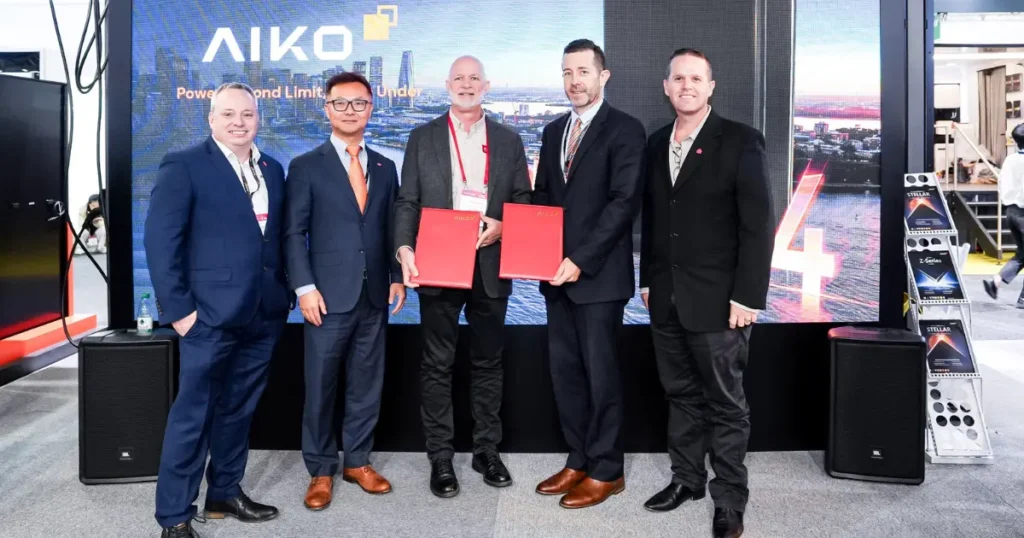
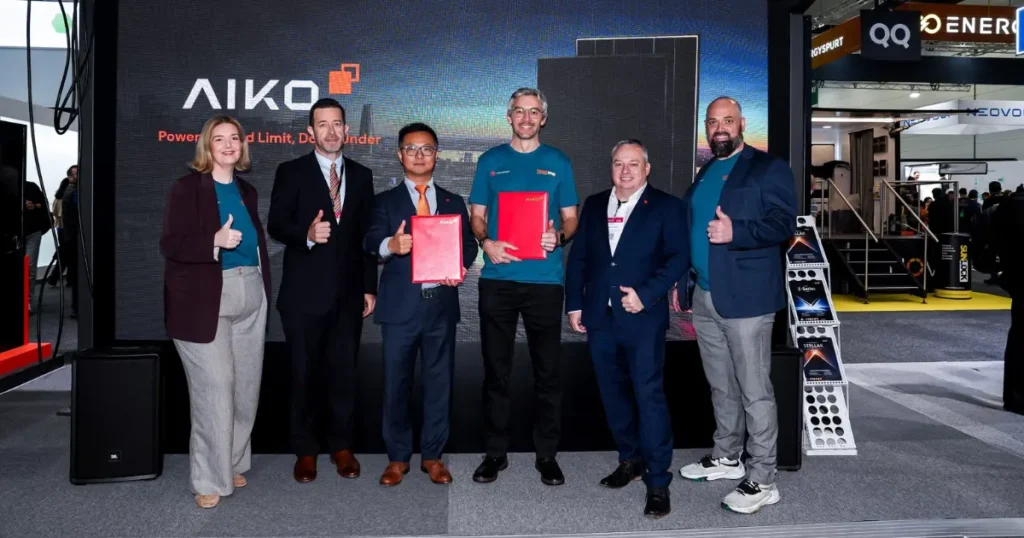
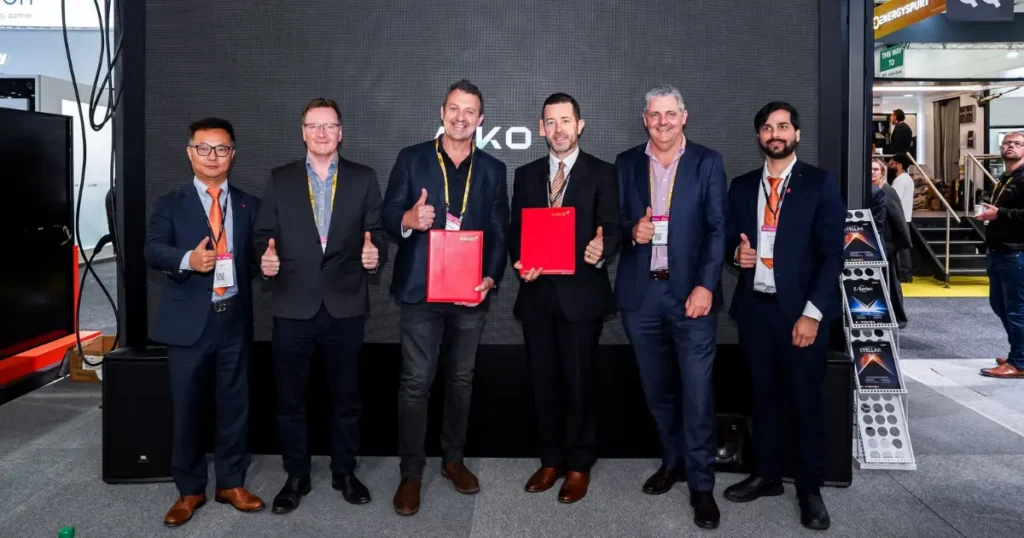
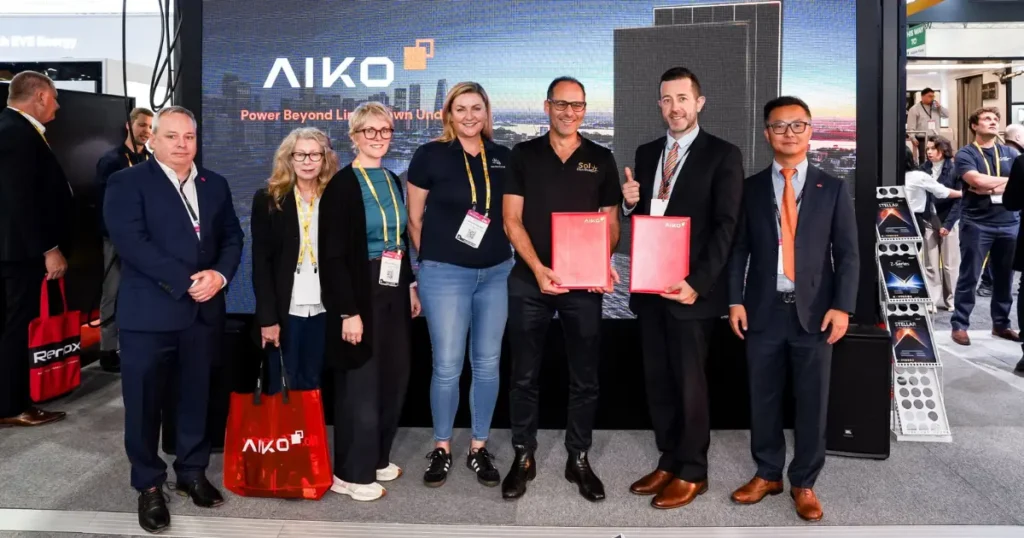
Alongside the product launch, AIKO announced 1 GW of Gen 4 agreements with Australian distribution partners.
These agreements concern the upcoming range. They are separate from the 1 GW of panels AIKO says it has already delivered in Australia. The company entered the Australian market in 2024 and has since expanded its distribution and installer relationships.
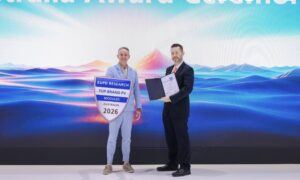
AIKO also received the top panel award in the SolarQuotes Installers’ Choice Awards in both 2025 and 2026.
Its next phase includes expanding the local team, supporting commercial and utility-scale projects, and growing its New Zealand presence.
“When we arrived in Australia, back contact was new to most installers. Today, it is the panel so many of them choose for their own roofs,” said Alex Hang, Head of APAC at AIKO.
“With Gen 4 and a growing local team, we are ready to deliver, and ready to scale.”
When will AIKO Gen 4 panels be available?
AIKO says Australian availability will follow Clean Energy Council listing. The premium Z Series is expected to arrive in 2027. The launch announcements do not provide confirmed Australian retail pricing or availability dates for every model.
If you’re comparing quotes, ask your installer to identify the exact panel model, listing status, warranty, and expected installation timeframe. Compare complete systems, too. Panel efficiency is valuable, but good design and installation turn that potential into useful electricity.
Looking at solar for your home or business? Get free solar quotes through Energy Matters and compare your options.