



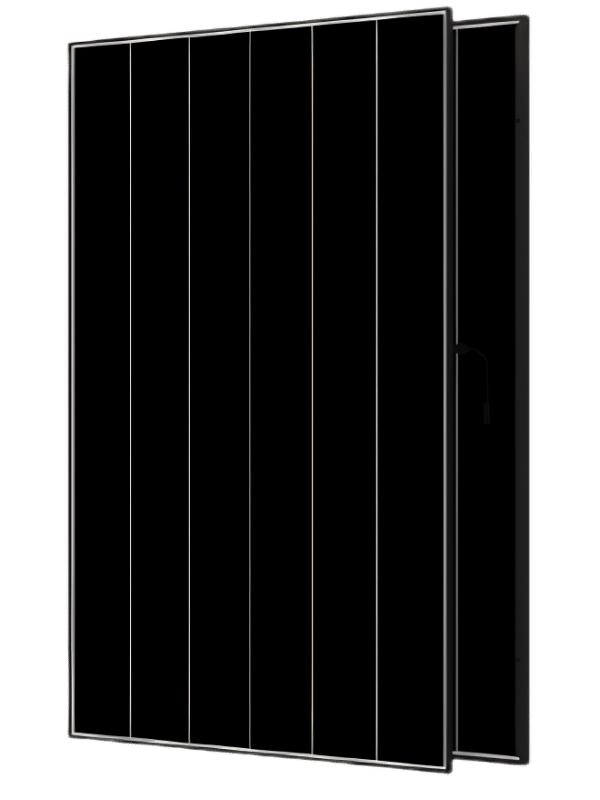
Dual-Glass Module | 530W-550W
Choosing the right solar module for Australian rooftops requires balancing maximum power density, long-term structural durability, and resistance to harsh weather conditions.
This review of the AIKO NEOSTAR 3P+60 Dual-Glass 530W-550W in Australia examines how AIKO’s flagship N-Type All Back Contact (ABC) technology performs in demanding home and commercial installations. Combining high power output with dual-glass encapsulation, this module targets property owners who want higher yield per square metre without compromising on physical protection.




Did you know Energy Matters is Australia’s largest renewable news, blog and educational resource? Subscribe to Energy Matters’ weekly newsletter and keep updated even with incentives, rebates and recommended solar product offers.
Key features of the AIKO NEOSTAR 3P+60 Dual-Glass
The AIKO NEOSTAR 3P+60 Dual-Glass is a 120-cell module built on N-type solar panel technology, with ratings from 530W to 550W. Instead of printing metal contacts on the front, it moves them all to the back of the cell. Here is what that means.
- All-back-contact (ABC) cells: With no metal busbars across the front, more of each cell captures sunlight. Efficiency ranges from 23.9% to 24.8%, and the panel has a clean, uniform look.
- Dual-glass construction: Coated semi-tempered glass (2.0 mm on each side) shields the cells from moisture and mechanical stress.
- Bifacial gain potential: AIKO lists outputs with 5% and 10% rear-side gain. At 10%, the 550W model reaches 605W when light reflects onto the back.
- Gentler heat losses: A power temperature coefficient of -0.26% per °C means output drops less on hot days than on many older designs.
- Shading and micro-crack resilience: AIKO highlights partial shading optimisation and micro-crack resistance, although real-world shade gains depend on your roof.
- Built for Australian conditions: AIKO states that Neostar modules are Clean Energy Council (CEC) listed and have passed cyclone testing for cyclonic regions.
Specifications of the AIKO NEOSTAR 3P+60 Dual-Glass
The AIKO NEOSTAR 3P+60 Dual-Glass highlights impressive electrical and physical engineering. Delivering high power outputs between 530W and 550W within a compact footprint, it minimises overall balance-of-system (BOS) mounting hardware and cabling requirements.
Specification | Value / Detail |
Model Code | AIKO-A-MCE60Dw |
Nominal Power Output | 530W – 550W |
Cell Type & Format | N-Type ABC, 60-cell (120 half-cell format) |
Maximum Module Efficiency | Up to 24.8% |
Dimensions | 1954 × 1134 × 30 mm |
Weight | Approx. 27.1 kg |
Glass Type | Dual Tempered Glass (2.0 mm + 2.0 mm) |
Frame | Anodised Aluminium Alloy |
Temperature Coefficient (Pmax) | -0.26%/°C |
Junction Box / Protection | IP68 Rated |
Maximum System Voltage | 1500V DC |
AIKO NEOSTAR 3P+60 Dual-Glass Warranty
AIKO’s Australian datasheet lists a 25-year product warranty and a 30-year linear performance warranty. The product warranty covers defects in materials and workmanship, while the performance warranty guarantees a minimum power output over time.
- Degradation: 1% or less in year one, then 0.35% or less per year from year two to year 30.
- Year-30 guarantee: At least 88.85% of rated power, measured on front-side STC power only.
- Optional extra: AIKO notes that Munich Re coverage is available on request.
- Check your paperwork: AIKO’s global datasheet lists a 15-year product warranty (extendable to 25 years), so confirm which terms apply to your supply.
A warranty is only as strong as the company behind it. Ask your installer who handles claims locally, and remember that your Australian Consumer Law rights apply on top of any manufacturer’s warranty.
Pros of the AIKO NEOSTAR 3P+60 Dual-Glass
The AIKO NEOSTAR 3P+60 Dual-Glass combines several specifications that can appeal to Australian residential and commercial solar projects. Its strengths are especially relevant for installations where roof space, long-term performance, and environmental durability matter.
- High power output
With models from 530W to 550W, the series provides substantial output per panel. This can help achieve a larger total system capacity without requiring as many modules.
- High module efficiency
The 550W version reaches 24.8% efficiency, while the 530W model is rated at 23.9%. Higher-efficiency modules can help when roof space is limited.
- Dual-glass construction
The dual-glass design uses glass on both sides of the module rather than a conventional glass-and-backsheet arrangement. This construction can provide a robust module architecture and supports the panel’s bifacial configuration.
- Bifacial generation potential
The rear side can contribute additional electricity where the installation provides suitable reflected light. AIKO’s datasheet provides illustrative bifacial gains under specified rear-side irradiance conditions, but actual gains will vary considerably with roof material, mounting height, ground or roof reflectivity and system design.
- Strong temperature coefficient
The -0.26%/°C Pmax temperature coefficient matters in Australia because photovoltaic modules generally lose output as cell temperature rises. A lower-magnitude temperature coefficient can help limit temperature-related power losses in hot conditions.
- Long performance warranty
The Australian listing provides a 30-year performance warranty alongside a 25-year product warranty. This gives buyers a defined long-term performance framework when evaluating the panel as part of a multi-decade solar investment.
Cons of the AIKO NEOSTAR 3P+60 Dual-Glass
Despite its strong specifications, the AIKO NEOSTAR 3P+60 Dual-Glass is not automatically the right panel for every Australian property. High-output modules can introduce practical considerations involving weight, system design and installation.
- Relatively heavy module
At approximately 27.1kg ±3%, each panel requires careful handling. Consider roof access, installer logistics, and mounting-system requirements before installation.
- Large physical footprint
The 1954 × 1134mm dimensions are broadly substantial for a modern rooftop module. Roof obstructions, setbacks, valleys, skylights and usable roof geometry can determine whether these panels can be laid out efficiently.
- Bifacial gains are installation-dependent
Bifacial capability does not guarantee a specific percentage increase in household energy production. A conventional pitched roof with dark roofing and little rear-side light may provide substantially less opportunity for rear-side generation than a suitably elevated, reflective installation.
- Requires careful electrical design
The panel’s current and voltage characteristics must match the selected inverter and string configuration. Installers need to check the inverter’s maximum input current, voltage window, string voltage and Australian installation requirements rather than selecting the panel based solely on its wattage.


Applications for the AIKO NEOSTAR 3P+60 Dual-Glass
The AIKO NEOSTAR 3P+60 Dual-Glass suits projects where power density, durability and long-term output matter more than the lowest upfront price. Common uses include the following.
- Space-limited homes: Rooftops where every square metre counts.
- Larger homes and commercial roofs: Systems that benefit from fewer, higher-wattage panels.
- Carports, pergolas and ground mounts: Dual-glass bifacial panels can use light reflected from below.
- Hot, coastal or cyclone-prone regions: Areas where durability and heat tolerance matter.
- Solar and battery systems: Higher daytime generation helps charge a home battery system. Tier 1 solar panels are another useful point of comparison.
For Australian installations, suitability also depends on local building conditions, the roof’s structural capacity, the electrical design and applicable installation requirements. Homeowners should ask their installer to confirm that the selected modules and mounting system suit the property.
Read more about:

Is the AIKO NEOSTAR 3P+60 Dual-Glass right for you?
The AIKO NEOSTAR 3P+60 Dual-Glass may be worth considering if your priority is high module output combined with high efficiency, N-type ABC technology, dual-glass construction and long-term performance coverage. Its 530W-550W range is particularly relevant for homeowners seeking substantial solar capacity without using many individual modules.
Assess the complete system, not the panel in isolation. A high-quality panel still needs to be paired with a correctly sized inverter, suitable mounting system, appropriate string design and professional installation.
Consider the AIKO NEOSTAR 3P+60 Dual-Glass if you:
- Have limited or moderately constrained usable roof space.
- Want a high-output module.
- Prefer N-type ABC cell technology.
- Want a dual-glass, bifacial panel.
- Live in a hot Australian climate and value temperature performance.
- Are planning a larger residential or commercial solar installation.
- Want a long product and performance warranty.
- Are considering solar combined with battery storage.
You may need to look at other options if you:
- Have a roof where the approximately 27kg module weight creates installation constraints.
- Cannot accommodate the panel’s 1954 × 1134mm dimensions efficiently.
- Have a roof layout where bifacial generation provides little practical benefit.
- Are primarily selecting equipment on the lowest upfront price rather than long-term specifications.
Before choosing the AIKO NEOSTAR 3P+60 Dual-Glass 530W-550W, ask an installer to model your roof layout, shading, expected generation, inverter compatibility and annual energy consumption. The Energy Matters Solar Consumer Guide is also useful for understanding the broader considerations involved in buying a solar system.