EV Charger
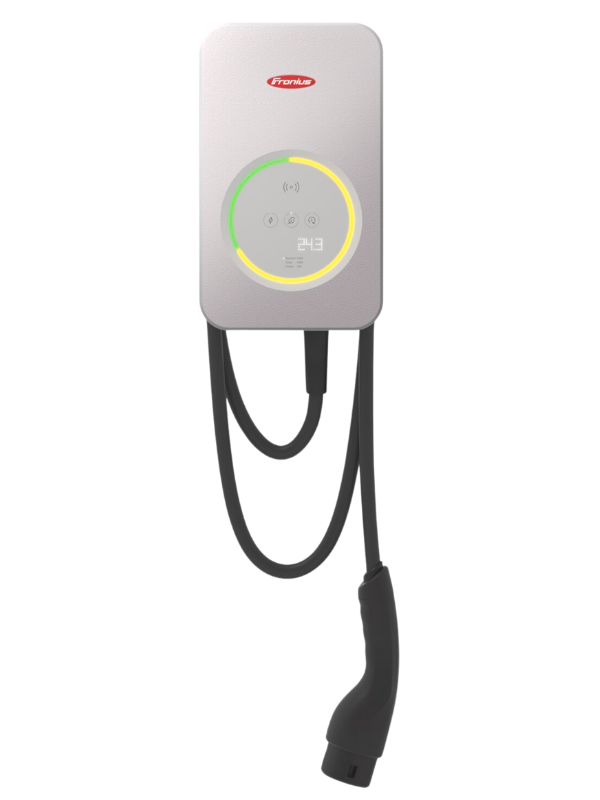
Electric vehicle ownership continues to grow across Australia, making smart home charging more important than ever. This Fronius Wattpilot Flex (EV Charger) Review in Australia explores how Fronius has designed a charging solution that works seamlessly with solar energy, smart energy management and modern homes.
If you’re looking for a premium EV charger that can maximise self-generated solar power while reducing charging costs, the Fronius Wattpilot Flex deserves serious consideration.
Did you know Energy Matters is Australia’s largest renewable news, blog and educational resource? Subscribe to Energy Matters’ weekly newsletter and keep updated even with incentives, rebates and recommended solar product offers.
Key features of the Fronius Wattpilot Flex
The Fronius Wattpilot Flex is designed around one core idea: making the most of solar power you’re already generating, rather than exporting it to the grid for a few cents per kilowatt-hour. Paired with a compatible Fronius inverter and Smart Meter, the charger continuously reads how much surplus solar is available and adjusts charging power to match it in real time. Here’s what stands out:
- Solar surplus charging: Automatically diverts spare rooftop solar into your EV instead of sending it back to the grid, using outputs as small as 1.38 kW.
- Automatic phase switching: Shifts seamlessly between single-phase and three-phase charging (up to 11 kW or 22 kW, depending on the model) to squeeze out every available watt of sunshine.
- Intelligent charging modes: Eco Mode prioritises solar and off-peak tariffs, while Next Trip Mode guarantees a set range is ready by a chosen time.
- Wi-Fi and Ethernet connectivity: The Flex adds a wired network option alongside Wi-Fi, improving reliability in garages where wireless signal is patchy.
- RFID user profiles: Supports up to ten separate driver profiles, with itemised charging history for each one — handy for shared households or small fleets.
- App and portal control: Managed through the Fronius Solar.Wattpilot app, with solar generation and charging data visible in the Fronius Solar.web monitoring platform.
Specifications of the Fronius Wattpilot Flex
The following table summarises the technical specifications of the Fronius Wattpilot Flex Home series designed for Australian electrical standards.
Specification Parameter | Wattpilot Flex Home 11 kW | Wattpilot Flex Home 22 kW |
Max Charging Capacity | 11 kW (3-Phase) / 3.7 kW (1-Phase) | 22 kW (3-Phase) / 7.4 kW (1-Phase) |
Current Adjustability | 6 A to 16 A (variable) | 6 A to 32 A (variable) |
Solar Surplus Charging Range | 1.38 kW to 11 kW | 1.38 kW to 22 kW |
Phase Switching | Automatic 1-phase to 3-phase | Automatic 1-phase to 3-phase |
Cable / Connector | Tethered 6m Type 2 cable | Tethered 6m Type 2 cable |
Enclosure Rating | IP66 (Indoor / Outdoor) | IP66 (Indoor / Outdoor) |
Connectivity | Wi-Fi (WLAN) & Ethernet (LAN) | Wi-Fi (WLAN) & Ethernet (LAN) |
Open Protocols | OCPP 1.6-J compliant | OCPP 1.6-J compliant |
Access Security | Integrated RFID reader & touch controls | Integrated RFID reader & touch controls |
Dimensions & Weight | 325 x 195 x 105 mm | 4.1 kg | 325 x 195 x 105 mm | 5.4 kg |
Fronius Wattpilot Flex warranty
When investing in an EV charging setup in Australia, understanding equipment longevity and manufacturer support terms is essential for long-term peace of mind.
Standard warranty term: The Fronius Wattpilot Flex comes with a standard 3-year manufacturer warranty for units installed in Australia. Homeowners can manage, verify, and register their device warranty online through the Fronius Solar.web Monitoring Platform alongside their existing solar inverter.
Pros of the Fronius Wattpilot Flex
The Fronius Wattpilot Flex stands out because it combines premium hardware with intelligent software. Rather than acting as a basic charger, it becomes part of a complete home energy ecosystem.
- Seamless ecosystem integration: Native local-network communication with Fronius inverters eliminates the need for complex secondary CT wiring.
- Ultra-low solar threshold: Phase-switching capability allows solar charging to begin at just 1.38 kW of surplus generation.
- Robust IP66 weather protection: High-grade enclosure ensures excellent protection against Australian dust, rain, and outdoor UV exposure.
- Unified app experience: Complete system control via the Solar.wattpilot app and integrated reporting within Solar.web.
- Future-Proof OCPP Compliance: Supports OCPP 1.6 standards for grid demand-response programs and flexible software integration.
- Integrated security controls: Standard RFID card functionality prevents unauthorised charger usage in carports or shared driveways.
Cons of the Fronius Wattpilot Flex
Although the Fronius Wattpilot Flex offers many advantages, it may not be the ideal solution for every household. Buyers should consider both their existing energy system and future plans.
- Shorter standard warranty: Offers a 3-year warranty, which is shorter than the 5- to 10-year terms standard on Fronius solar inverters.
- Higher standalone price point: Commands a premium price tag if you do not already own a Fronius solar inverter.
Applications for the Fronius Wattpilot Flex
The versatility of the Wattpilot Flex makes it an exceptional choice across various Australian residential and commercial scenarios. Key applications include:
- Rooftop solar integration: Ideal for existing Fronius inverter owners seeking to soak up excess daytime solar generation rather than exporting power to the grid at low feed-in tariffs.
- Variable electricity tariff optimisation: Perfect for households on Time-of-Use (ToU) or dynamic spot-price tariffs. The app automatically schedules charging during off-peak windows or negative pricing events.
- Multi-driver residential garages: Equipped with RFID access control, allowing multiple household members or tenants to track individual power consumption separately.
- Commercial & workplace fleet charging: OCPP 1.6 compliance allows business operators to manage access control, monitor usage data, and integrate wallboxes into centralised billing management software.
Is the Fronius Wattpilot Flex right for you?
Deciding whether to invest in the Wattpilot Flex comes down to your current solar setup and long-term energy goals. As highlighted throughout this Fronius Wattpilot Flex EV charger review in Australia, it represents the gold standard for homeowners already utilising a Fronius inverter.
- For Existing Fronius Owners: If you own a Fronius GEN24 or Primo/Symo inverter, this charger is an absolute top-tier recommendation. The seamless synchronisation, real-time solar tracking, and unified app dashboard offer an unmatched user experience.
- For Non-Fronius Owners: While it remains a high-quality, OCPP-compliant wallbox for any solar system, non-Fronius users may find the premium price harder to justify compared to alternative universal chargers.
Learn more about Fronius Inverters, Hybrid Inverters, Storage Solutions, and EV Chargers.