


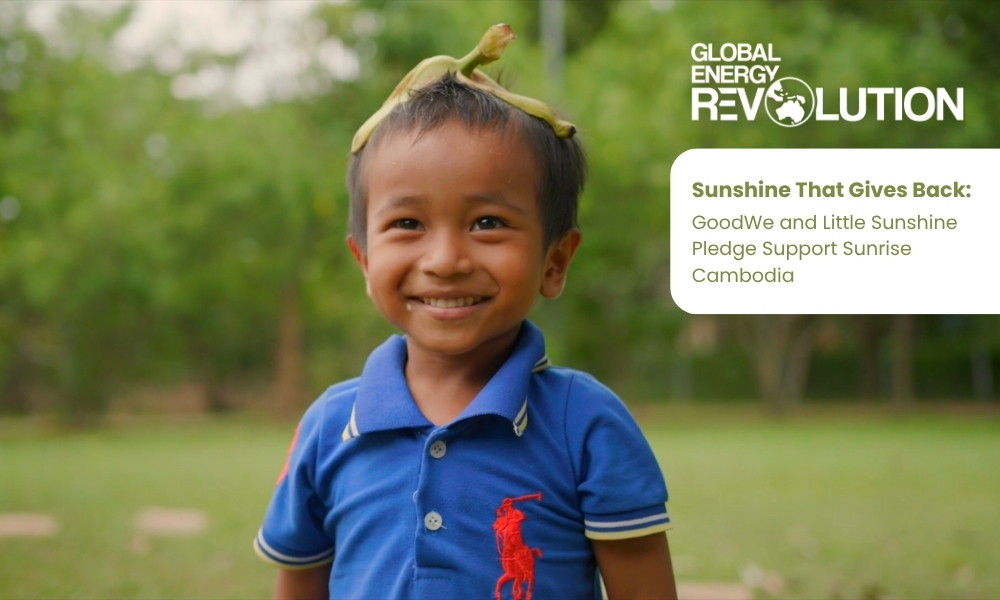
At Sunrise Cambodia, the classrooms are busy, the children are curious, and the opportunities stretch well beyond the school gates. Behind it all, a dedicated team works to give vulnerable children the care, education, and confidence to build their futures.
Keeping that work going takes resources. With electricity costing more than US$1,500 a month, energy represented a significant ongoing expense.
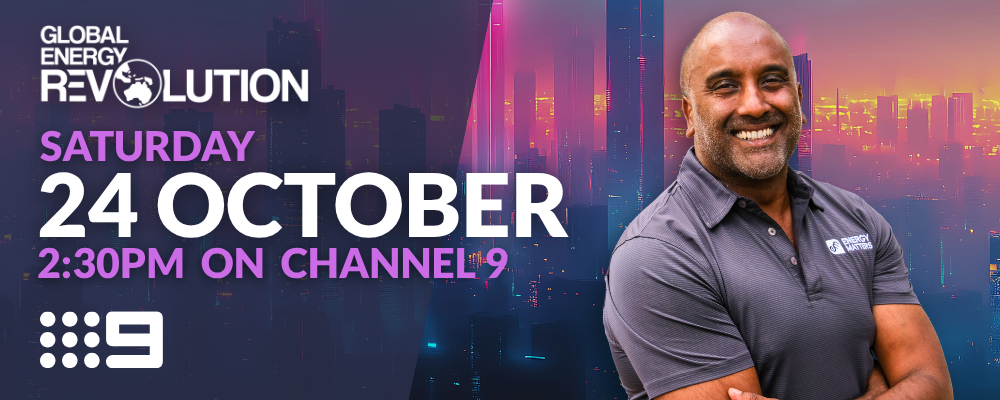
In Global Energy Revolution Season 2, host and Energy Matters CEO Roshan visits Sunrise to discover how renewable energy can help. Across two segments, he meets the people supporting the children and follows a solar installation from ambitious plans to working reality.
The project brings together Little Sunshine Pledge, GoodWe, Clenergy, and Yingli Solar for a shared purpose: reducing electricity costs so more funding can support the centre and its students.
It is a story about what happens when good technology meets people determined to do good.
TL;DR: Solar power with a lasting purpose
- Sunrise Cambodia provides residential care and education, supporting vulnerable children and families near Phnom Penh.
- Little Sunshine Pledge coordinated the solar installation, with GoodWe supplying the inverter, Clenergy providing mounting equipment, and Yingli Solar supplying panels.
- The system is expected to reduce daytime electricity costs, leaving more funding available for children’s care, education, and everyday needs.
Welcome to Sunrise Cambodia
Around 45 minutes outside Phnom Penh, Sunrise Cambodia offers children something every young person deserves: somewhere to feel safe, supported, and hopeful.
Australian Geraldine Cox founded Sunrise in 1993, initially helping displaced children near the Cambodian and Thai border. Over three decades, that commitment has grown into residential care, educational programmes, and support reaching surrounding communities.
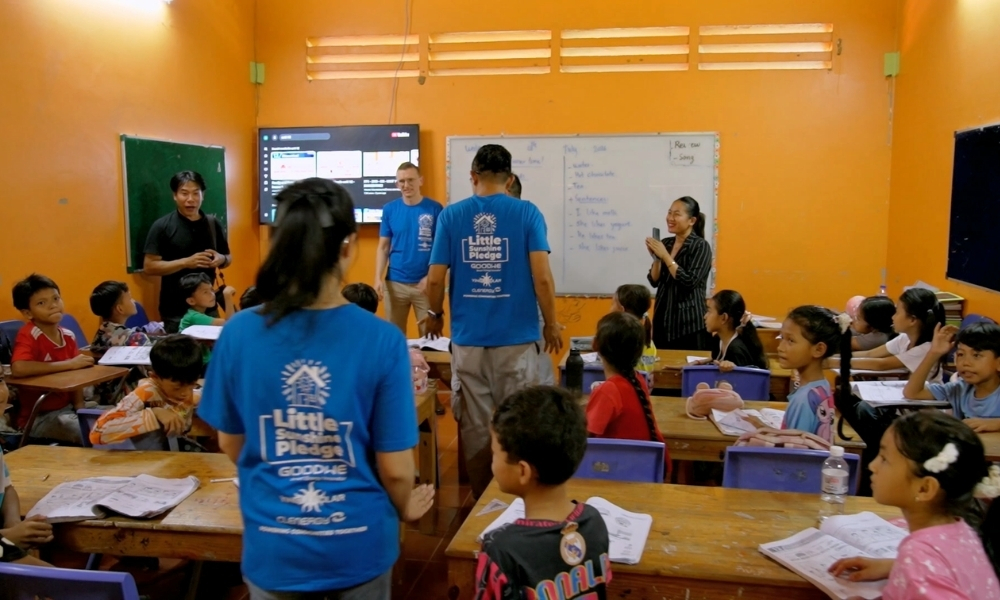
Roshan’s visit captures the life within that work. Children attend lessons, take part in activities, and welcome visitors into a place filled with energy.
The challenges of bringing children to Sunrise can be profound. Yet the episode also reveals joy, creativity, and a strong sense of belonging.
For Tracey Shelton, Sunrise Cambodia’s Country Director, that balance matters. Children need protection and practical support, alongside opportunities to learn, play, and discover who they can become.
A safe home and a connection to community
During filming, Tracey explains that 61 children were living at Sunrise because they had nowhere safe to live within the community. The centre provides care while working towards safe community placements where possible.
That distinction is important. Sunrise’s work responds to children’s circumstances, including whether a safe family or community home is available. Its reach also extends well beyond the children living onsite.
Tracey describes around 300 children coming from surrounding communities to attend free lessons during the filming period. For those families, Sunrise offers educational opportunities that might otherwise remain out of reach.
The result is a centre connecting residential care, learning, and community support.
An education that opens doors
Education at Sunrise encompasses academic learning, practical skills, creativity, and confidence. Children can develop computer skills, learn languages, explore art, and participate in traditional Khmer music and dance. Sporting activities offer further opportunities to build skills, friendships, and self-belief.
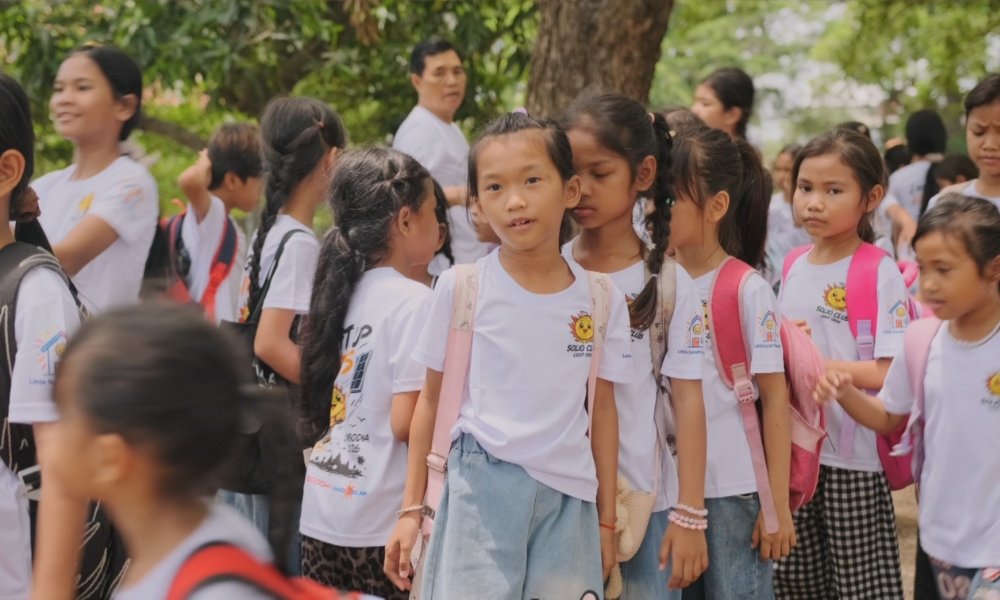
Sunrise also supports young adults through university and vocational training, helping them prepare for life beyond school. These programmes recognise that a child’s future develops through many different experiences.
A computer lesson might spark an interest in technology. Learning English might create future employment opportunities. Music and dance can strengthen cultural connections.
Having space to explore those possibilities matters.
So does having teachers, equipment, and facilities that make participation possible. Electricity supports much of that environment, from computers and classroom screens to lighting and fans.
At Sunrise, keeping those essentials affordable directly supports the work happening around them.
Get FREE Quotes for a GoodWe System
Tracey Shelton’s lifelong connection with Sunrise
For Tracey, Sunrise Cambodia is far more than a workplace.
During the episode, she recalls watching Geraldine Cox interviewed on television while she was still at school. Geraldine’s dedication left a lasting impression. After finishing high school, Tracey contacted her and asked whether she could volunteer.
That first visit became a connection spanning decades.
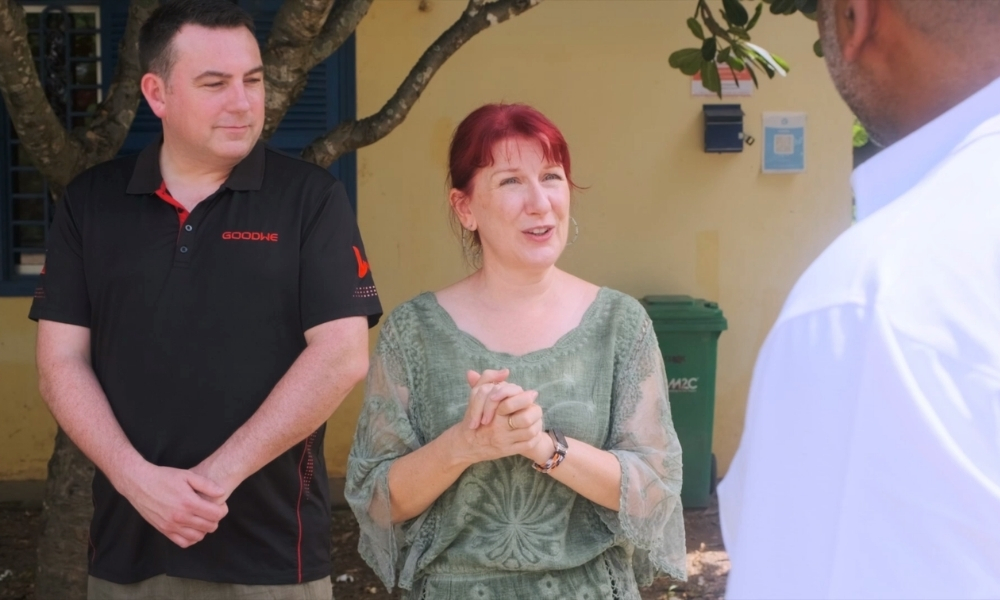
Tracey went on to pursue a journalism career covering conflict, trauma, and human rights, while continuing her relationship with Sunrise. In 2023, she left journalism to dedicate herself to the organisation as Country Director.
Her connection helps explain the warmth Roshan encounters throughout his visit. Behind conversations about programmes, budgets, and equipment sits a deeply personal commitment to the children.
For Sunrise’s team, financial decisions carry that responsibility every day. Every operating expense influences what remains available for care, education, and future opportunities.
That makes reducing electricity costs a practical way to strengthen the centre’s work.
Why electricity bills matter at Sunrise Cambodia
Electricity rarely takes centre stage in a story about children’s education. Its importance becomes obvious when the bill arrives.
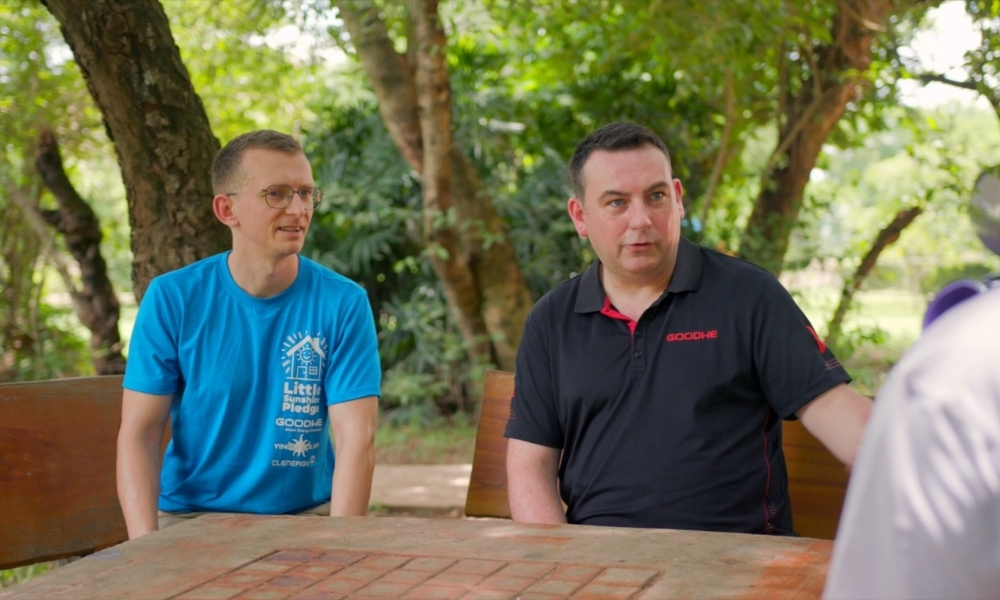
During filming, Little Sunshine Pledge’s Krystian Wielgosz explains that Sunrise was spending more than US$1,500 each month on electricity.
That is a substantial recurring expense for an organisation supporting children and families.
The centre needs electricity for classroom technology, lighting, cooling, and other daily activities. Those costs continue alongside spending on food, educational resources, staffing, and care.
Cambodia’s hot season makes classroom cooling particularly important. Fans help create a more comfortable environment for students and teachers. Computers and other learning tools also require power whenever children use them.
Reducing the cost of supplying those everyday needs can give Sunrise greater flexibility. It can ease pressure on the operating budget and leave more resources available for its programmes.
Solar offered an opportunity to address that expense at its source.
Little Sunshine Pledge: Turning generosity into ongoing support
Little Sunshine Pledge is an Australian charity providing donated solar systems to facilities supporting children and disadvantaged communities. Its projects span Cambodia and Vietnam, including orphanages, schools, and community facilities.
The idea is straightforward: help organisations generate electricity so they can spend less purchasing it. Those savings stay with the recipient facility, which decides how to use them.
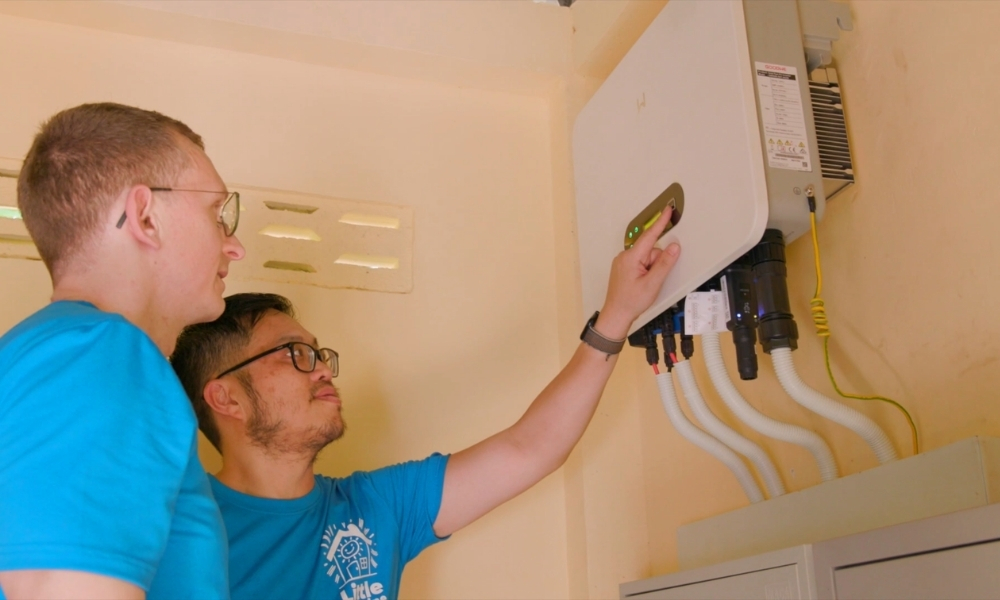
For a centre supporting children, that flexibility matters. Its team understands whether the immediate priority is educational equipment, meals, building improvements, or another essential need.
Solar adds a lasting resource to support those decisions. Once installed, a suitable system can continue generating electricity over many years. Its contribution extends beyond the initial donation through the energy produced and used.
An Australian friendship with an international purpose
In the episode, Krystian describes how the initiative began with a conversation in 2024 with his longstanding friend, Peter Chang. They wanted to make a positive difference. Their experience with solar provided a practical starting point.
Before long, they were helping install systems at orphanages in Vietnam.
The charity also honours Peter’s mother, Tam Pham, whose generosity helped inspire its work. After fleeing Vietnam with her children, Tam rebuilt her life in South Australia and continued supporting others.
Little Sunshine Pledge carries that spirit into projects designed to benefit communities over time.
At Sunrise Cambodia, the connection between generosity and practical outcomes is easy to understand. A donated solar installation can help reduce an expense the centre faces every month.
Why Sunrise Cambodia was a natural fit
For Little Sunshine Pledge, selecting a project involves understanding the organisation and the difference solar could make.
During his conversation with Roshan, Krystian highlights Sunrise’s history, people, and ongoing commitment to children. The centre had an established purpose, a substantial electricity bill, and daily activities that could benefit from solar generation.
Together, those factors created a strong opportunity. The installation could support an organisation already delivering care and education, while helping it manage a recurring financial pressure.
That is central to Little Sunshine Pledge’s approach: strengthen the facilities doing important work within their communities.
At Sunrise, the project supports the teachers, carers, and staff who continue that work long after installation day.
GoodWe, Clenergy, and Yingli Solar bring the project together
Delivering the Sunrise Cambodia installation required equipment, planning, coordination, and people prepared to get the job done.
Each partner brought a specific contribution:
- Little Sunshine Pledge coordinated the project and installation delivery.
- GoodWe supplied the solar inverter.
- Clenergy provided the solar mounting equipment.
- Yingli Solar supplied the solar panels.
GoodWe’s John Wright explains that the relationship began with an earlier Little Sunshine Pledge project in Vietnam.
GoodWe donated an inverter for that installation. Further conversations explored how the partnership could support additional projects, including work in Cambodia.
For John, the connection between the equipment and its everyday impact is central:
“The best part of our job is that we make the products that make a real positive difference to people’s lives.”
At Sunrise, that difference depends on the partners working together. The panels generate electricity from sunlight. The inverter converts that electricity into a form the centre can use. Mounting equipment secures the panels to the roof.
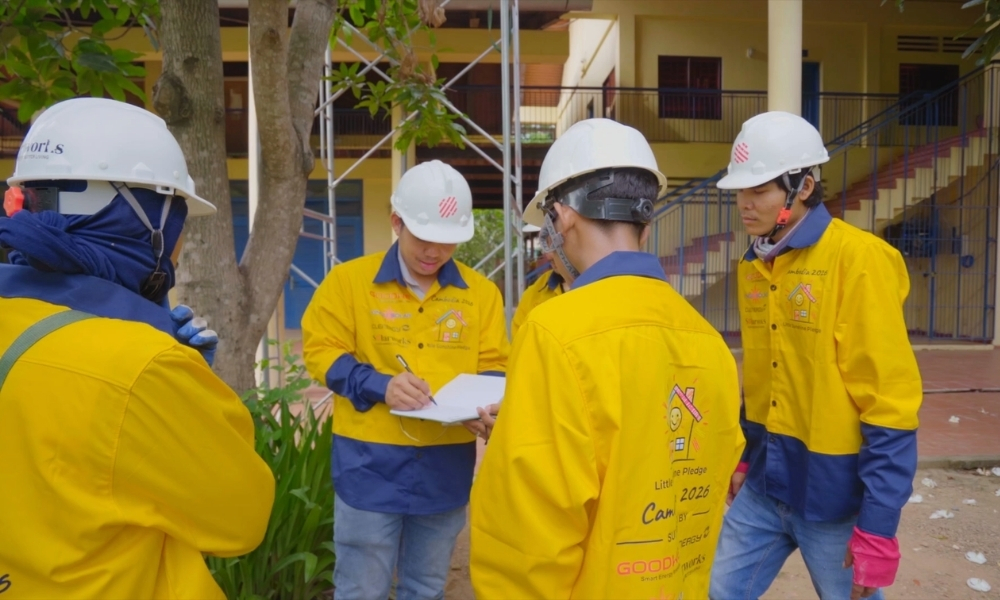
The installation team brings those components together into a working system suited to the site. Each contribution supports the same outcome: helping Sunrise generate electricity and reduce ongoing costs.
Seven days to make it happen
The first segment ends with Roshan setting the team a challenge: complete the installation within seven days. There is plenty to organise.
The team discusses bringing in a specialised GoodWe inverter, completing approximately 50 metres of trenching, and navigating the existing tiled roof.
These details reveal the practical work behind a donated solar system. Equipment needs to arrive. Electrical connections need preparation. The roof requires care, and the team must coordinate the different parts of the installation.
It is a substantial job with a clear purpose.
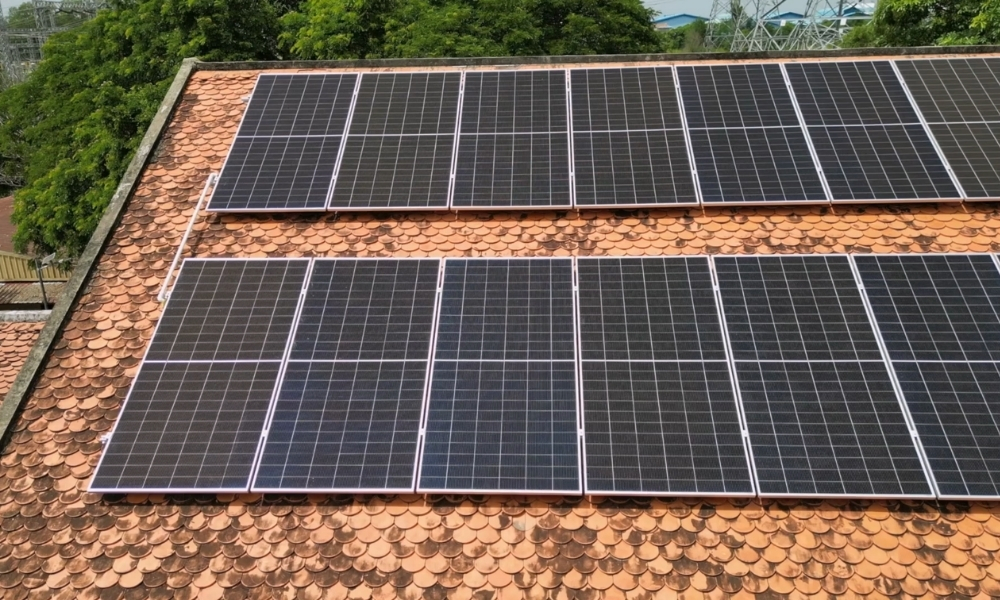
When Roshan returns in the second segment, the installation is complete. The panels are on the roof, the inverter is operating, and Sunrise is generating solar electricity.
For the team, it marks the successful completion of the challenge. For Sunrise, it marks the beginning of the system’s contribution.
How solar can reduce Sunrise Cambodia’s electricity costs
Little Sunshine Pledge records the installation as a 13.2 kW solar system completed in July 2026.
The charity estimates it could reduce the centre’s daytime electricity costs by 30% to 35%.
That figure represents projected daytime savings. Actual results depend on electricity consumption, weather, tariffs, and how much solar electricity the centre uses.
The principle remains straightforward. When Sunrise uses electricity generated by its solar panels, it can purchase less electricity from the grid.
For a centre running educational activities during daylight hours, that creates a useful connection between solar generation and daily demand.
Matching sunshine with classroom activity
Computer lessons, classroom fans, and other daytime activities create opportunities to use solar electricity as it is generated. This helps the centre gain value from the system during its operating hours.
During the follow-up visit, John also explains that Tracey can monitor solar production and better understand the centre’s electricity use.
That visibility provides useful information for managing energy. Staff can see when the system generates electricity and consider opportunities to run suitable equipment during those periods.
For a busy charitable organisation, understanding energy use can support more informed budgeting and planning.
Keeping savings within the centre
The project’s purpose reaches beyond reducing a number on an electricity bill. Lower energy spending can leave Sunrise with more resources for its own priorities.
Those priorities may include learning materials, equipment, facilities, care, or other needs identified by the team.
The centre decides where its available funding can make the greatest difference. That flexibility is a valuable part of the donation. It allows the benefit to respond to changing circumstances as children grow and programmes develop.
Money saved on electricity can remain available for the people and programmes at the heart of Sunrise.
What the installation means for everyday learning
In the second segment, the conversation returns to children’s access to technology. John describes how concerns about electricity costs had influenced computer use and learning opportunities.
Reducing daytime energy costs can ease that pressure. For a student, the benefit may appear in an ordinary moment: practising a computer skill, participating in a lesson, or studying with fans running.
Those moments accumulate.
Learning requires time, access, repetition, and encouragement. Children need opportunities to explore, ask questions, make mistakes, and try again. Affordable electricity helps support the environment where that happens.
The solar system becomes part of the infrastructure behind Sunrise’s work, alongside classrooms, teaching equipment, and other facilities. Its value comes through the activities it helps make more affordable.
Supporting communities across Cambodia and Vietnam
Sunrise Cambodia forms part of Little Sunshine Pledge’s wider work across Southeast Asia.
The charity’s project portfolio includes Vietnamese facilities such as Minh Tam Orphanage and Thien Duyen Orphanage. Cambodian projects also include Transform Cambodia and New Smile of Hope Children’s Association.
Each organisation serves a different community, with its own needs and circumstances. Some provide residential care. Others focus on education or specialist support. Their buildings, electricity consumption, and resources vary. The shared opportunity is to reduce an ongoing cost at facilities already supporting children.
Solar can complement the donations that meet immediate needs, including food, clothing, medical care, and educational supplies.
It adds infrastructure intended to provide value over time.
For renewable energy businesses, these projects also offer a practical way to contribute products, skills, and experience.
The result brings industry capability into direct contact with community needs.
A contribution that continues after installation day
One of the most moving moments comes when Tracey thanks the team following the installation.
“You’re making such a huge difference in hundreds of lives, literally hundreds.”
Her response captures the significance of the collaboration.
Sunrise’s responsibilities continue every day. Children need care, teachers need resources, and facilities need funding. The solar installation supports that ongoing commitment by helping address an expense that keeps returning.
Its benefits will depend on continued operation, maintenance, and the electricity generated and used. Its purpose, however, is firmly grounded in the centre’s future.
GoodWe, Little Sunshine Pledge, Clenergy, and Yingli Solar have helped create a resource that Sunrise can put to work. The children, carers, and teachers give that resource its meaning.
Across both Global Energy Revolution segments, that connection remains the strongest part of the story.
Sunshine becomes electricity. Lower electricity costs create opportunities. The people at Sunrise turn those opportunities into care, learning, and possibilities for the next generation.
Help sunshine go further
Inspired by the people behind this story? You can help support their work.
Support Little Sunshine Pledge
Help bring solar power to more orphanages, schools, and community facilities across Cambodia and Vietnam.
Make a donation, explore system sponsorship, or discuss how your business could contribute equipment, expertise, or funding.
Supporting an installation can help a recipient organisation reduce electricity costs and keep more resources available for its community.
Donate or get involved with Little Sunshine Pledge
Support Sunrise Cambodia
Help provide vulnerable children with care, education, and opportunities to build their futures.
Make a donation, explore sponsorship, or organise a fundraiser with your workplace, school, family, or community.
Your support can contribute to the everyday work behind the smiles, from classroom learning to the care children need.
Donate or get involved with Sunrise Cambodia
Frequently asked questions
What does Sunrise Cambodia do?
Sunrise Cambodia provides residential care for vulnerable children and educational opportunities for children from surrounding communities. Its work also includes support for further education and community assistance. Founded by Geraldine Cox in 1993, the organisation helps children develop skills and pursue opportunities within a caring environment.
How does Little Sunshine Pledge help orphanages and communities?
Little Sunshine Pledge provides donated solar systems to facilities supporting children and disadvantaged communities in Cambodia and Vietnam. Solar generation can reduce electricity purchases, leaving recipient organisations with more funding for their priorities. The charity brings together community relationships, project delivery, donors, and renewable energy industry partners.
What did GoodWe contribute to Sunrise Cambodia?
GoodWe supplied the inverter for the Sunrise Cambodia solar installation. The inverter converts electricity generated by the solar panels into electricity the centre can use. Little Sunshine Pledge coordinated the project, with Clenergy contributing mounting equipment and Yingli Solar supplying the panels.
How much could Sunrise Cambodia save with solar?
Little Sunshine Pledge forecasts a 30% to 35% reduction in daytime electricity costs from the 13.2 kW installation. Actual savings depend on solar generation, electricity consumption, tariffs, and how much solar electricity the centre uses. Reduced energy spending can leave more funding available for children’s needs.
How can I support Little Sunshine Pledge or Sunrise Cambodia?
Visit Little Sunshine Pledge’s website to explore donations, system sponsorship, and opportunities to participate. Sunrise Cambodia also offers ways to donate, sponsor, and fundraise. Individuals, workplaces, schools, and community groups can support their work according to their resources, interests, and capacity to contribute.