




Australia is one of the world’s strongest solar markets, with more than 4.3 million Australian households now having rooftop solar and 2.6 GW of new rooftop capacity installed in 2025. For properties beyond the electricity grid, knowing how to design an off-grid solar system that Australian homeowners can rely on is especially important.
A successful off-grid system is more than installing enough panels. It must balance solar generation, battery storage, household demand, inverter capacity and local weather conditions so electricity remains available when sunshine is limited.
This guide explains the fundamentals of off-grid solar design, including how to perform an off-grid load calculation, size an off-grid system and build a practical standalone system design for Australian conditions.
Quick summary
- Calculate your daily and peak electricity demand before selecting equipment.
- Size solar panels and batteries around seasonal Australian conditions, not just average sunshine.
- Use professional design and installation to ensure safety, reliability and compliance.



What is an off-grid solar system?
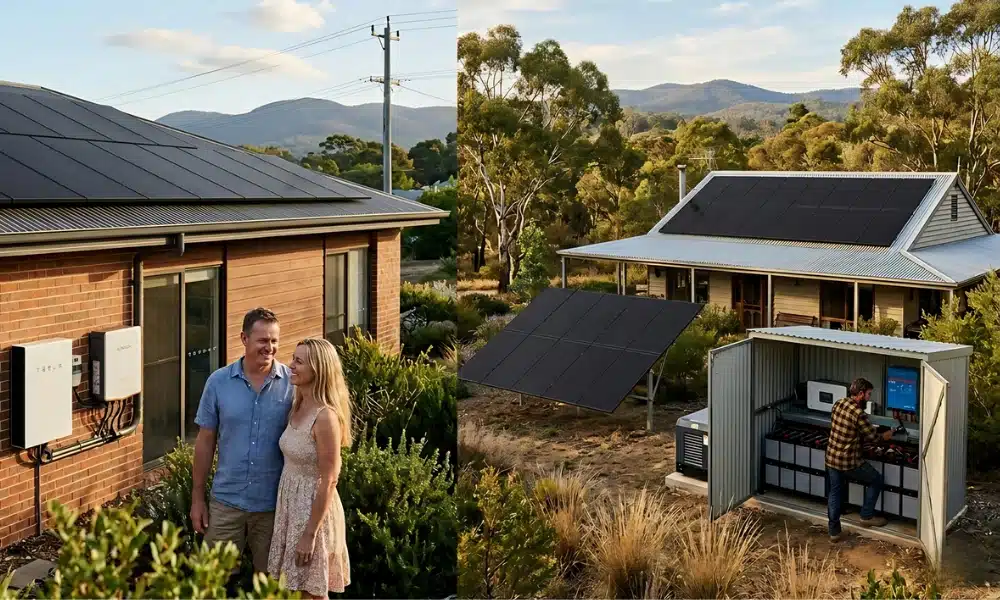
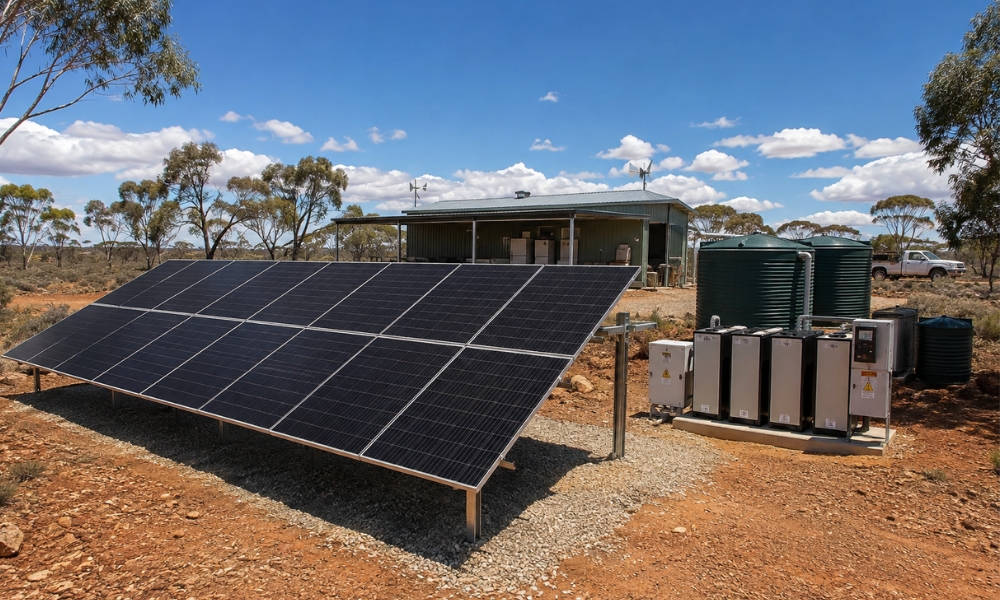
An off-grid solar system, also called a standalone power system, generates and stores electricity without relying on the electricity grid. Solar panels produce electricity during daylight hours, while batteries store surplus energy for evenings, overnight use and periods of poor solar production. A typical system includes:
- Solar photovoltaic (PV) panels
- Solar charge controllers or hybrid inverters
- Battery storage
- An inverter to supply household AC electricity
- Monitoring and energy management equipment
- Protection and electrical safety equipment
- A backup generator where appropriate
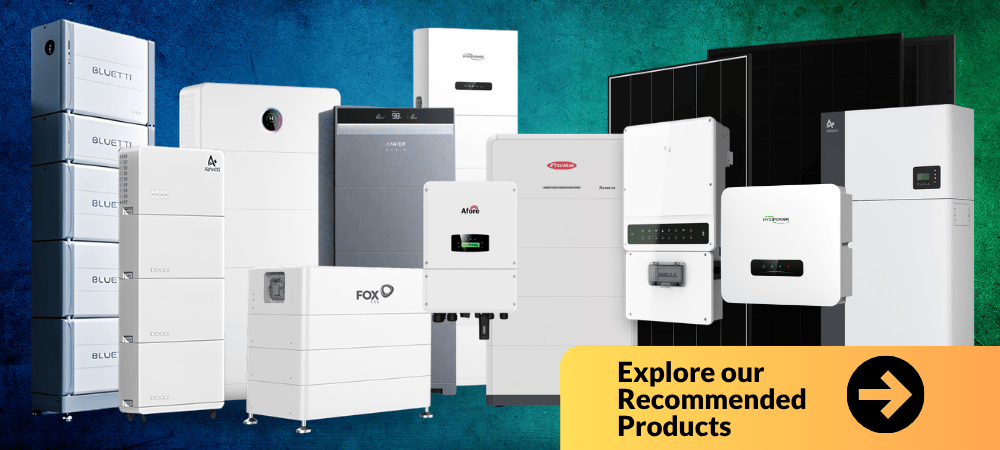
Check our page for our recommended solar products.
How to design an off-grid solar system in Australia: Start with your energy needs
The first step in learning to design an off-grid solar system for Australian properties is to determine how much electricity the property actually consumes.
Do not rely solely on the average electricity bill. An off-grid system should account for daily consumption, seasonal changes and high-demand appliances.
Perform an off-grid load calculation
List every significant electrical appliance and estimate:
Appliance power (kW) × hours used per day = daily energy consumption (kWh)
For example, if a 2 kW appliance operates for two hours:
2 kW × 2 hours = 4 kWh per day
Include appliances such as:
- Refrigerators and freezers
- Lighting
- Water pumps
- Washing machines
- Dishwashers
- Air conditioning
- Electric hot water systems
- Induction cooktops
- Computers and entertainment equipment
- Workshop or agricultural equipment
Also identify appliances with high starting loads. Pumps, compressors and some motors can temporarily require substantially more power than their normal operating rating.

How to size an off-grid solar system in Australia
Once the energy demand is known, the next question is how to size off-grid system components for the property.
Solar generation needs to cover daily consumption and provide enough energy to recharge batteries after overnight use. Importantly, design should account for the site’s worst-case practical solar conditions rather than relying on the annual average.
Consider Australia’s regional conditions
Solar output varies significantly across Australia. A property in northern Queensland, regional New South Wales, Victoria, Tasmania or Western Australia will experience different solar resources and seasonal patterns. Consider:
- Local solar irradiation
- Winter solar production
- Roof or ground-mount orientation
- Panel tilt
- Shading
- Temperature
- Dust and environmental conditions
- Extended cloudy periods
AEMO’s energy planning work highlights the growing importance of distributed solar and consumer energy resources in Australia’s electricity system. Its 2026 Integrated System Plan is the current national roadmap for the NEM’s energy transition.
Battery storage is central to standalone system design
Unlike a grid-connected solar system, an off-grid property cannot simply draw electricity from the grid when solar production falls.
Battery capacity therefore needs careful consideration. A simplified starting point is:
Required battery storage = daily energy consumption × desired autonomy
For example, a household consuming 15 kWh per day that wants two days of nominal energy autonomy would start with a theoretical requirement of 30 kWh before accounting for usable capacity, battery limits, inverter losses and other design factors.
Lithium iron phosphate (LFP) batteries are increasingly common because of their combination of cycle life, safety characteristics and usable capacity. However, battery selection should always consider the complete system, manufacturer specifications, warranty conditions and Australian installation requirements.
Use Energy Matters’ easy-to-use solar power and battery storage calculator to determine the size of your solar system with storage! Our solar calculator will generate performance information and potential savings.
We can send this information to 3 of our pre-vetted, trusted local installers in your area so they can provide obligation-free solar quotes and take the first step toward true energy independence!

Choose the right inverter capacity
The inverter converts stored DC electricity into AC electricity used by household appliances.
Its capacity should reflect both normal electricity demand and potential simultaneous loads.
For example, a home might use only 3 kW under normal conditions but temporarily run a refrigerator, a pump, a kettle, and an air conditioner simultaneously. The inverter must be capable of handling the combined demand and relevant startup surges.
An appropriately sized inverter can also improve system efficiency and provide better control over battery charging and solar generation.
Plan for cloudy weather and backup power
One of the biggest mistakes in off-grid solar design is designing around perfect weather.
Australian off-grid properties should have a strategy for prolonged periods of low solar generation. Depending on the property and budget, this may involve additional PV capacity, larger batteries, load management, a backup generator or another renewable generation source.
Key components for Australian off-grid solar design
| Component | Primary purpose | Important design consideration |
| Solar panels | Generate electricity | Location, shading and winter production |
| Battery | Store excess energy | Usable capacity and autonomy |
| Inverter | Converts DC to AC | Continuous and surge power |
| Charge controller | Manages battery charging | PV and battery compatibility |
| Monitoring | Tracks system performance | Energy use and battery state |
| Backup generator | Emergency support | Fuel availability and automatic operation |
| Protection equipment | Electrical safety | Compliance and installation standards |
Professional design is particularly important because Australian electrical and solar installations must meet applicable standards and regulatory requirements.
Reduce energy demand before increasing system size
Learning how to design an off-grid solar system that Australian homes can depend on does not always mean buying more panels and batteries.
Reducing energy demand can lower the required system size and improve resilience. Consider:
- High-efficiency LED lighting
- Efficient refrigeration
- Energy-efficient appliances
- Heat pump hot water
- Smart energy monitoring
- Efficient heating and cooling
- Scheduling high-load appliances during sunny periods
Ready to upgrade your appliances and take your energy savings to the next level? Energy Matters believes that understanding and utilising these new energy ratings in Australia is crucial to a greener home. By prioritising energy-efficient home appliances, you can reduce your energy bills and minimise your environmental footprint.
Energy Matters recommends switching to energy-efficient appliances now for smarter savings and a more environmentally friendly lifestyle.
Expert tips
- Do not size batteries using nominal capacity alone. Compare usable capacity, continuous power output, surge capability, operating temperature, warranty and expected cycling.
- Ask your installer to model several consecutive low-solar days. A system that works perfectly in summer sunshine may not provide the same level of reliability in winter or during prolonged cloudy conditions.
- Build your load calculation around your future lifestyle, not only today’s consumption. Adding an electric vehicle (EV), heat pump, or larger air conditioner later can significantly change system requirements.
Powering up your EV with solar
If you’re thinking of buying an EV, adding an EV charger to your solar system is a smart way to “fuel” your car with clean, renewable energy.
FAQs about how to design an off-grid solar system in Australia
How do I calculate the size of an off-grid solar system?
Start by calculating the property’s daily electricity consumption in kWh. Then account for seasonal solar production, system losses, battery charging requirements, peak loads, and several days of low solar generation before determining the appropriate PV, battery, and inverter capacities.
How many solar panels are needed for an off-grid home?
There is no universal number because panel requirements depend on daily energy consumption, panel output, location, orientation, shading and seasonal conditions. A professional designer should use site-specific solar data and model winter production rather than relying only on annual averages.
How much battery storage does an off-grid house need?
Battery requirements depend on daily consumption and the desired level of energy autonomy. The calculation should consider usable battery capacity, depth of discharge, efficiency, inverter losses and expected periods of low solar production.
Is off-grid solar suitable for every Australian home?
Off-grid solar can suit remote properties where connecting to the electricity network is difficult or expensive. However, homeowners should compare the full cost of standalone generation and storage with the cost of a grid connection before making a decision.
Do off-grid solar systems need a generator?
Not necessarily, but backup generation can improve resilience where prolonged cloudy weather, high electricity demand or limited battery capacity could cause shortages. The best solution depends on the property’s energy profile, location and reliability requirements.

Key takeaways
- Designing an off-grid solar system for Australian properties starts with accurate energy-use data.
- Perform an off-grid load calculation before selecting solar panels, batteries or an inverter.
- Size the system for seasonal conditions and periods of poor solar generation.
- Battery capacity and inverter power are critical to a reliable standalone system design.
- Energy efficiency can reduce the size and cost of the overall off-grid system.
Ready to design your off-grid solar system?
Understanding how to design an off-grid solar system that Australian homeowners can rely on means looking beyond panel capacity. A dependable system combines accurate energy calculations, appropriately sized solar generation, sufficient battery storage, inverter capacity, energy efficiency and a strategy for periods of poor weather.
Australia’s growing investment in distributed solar and storage demonstrates the expanding role of consumer energy resources in the country’s energy future.
Ready to explore energy independence? Get started with Energy Matters today. Use the Energy Matters solar and battery calculator for an initial sizing guide, then request free solar and battery quotes from trusted Australian installers to develop a system tailored to your property.
Sources and References
- Clean Energy Council: Australian rooftop solar and storage data
- AEMO: 2026 Integrated System Plan
- ARENA: Australian off-grid and hybrid energy projects