


Choosing between hybrid vs off-grid solar in Australia is one of the biggest decisions Australian homeowners face when going solar. Both systems offer real energy independence, but they work in very different ways. This guide breaks down the key differences so you can choose the right solar system for your home, budget, and lifestyle.
What is a hybrid solar system?
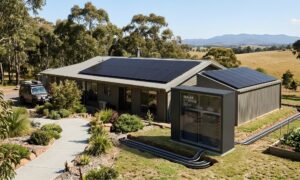
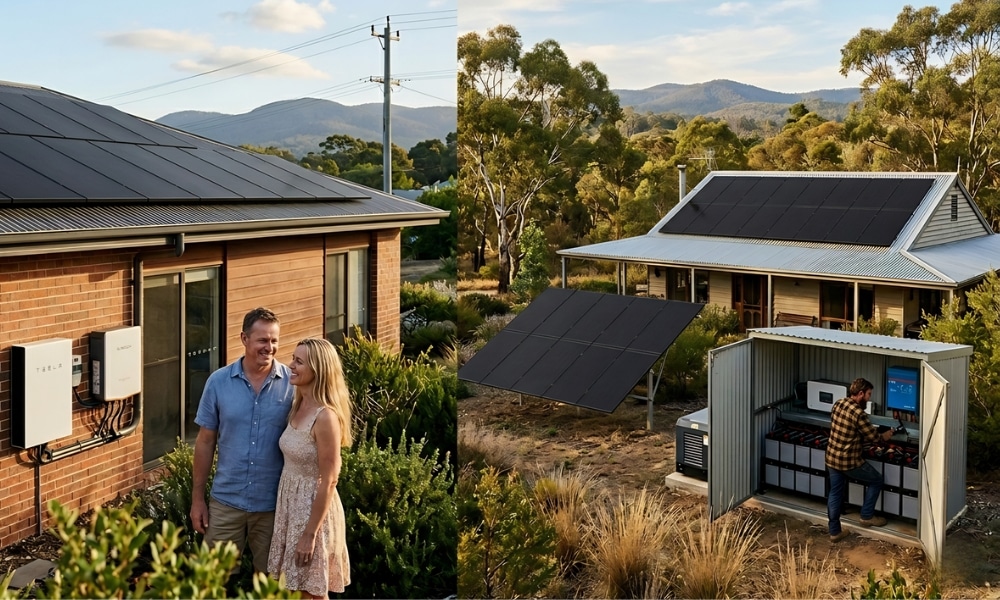
A hybrid solar system combines rooftop solar panels with a battery storage system — while staying connected to the electricity grid. It captures excess solar energy in a battery and draws from the grid only when solar and battery power run low.
This setup is ideal for suburban Australian homes where grid access is reliable. It significantly lowers power bills while still providing a safety net on cloudy days or during periods of high usage.
Key features of hybrid solar
- Stays connected to the grid as a reliable backup
- Stores surplus solar energy in a battery bank
- Can feed excess power back to the grid (feed-in tariff)
- Eligible for Virtual Power Plant (VPP) programs
- Lower upfront cost than off-grid solar


What is an off-grid solar system?
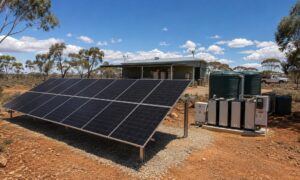
An off-grid solar system operates completely independently from the electricity grid. It relies entirely on solar panels, a large battery bank, and often a backup generator to power a home or property 24/7.
Off-grid solar is the top choice for rural and remote Australian properties where grid connection is unavailable or prohibitively expensive. It delivers full energy independence and eliminates electricity bills entirely.
Key features of off-grid solar
- No grid connection — completely self-sufficient
- Requires a larger battery storage capacity
- Often paired with a diesel or petrol backup generator
- Higher upfront cost but zero ongoing grid fees
- Essential for remote, rural, or off-road properties

Energy independence: Hybrid vs. off-grid solar in Australia
The core question is: how much energy independence do you actually need? Hybrid solar provides partial to high independence — most households with a good battery system can cover 80–95% of their own energy needs. The grid acts as a seamless backup.
Off-grid solar, on the other hand, delivers complete energy independence. Your home runs entirely on the energy you generate and store. There is no power company, no grid fees, and no exposure to rising grid electricity prices.
For most Australians living in cities or suburbs, a hybrid solar system offers the ideal balance. For remote or rural properties, off-grid solar is often the only practical — and most cost-effective — long-term option.
Cost comparison: Hybrid vs off-grid solar
Upfront cost is one of the biggest differences between these two systems. Hybrid solar systems typically cost between $8,000 and $15,000+, depending on panel capacity and battery size. Government rebates through the Small-scale Technology Certificate (STC) scheme help reduce this cost.
Off-grid solar systems generally start at $20,000 and can reach $40,000 or more for larger homes or properties with higher energy demands. However, off-grid owners avoid all ongoing network and distribution charges, which can be substantial in rural areas.
Rebates and incentives available in Australia
- Small-scale Technology Certificates (STCs): available for both hybrid and off-grid systems
- State-based battery rebates: SA Home Battery Scheme, VIC Solar Homes Program, and more
- ARENA off-grid grants: support for remote and regional energy projects
- Virtual Power Plant (VPP) programs: earn credits by sharing stored battery energy with the grid

Battery storage: The heart of both systems
Both hybrid and off-grid solar rely on battery storage, but the requirements differ. Hybrid systems typically require 10–15 kWh of storage capacity, sufficient to cover most households’ overnight power needs.
Off-grid systems need much larger battery banks — often 20–40 kWh or more — to handle several days of cloudy weather without solar generation.
Use Energy Matters’ easy-to-use solar power and battery storage calculator to determine the size of your solar system with storage! Our solar calculator will generate performance information and potential savings.
We can send this information to 3 of our pre-vetted, trusted local installers in your area to receive obligation-free solar quotes and take the first step toward true energy independence!

Which system is right for you?
The best solar system depends on where you live and what your energy goals are. Here is a simple guide to help you decide between hybrid vs off-grid solar in Australia.
Choose hybrid solar if you:
- Live in a suburban or urban area with grid access
- Want to reduce power bills without high upfront costs
- Want the security of grid backup during outages
- Plan to add an EV or home battery in the future
Powering up your EV with solar
If you’re thinking of buying an EV, adding an EV charger to your solar system is a smart way to “fuel” your car with clean, renewable energy.
Choose off-grid solar if you:
- Live in a remote or rural area without grid access
- Want complete energy independence and zero power bills
- Are building a new property in a regional area
- Have high energy needs and space for a large battery bank
Choosing between hybrid vs off-grid solar in Australia depends on your goals, budget, and location. Hybrid systems offer flexibility and reliability, while off-grid systems deliver total independence. For most Australians, hybrid solar strikes the best balance.
Take control of your energy future today. Contact Energy Matters for expert advice, tailored solar solutions, and competitive quotes. Start your journey toward energy independence now.