



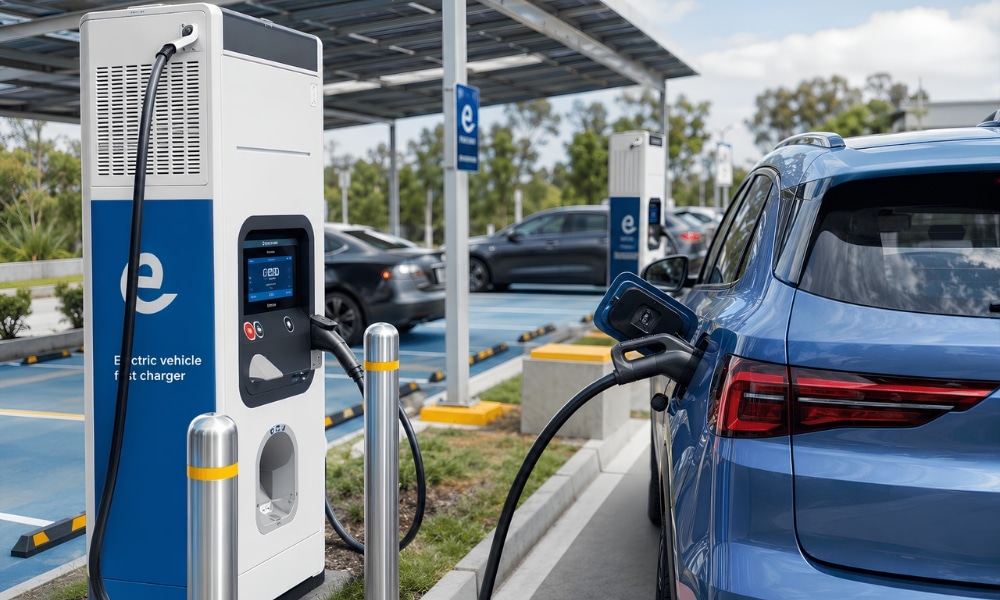
Australia’s public charging network has passed 5,000 sites nationwide and is still growing fast. Yet for many drivers, the jargon around plugs and power levels remains the biggest barrier to charging confidence. This public electric vehicle (EV) charging guide in Australia breaks down the three things you’ll actually meet on the road: Type 2 AC charging, CCS2 DC fast charging, and the ultra-rapid chargers now appearing on major highways.
Whether you’re planning a coastal road trip or simply topping up at the shops, knowing your EV charging types in Australia makes every stop faster and cheaper. We’ll also point you towards Energy Matters’ home solar and EV charging solutions, so your car can run on sunshine at home and public power on the road.
Powering up your EV with solar
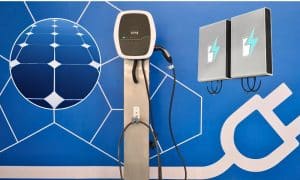
If you’re thinking of buying an EV, adding an EV charger to your solar system is a smart way to “fuel” your car with clean, renewable energy.
Understanding EV charging types in Australia: AC vs DC
Electric vehicles rely on two fundamental forms of electrical current: Alternating Current (AC) and Direct Current (DC). Grid power is always AC, whereas EV battery cells store energy strictly as DC power.
An onboard charger inside your vehicle converts AC electricity into DC during light charging sessions. When utilising high-power stations, the external equipment converts grid power directly before sending it straight into your solar battery storage.
Use Energy Matters’ easy-to-use solar power and battery storage calculator to determine the size of your solar system with storage! Our solar calculator will generate performance information and potential savings.
We can send this information to 3 of our pre-vetted, trusted local installers in your area so they can provide obligation-free solar quotes and take the first step toward true energy independence!

Expert tip
AC charging is ideal for destination stops where your vehicle sits idle for hours, whereas DC stations bypass the car’s internal converter to deliver rapid energy directly into the battery pack.
Type 2 EV charging: The backbone of public AC power
The standard connector for public AC charging across Australia is the IEC 62196 Type 2 plug. Most public destination chargers located at shopping centres, council parks, and hotels utilise Type 2 EV charging sockets.
These stations typically supply power outputs ranging from 7 kW to 22 kW. While some public AC posts feature tethered cables, many require drivers to supply their own untethered Type 2-to-Type 2 cable.


High-speed DC fast charging Australia: Speeds and locations
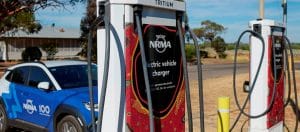
When travelling long distances, drivers rely on high-output DC fast charging Australia networks along key highway corridors. These charging stations bypass onboard limits to deliver rapid top-ups.
Fast DC chargers generally start at 50 kW, adding 100 km of driving range in roughly 15 to 20 minutes. Ultra-rapid units capable of 150 kW to 350 kW can replenish batteries up to 80% in under 15 minutes.
Overview of EV charging station types across Australia
Understanding the primary EV charging station types helps you select the right charger for every situation. Public stations vary by output speed, typical location, connector type, and approximate usage fees.
| Charger Category | Connector Standard | Power Output | Average Range Added | Ideal Use Case | Estimated Cost |
| Level 2 Public AC | Type 2 (Mennekes) | 7 kW – 22 kW | 40 – 120 km per hour | Shopping centres, workplaces, kerbside | $0.30 – $0.50 / kWh |
| Level 3 DC Fast | CCS2 / CHAdeMO | 50 kW – 100 kW | 100 km per 15–20 mins | Highway rest stops, commercial hubs | $0.50 – $0.75 / kWh |
| Level 3 Ultra-Rapid | CCS2 Standard | 150 kW – 350 kW | 100 km in 5–10 mins | Major interstate transport routes | $0.65 – $0.90 / kWh |
Frequently asked questions about public EV charging
What is the primary public EV charging Australia guide standard for fast chargers?
The primary fast-charging standard across public stations in Australia is the CCS2 (Combined Charging System 2) plug. It handles both Level 2 AC power and high-voltage DC fast charging through a single unified inlet port on modern vehicles.
Can I charge any electric car at a public CCS2 charger in Australia?
Most modern EVs sold in Australia accept CCS2 connectors directly. Older Japanese imports utilising CHAdeMO or legacy Tesla models may require dedicated adapters to connect smoothly to public CCS2 fast-charging stations across local networks.
What is the main difference between Type 2 AC and CCS2 DC chargers?
Type 2 AC chargers send alternating current to your car’s internal converter, providing slower, steady charging ideal for parking. CCS2 DC chargers feed high-voltage direct current straight into the battery, bypassing internal limits to deliver rapid highway top-ups.
How much does it cost to use public EV chargers in Australia?
Public AC charging typically costs between $0.30 and $0.50 per kWh, whereas DC fast charging ranges from $0.50 to $0.90 per kWh depending on station speed and provider tariffs. Some municipal AC chargers remain free to use.
Do I need to bring my own cable to public charging stations?
For Level 2 public AC charging stations, you often need to bring your own Type 2 cable because many council sockets are untethered. However, Level 3 DC fast-charging stations always feature heavy, permanently tethered cables attached directly to the unit.

Key takeaways for Australian EV drivers
- CCS2 is King: CCS2 is Australia’s primary fast-charging standard for new passenger electric vehicles.
- Carry a Cable: Bring a Type 2 to Type 2 cable for untethered public AC destination chargers.
- Understand AC vs DC: Use AC power for multi-hour stays and DC chargers for rapid highway road trips.
- Optimise 10–80%: Unplug at 80% charge on DC fast chargers to save time and reduce overall costs.
- Combine solar & home power: Pair public network convenience with efficient home charging to maximise savings.
Power your EV transition with Energy Matters
Are you ready to optimise your electric vehicle charging routine at home or for business? Connect with Energy Matters today to receive custom, fee-free quotes on solar system upgrades, battery storage, and EV charger installations from certified local experts.
Get your FREE EV charging & solar quotes
Ready to reduce your road trip costs and charge powered by the Australian sun? Fill out the quick form below to receive up to 3 free, no-obligation quotes from trusted solar and EV installers in your area.