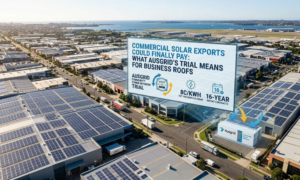




Australia’s commercial solar sector is on the verge of its biggest policy shift in more than a decade. The Federal Government has officially confirmed the expansion of the Small-scale Renewable Energy Scheme (SRES), increasing the STC eligibility threshold from 100 kW to 1 MW from 1 October 2026.
The expansion of the Small-scale Renewable Energy Scheme (SRES) could reduce the upfront cost of commercial solar installations by around 20%, making renewable energy more accessible for warehouses, factories, schools, shopping centres, agricultural operations, and other large commercial facilities.
For businesses considering solar, this could represent one of the most significant commercial solar rebate opportunities Australia has ever seen.
Update: 5 August 2026, 12:00 pm AEST
The Federal Government has now officially confirmed the expansion of the Small-scale Renewable Energy Scheme (SRES), increasing eligibility for Small-scale Technology Certificates (STCs) from 100 kW to 1 MW from 1 October 2026.
Speaking at the National Press Club, Climate Change and Energy Minister Chris Bowen described medium-scale commercial rooftop solar as Australia’s “missing middle”, highlighting the enormous untapped opportunity across factories, warehouses, shopping centres, schools, farms, and other commercial buildings.
The Government estimates there is more than 80 GW of commercial rooftop solar potential, yet only around 5.6 GW has been installed to date. By expanding the SRES, businesses will gain access to the same proven upfront incentive model that has helped millions of Australian households install rooftop solar.
The reforms will also tackle another long-standing challenge for commercial solar by working with energy regulators and network businesses to speed up connection approvals for larger rooftop systems. Faster approvals, combined with the expanded rebate, are expected to unlock significantly more investment across Australia’s commercial and industrial sectors.
Quick summary
- The proposed SRES expansion increases STC eligibility from 100 kW to 1 MW.
- Businesses could save tens or even hundreds of thousands of dollars on installation costs.
- The announcement targets Australia’s “missing middle” of medium-scale commercial rooftop solar.
- The change could accelerate renewable energy adoption while helping Australia meet its 2030 emissions and renewable electricity targets.
What is changing?
Since 2011, the Small-scale Renewable Energy Scheme has helped millions of Australian households install rooftop solar through the creation of Small-scale Technology Certificates (STCs). While the scheme technically included businesses, the 100 kW eligibility cap meant that most commercial buildings quickly exceeded the limit.
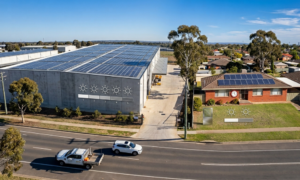
For many warehouses, supermarkets, manufacturing facilities, agricultural operations, and logistics centres, a 100 kW system barely scratches the surface of their available roof space or electricity demand.
Under the proposed changes, systems up to 1 MW would qualify for STCs, bringing much larger commercial projects into the scheme. Rather than relying solely on Large-scale Generation Certificates (LGCs), businesses would receive the simpler, upfront financial benefit that has driven Australia’s residential solar success.
Why this matters for businesses
Electricity prices remain one of the largest operating expenses for many Australian businesses.
Commercial solar has always delivered attractive long-term returns, but the upfront capital investment has often delayed projects. A larger business solar rebate significantly improves project economics.
Government estimates suggest:
- A 250 kW commercial solar system could save almost $70,000 upfront.
- An 850 kW installation could reduce upfront costs by more than $230,000.
For many organisations, this changes the conversation from “Should we invest?” to “How soon can we install?”
The rebate also improves financing opportunities. Lower installation costs generally reduce payback periods, improve return on investment, and free up capital for other business priorities.
Unlocking Australia’s “missing middle”
Australia has become a global leader in residential rooftop solar.
More than 4.5 million homes now have rooftop solar, while large-scale solar farms continue to grow rapidly across the country.
Commercial rooftops, however, remain an enormous untapped resource.
Chris Bowen has described medium-scale commercial solar as Australia’s “missing middle”. Countless warehouses, distribution centres, schools, factories, office buildings, and farm sheds feature expansive roof space that receives excellent sunlight every day but currently generates no electricity.
Expanding the SRES could finally unlock this enormous opportunity.
A major boost for Australia’s solar industry
The benefits extend well beyond electricity savings.
A stronger commercial solar market is expected to stimulate demand throughout the renewable energy supply chain, including:
- Solar installers
- Electrical contractors
- Engineering firms
- Solar wholesalers
- Equipment manufacturers
- Project designers
- Battery installers
Following the strong uptake of the Cheaper Home Batteries Program, Australia’s residential solar market has regained momentum. Expanding commercial incentives provides another significant pipeline of work for an industry that has been seeking stronger growth in the commercial and industrial sector.
Greater demand also encourages investment in workforce development, training, and regional employment.
Faster approvals could remove another major barrier
The proposed reforms are not limited to financial incentives.
Alongside expanding the SRES, the Federal Government intends to work with Australia’s energy market regulators to improve network approval processes for commercial solar projects.
Many businesses currently face lengthy delays while waiting for distribution network service providers to approve larger solar installations.
Reducing these approval times could help projects move from planning to commissioning much faster, improving confidence across the commercial solar market.
Why the “missing middle” matters
During his National Press Club address, Chris Bowen said Australia has become a world leader in residential rooftop solar, but commercial rooftops have largely been left behind.
“The missing middle is mid-scale solar. Factories, warehouses, farming sheds and large industrial premises, big empty roof space ripe for solar generation.”
He also noted that while Australians have installed more than 22 GW of rooftop solar on homes, only 5.6 GW has been installed across commercial, industrial, and agricultural rooftops, despite an estimated technical potential of more than 80 GW.
Closing this gap represents one of Australia’s biggest opportunities to reduce electricity costs for businesses while increasing renewable generation without requiring additional land or large-scale infrastructure.
Helping Australia reach its renewable energy targets
Australia has committed to ambitious renewable energy and emissions reduction targets by 2030. Achieving these goals will require more than additional utility-scale wind and solar farms. Commercial rooftops represent one of Australia’s largest underutilised renewable energy assets.
Every warehouse, supermarket, factory, school, and agricultural building that generates its own electricity helps:
- Reduce demand on the electricity grid.
- Lower peak electricity consumption.
- Cut greenhouse gas emissions.
- Improve energy resilience.
- Reduce operating costs for Australian businesses.
Collectively, thousands of medium-scale commercial systems could contribute significant additional renewable generation without requiring large amounts of new land or major transmission infrastructure.
The proposed expansion therefore supports both Australia’s renewable energy ambitions and the practical needs of businesses looking to control rising energy costs.
Should businesses start planning now?
Although today’s announcement still requires implementation, businesses with suitable roof space should begin evaluating their opportunities.
Good candidates include:
- Manufacturing facilities
- Distribution centres
- Shopping centres
- Agricultural buildings
- Schools and universities
- Commercial office buildings
- Cold storage facilities
- Logistics warehouses
Many of these facilities consume most of their electricity during daylight hours, making solar particularly effective at reducing electricity bills.
Businesses planning future battery storage may also benefit from designing solar systems that accommodate future expansion.
Waiting for the green light
The Smart Energy Council has welcomed the announcement, describing the expanded SRES as a “permanent bill slasher” for Australian businesses. The organisation said providing an upfront, certain incentive rather than relying on Large-scale Generation Certificates (LGCs) could be the difference between many commercial solar projects proceeding or being shelved.
By extending STC eligibility to larger systems, the Federal Government would help bridge the long-standing gap between residential rooftop solar and utility-scale renewable projects. The result could be lower energy costs for businesses, increased investment across the renewable energy industry, thousands of new commercial solar installations, and meaningful progress towards Australia’s renewable energy and emissions reduction goals.
For businesses that have been waiting for the right time to invest in solar, that time may have just arrived.