




Media Release
Australia’s green hydrogen sector just kicked another goal. The Good Earth Green Hydrogen and Ammonia (GEGHA) project, a joint venture between Hiringa Energy, Sundown Pastoral Company, and the NSW Government, has officially reached Financial Close. Construction is set to kick off in October 2025.
A blueprint for regional hydrogen success
With all development milestones met, GEGHA is now a proof point that demand-led, right-sized green hydrogen projects aren’t just pipe dreams – they’re shovel-ready.
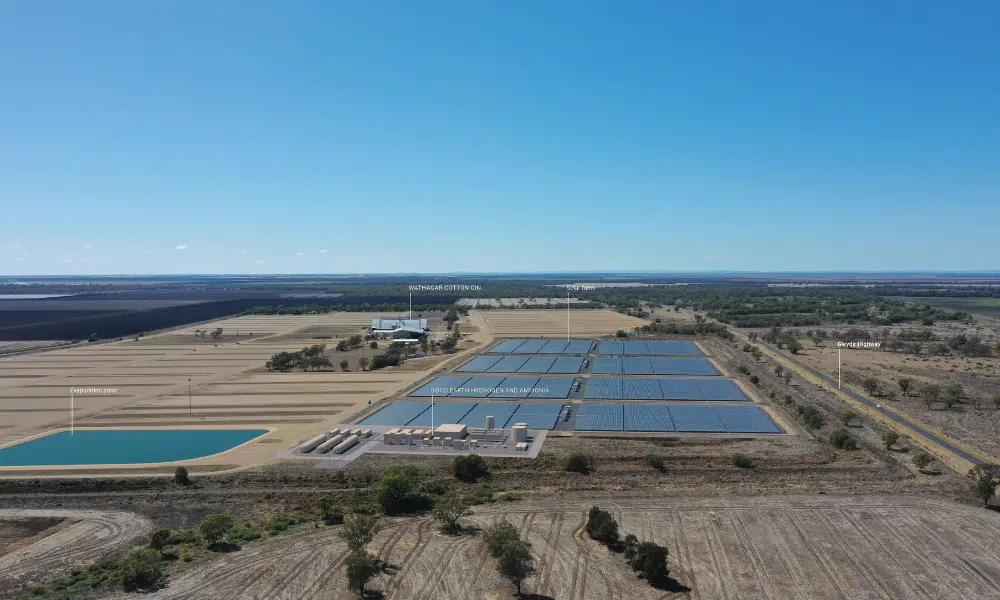
The integrated solar-to-ammonia facility will be built beside Sundown’s Wathagar cotton ginning operation, just outside Moree, NSW. When up and running, GEGHA will produce 4,500 tonnes of low-carbon ammonia annually. This will displace fossil fuel-based fertiliser, removing up to 17,000 tonnes of CO₂-equivalent emissions every year – that’s the same as taking 6,500 cars off the road or planting half a million trees.
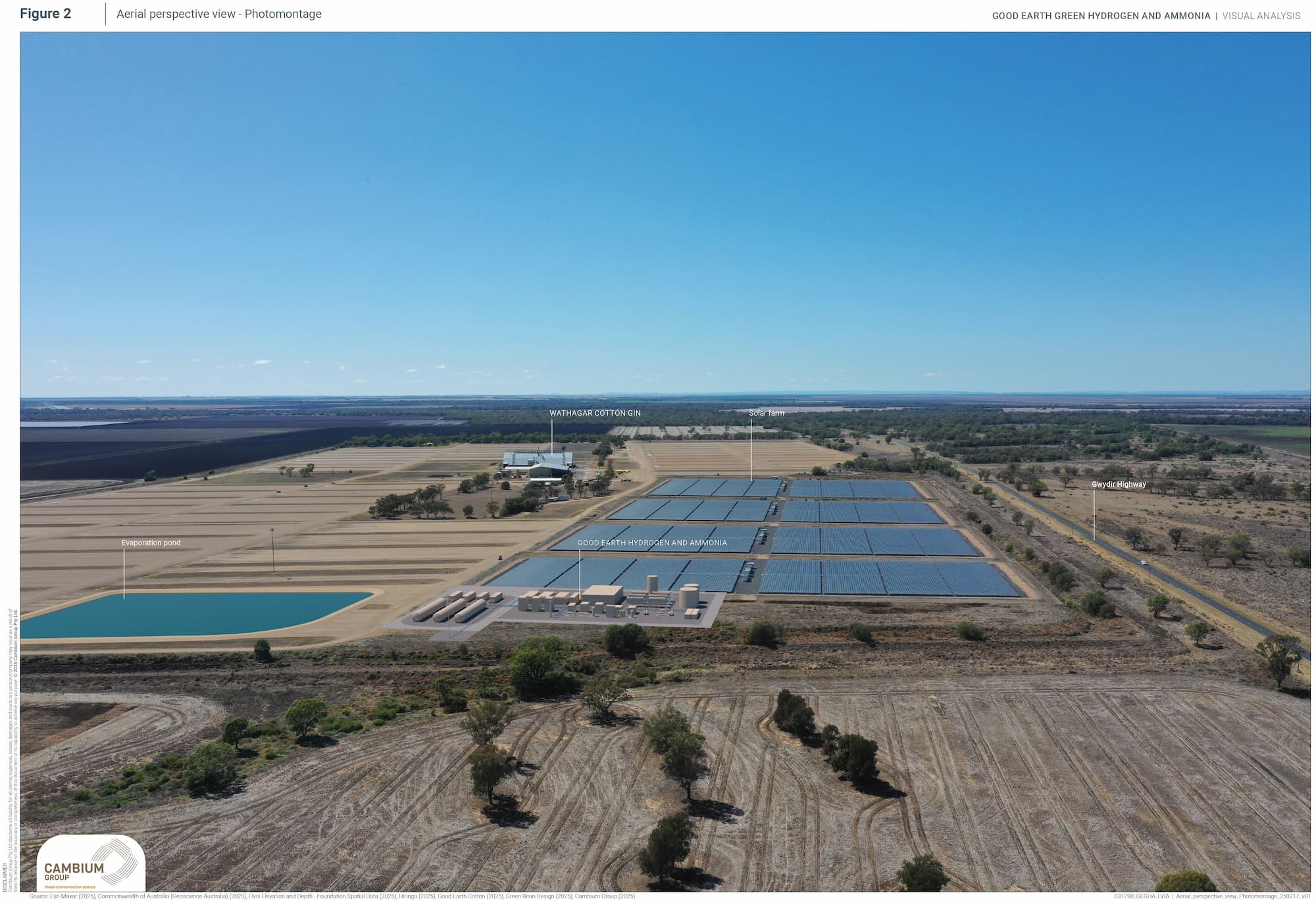
This homegrown fertiliser will first support Sundown’s Good Earth Cotton – the world’s first climate-positive, traceable cotton – with surplus ammonia made available to other local growers.
GEGHA will also deliver around 224 tonnes of green hydrogen per year, fuelling Hiringa’s heavy-vehicle refuelling network and replacing diesel in irrigation pumps. That’s another major step towards a cleaner, closed-loop agri-supply chain from paddock to port.
“Getting the green light for green fertiliser production isn’t just about producing low-carbon ammonia,” said Andrew Clennett, Hiringa co-founder and CEO.
“It’s a model for overcoming the obstacles that have held back the establishment of these new green industries. By strategically partnering with Sundown Pastoral Co, we’re anchoring demand with supply to meet the immediate needs of the agricultural sector.”


Building supply chain resilience
GEGHA will deliver Australia’s first East Coast green fertiliser supply, offering regional farmers price stability, supply security, and a local low-emissions alternative to imported product.
Powered by solar and battery storage, GEGHA uses electrolysis to extract hydrogen from water, which is then combined with nitrogen to form ammonia – with negligible CO₂ emissions.
In contrast, most fertiliser today is made using natural gas or coal, with Australia relying heavily on imports vulnerable to global market shocks.
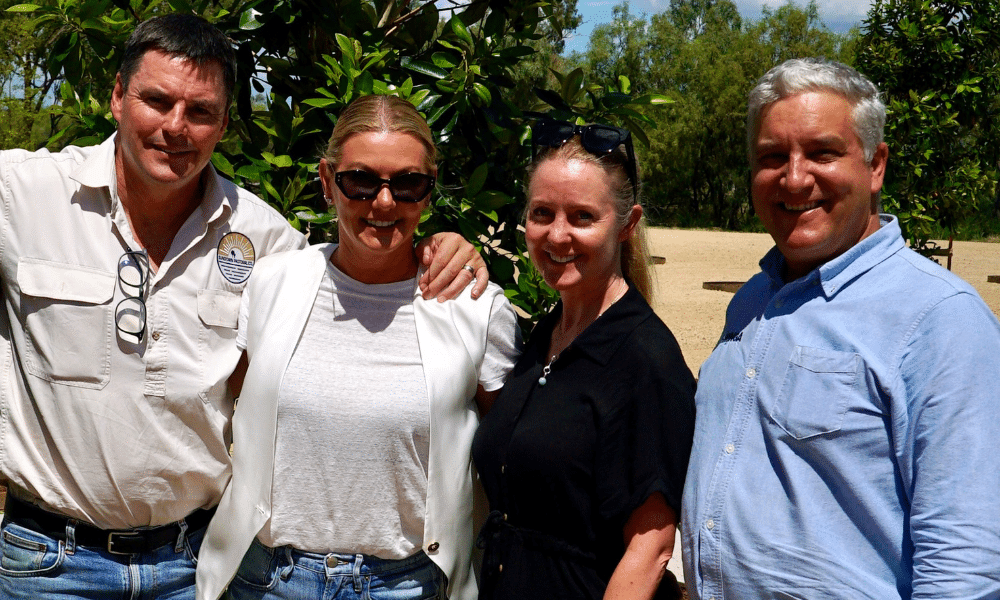
David Statham, owner of Sundown Pastoral Company, said:
“Agriculture is always adapting – as farmers we have adapted for generations. We have been measuring our emissions and reductions for the past five years. There is an increasing demand for fibres that demonstrate a lower footprint and the GEGHA project allows us to further control the reduction of our emissions.”
By using GEGHA’s green ammonia, farmers can not only reduce their own emissions but also meet growing consumer and industry demand for sustainable, low-carbon products.
“The GEGHA project demonstrates how low-carbon ammonia can be integrated into regional farming through a scalable, cost-effective model. As both a template and a catalyst GEGHA paves the way for decentralised fertiliser production across NSW’s agricultural valleys – cutting emissions, meeting demand, and driving a more resilient regional economy,” said Mr Clennett.

NAB backs farming’s low-emissions future
National Australia Bank (NAB) is financing the project, recognising its potential to transform Australian agriculture.
Khan Horne, NAB Executive for Regional and Agribusiness, said:
“This pioneering project could help transform Australian agriculture by enabling a more resilient, low-emissions future. As the bank for one in three Aussie agribusinesses, we’re committed to backing customers tackling challenges like access to affordable, low-emissions fertiliser. We’re proud to support GEGHA’s vision and its ambition to help farmers cut emissions, and boost profitability.”
The project is supported by the NSW Government under the Net Zero Plan Stage 1: 2020–2030. GEGHA is expected to be fully operational in early 2027.
GEGHA at a glance
Project partners: Hiringa Energy and Sundown Pastoral Company
Location: 33km south-west of Moree, NSW (next to Wathagar Cotton Gin)
Solar capacity: 36 MW (9 MW existing + 27 MW new)
Battery storage: 41 MWh
Electrolysis capacity: 15 MW
Ammonia production: 16 tonnes per day (~4,500 tonnes/year)
Hydrogen output: 224 tonnes/year
Storage: 600 tonnes of ammonia, 3 tonnes of hydrogen
Uses: On-farm fertiliser, irrigation pumping, and green hydrogen for transport
Next steps
Hiringa is already planning expansion projects in NSW’s Riverina and Gwydir regions, each with over 50 MW of electrolysis to produce around 20,000 tonnes of ammonia annually. These decentralised facilities will supply green fertiliser across regional NSW and Queensland, slashing distribution costs while helping farmers stay green, productive, and competitive.