




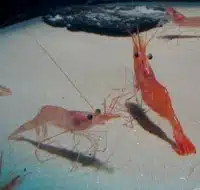
Scientists from Queen Mary University of London (QMUL) have created electricity-generating solar cells using chemicals derived from the shells of shrimp and other crustaceans, a development that could have a major impact on the cost of producing solar power.
The research is focused on nanotechnology, specifically the highly conductive light-absorbing quantum dots used in thin-film and spray-on solar technology.
These tiny crystals can be tuned to specific wavelengths of light, multiplying the energy production of electrons throughout solar devices. They can also trap and convert infrared light to energy, light that would otherwise heat up and degrade photovoltaic processes.
The team discovered that two materials found in the shells of shrimp and crustaceans, chitin and chitosan, could be used to replace expensive metals like ruthenium and platinum, the expensive and rare metals used to make carbon quantum dots (CQDs).
Using a process known as hydrothermal carbonisation, the QMUL scientists incorporated the shrimp-derived chemicals to successfully produce CQDs. They then coated zinc oxide nanorods with the quantum dots to make solar cells.
“This could be a great new way to make these versatile, quick and easy to produce solar cells from readily available, sustainable materials,” said Dr Joe Biscoe, a researcher on the project.
The efficiency of the solar cells is low compared to the solar panels used in rooftop PV systems, but the team hopes their discovery of an organic replacement for rare-earth materials in the production of CQDs will result in cheaper solar energy, at least in the field of thin-film technology.
“Once we’ve improved their efficiency they could be used anywhere that solar cells are used now, particularly to charge the kinds of devices people carry with them every day,” Dr Briscoe said.
Professor Magdalena Titirici, Professor of Sustainable Materials Technology at QMUL, added,
“New techniques mean that we can produce exciting new materials from organic by-products that are already easily available. Sustainable materials can be both high-tech and low-cost…We’ve also used biomass, in that case algae, to make the kinds of supercapacitors that can be used to store power in consumer electronics, in defibrillators and for energy recovery in vehicles.”
Image credit : Tomasz Sienicki