

More than 4.2 million Australian homes now generate their own electricity from rooftop solar, and one of the first questions every household faces is single-phase vs three-phase solar in Australia: which one applies to your home? The answer isn’t a preference. It depends on how your property is wired, which determines how large a system you can install and how much power you can send back to the grid.
Getting this right before you order equipment saves you from an inverter you can’t legally connect. It also affects your battery options, EV charging speed, and whether export limits throttle your system on sunny afternoons. This guide breaks down what a 3-phase solar system unlocks that single-phase can’t. Ready to size the right system?
Energy Matters can connect you with trusted installers and help you compare your options. Get started with a free solar quote today.
Most households only need single-phase solar. Three-phase becomes worthwhile for big energy users, EVs, or systems over about 8-10kW.
Key takeaways
- Single-phase solar suits most Australian homes and typically caps exports around 5kW.
- Three-phase solar allows larger inverters and higher export limits, often up to 15kW or more.
- A 3-phase solar system requires an existing 3-phase connection; you can’t simply install a 3-phase inverter on single-phase wiring.
- Large energy users, EV owners, and homes planning future battery expansions benefit most from three-phase power.
- Always confirm your exact export limit and phase type with your distributor before finalising system size.
What’s the difference between single-phase and three-phase solar?
Australian homes connect to the grid through either one live wire (single-phase) or three (three-phase), each carrying power slightly out of sync with the others. Single-phase is standard for most established houses, while three-phase is common in newer builds, larger homes, and properties with heavy-duty appliances.
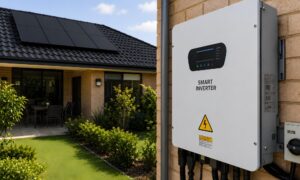
Your inverter has to match this wiring: a single-phase inverter feeds solar down a single wire, while a three-phase inverter distributes generation and export evenly across all three. This is why the single-phase vs three-phase solar decision in Australia starts with your switchboard, not your roof.


Single-phase solar inverter: What it means for your home
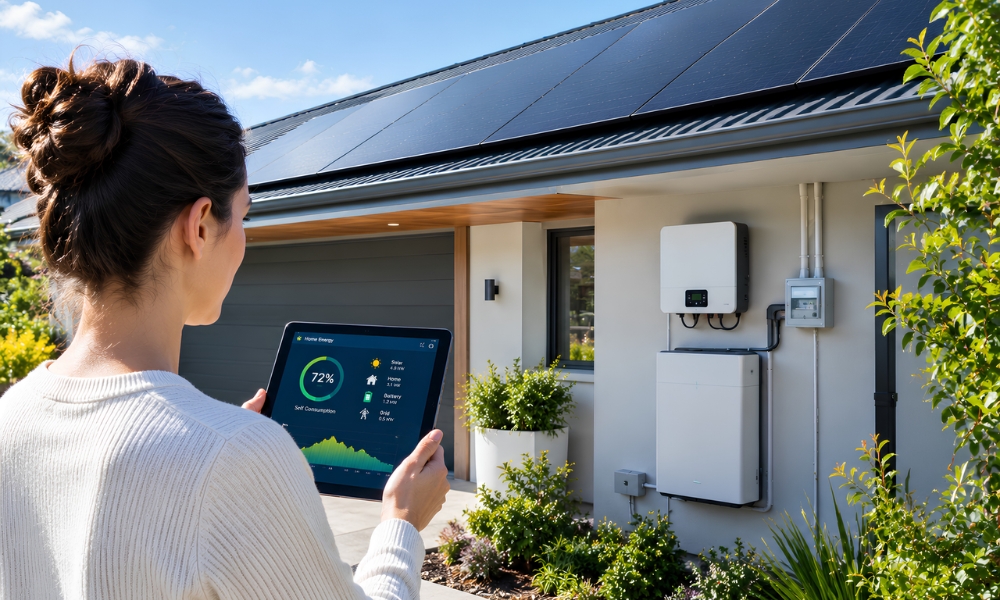
A single-phase solar inverter is the standard choice for most Australian rooftops and comfortably powers everyday households. Most distribution networks cap single-phase export at around 5kW, though a handful, like parts of Ausgrid’s NSW network, allow up to 10kW. Importantly, export limits restrict only what you send to the grid, not what your panels can generate, so a single-phase home can still install a larger array and store the extra solar rather than export it.
- Good fit if: you run a typical household load, don’t plan large-scale EV charging, and your existing single-phase wiring already suits your usage.
- Watch for: curtailment on very sunny days, where excess generation above your export cap is lost unless you self-consume it or store it in a battery.
Powering up your EV with solar
If you’re thinking of buying an EV, adding an EV charger to your solar system is a smart way to “fuel” your car with clean, renewable energy.
Three-phase solar Australia: When it makes sense
Three-phase solar Australia setups suit homes with higher energy demands or ambitions to expand their system down the track. Because generation and export are spread across three wires, this connection typically supports a bigger inverter and a higher export allowance, often around 15kW total. This extra headroom matters most for specific household profiles rather than the average home.
- Large or all-electric homes with ducted reverse-cycle air conditioning
- Households charging one or more EVs at home, especially with fast chargers
- New builds, since many developments now connect as three-phase by default
- Homes planning a solar system larger than roughly 8-10kW
Ready to upgrade your appliances and take your energy savings to the next level? Energy Matters believes understanding and utilising these new energy ratings in Australia is a crucial step towards a greener home. By prioritising home appliance efficiency, you can reduce your energy bills and minimise your environmental footprint.
Energy Matters recommends switching to energy-efficient appliances now for smarter savings and a more environmentally friendly lifestyle.
What is a 3-phase solar system, and how big can it be?
A 3-phase solar system uses an inverter that connects to all three supply wires, balancing output so no single phase is overloaded. Depending on your distributor, three-phase homes can generally install inverters up to 15-30kW, compared with 5-10kW for single-phase properties. Exact limits vary by state, and some areas (including parts of Western Australia) have recently expanded allowances to support bigger systems and more household batteries.
Single-phase vs three-phase solar in Australia: Quick comparison
Here’s how the two options generally stack up. Always confirm exact figures with your installer, since limits differ by state and distributor.
| Feature | Single-phase solar | Three-phase solar |
| Typical inverter capacity | Up to 5-10kW (network dependent) | Up to 15-30kW (network dependent) |
| Typical export limit | 5kW total (some networks allow 10kW) | 15kW total (5kW per phase) |
| Best suited to | Standard homes, average energy use | Big energy users, EVs, ducted air-con, new builds |
| Panel capacity generally allowed | Around 10-13kW (with oversizing) | Around 20-30kW (with oversizing) |
| Upgrade consideration | Usually no upgrade needed | May need a network upgrade if not already three-phase |
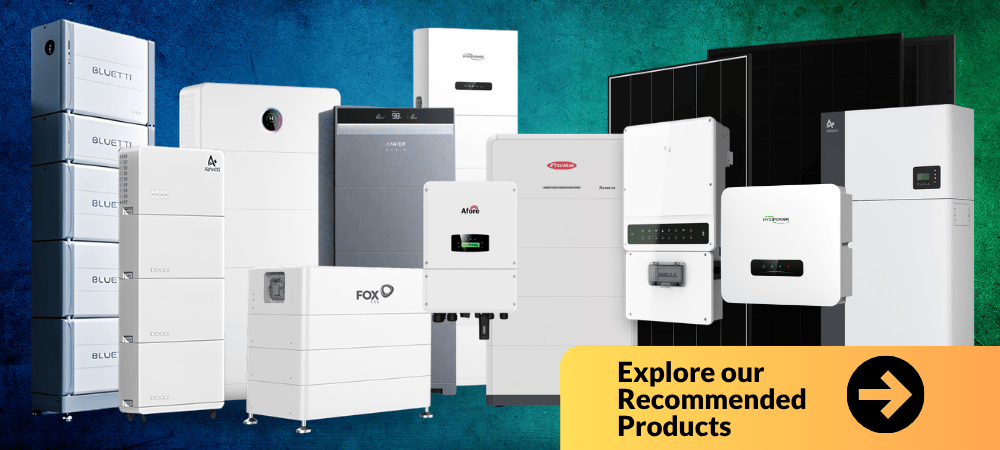
Check our page for our recommended solar inverter products.
Do I need 3-phase solar for my home?
The honest answer for most households is no. If you’re asking, “Do I need 3-phase solar” simply to install a standard rooftop system, single-phase will comfortably cover an average family home’s energy needs. Three-phase becomes the smarter answer once your circumstances shift toward higher consumption or bigger future plans. Run through this quick checklist:
- Check your usage: If your quarterly bill regularly exceeds the typical household average, three-phase may suit your load better.
- Check your appliances: Ducted air conditioning, pool heat pumps, and EV chargers often run more efficiently on three-phase power.
- Check your growth plans: If you’re likely to add a solar battery storage system, a second EV, or a bigger array later, three-phase leaves more room to grow.
Use Energy Matters’ easy-to-use solar power and battery storage calculator to determine the size of your solar system with storage! Our solar calculator will generate performance information and potential savings.
We can send this information to 3 of our pre-vetted, trusted local installers in your area so they can provide obligation-free solar quotes and take the first step toward true energy independence!

How to check which phase power your home has
Before comparing inverters, confirm your current connection type. It takes only a few minutes and helps you avoid quoting the wrong system entirely.
- Look at your switchboard: three-phase boards usually show three main switches instead of one.
- Check a recent electricity bill, which often lists your connection type.
- Ask your solar installer to confirm during a site inspection, standard practice before any quote.

Frequently asked questions
What’s the difference between single-phase and three-phase solar in Australia?
Single-phase homes receive power through one wire and typically suit smaller solar systems with lower export limits. Three-phase homes receive power across three wires, allowing larger inverters, higher export caps, and better support for big appliances, EV charging, and batteries.
Can I install three-phase solar if my home only has single-phase power?
No, a three-phase inverter needs a three-phase connection. If your home has only single-phase power, your retailer can quote an upgrade, but it requires additional wiring and network approval before installation can proceed.
How much can I export with a single-phase solar system?
Most Australian networks cap single-phase export at around 5kW, though this varies by distributor and location. You can still install a larger system for self-consumption or battery storage, since export limiting affects only grid feed-in, not generation.
Does three-phase solar cost more to install?
A three-phase inverter typically costs somewhat more than an equivalent single-phase model, and homes without existing three-phase wiring face additional upgrade costs. For larger systems, the higher export allowance often offsets this over time by providing more usable solar.
Do I need 3-phase solar to run a home battery?
Not necessarily. Most home batteries pair well with a single-phase inverter, since they store excess solar rather than export it. Three-phase becomes more relevant if you’re pairing a battery with a large solar system or heavy three-phase appliances.

Choosing the right solar setup for your home
Whether your home runs on single-phase or three-phase power, the right system comes down to matching your inverter to your wiring and your energy needs. Getting this right from the start avoids costly upgrades and maximises every kilowatt your panels produce.
Compare tailored solar quotes from Solar Accreditation Australia (SAA)-accredited installers near you. No obligation, no pressure, just the right system for your home.