



Over four million Australian homes and small businesses now harness rooftop solar energy, according to the Clean Energy Council. However, generating clean electricity is only half the battle when it comes to slashing your power bills. To track what you send to the grid and unlock maximum feed-in tariffs, pairing a smart meter with a solar panel system is essential for your home.
Ready to unlock maximum bill reductions? Whether you are upgrading an older system or installing solar for the first time, understanding digital metering is critical.
Energy Matters helps you navigate this transition seamlessly by connecting you with trusted, SAA-accredited installers. Get up to 3 free solar quotes through Energy Matters today to optimise your household energy setup.
What is a smart meter and how does it work with solar panels?
A smart meter is a digital electricity meter that records how much power your home imports from the grid and, if you have solar, how much it exports back to the grid, typically at 5- to 30-minute intervals. That data is sent automatically to your retailer, so there is no need for a manual meter read.


For a home with solar, this is the piece that makes the whole system work properly. Without a smart meter and solar panels working together, your retailer cannot accurately measure how much surplus energy you are sending back to the grid, which could mean you miss out on feed-in tariff payments altogether.
| Feature | Analogue (accumulation) meter | Smart meter |
| Reading frequency | Manual, roughly every 3 months | Automatic, every 5-30 minutes |
| Solar export tracking | Not supported | Fully supported (two-way) |
| Time-of-use tariffs | Not available | Available |
| Outage detection | Manual reporting only | Often automatic |
| Typical cost to upgrade | N/A | Free under accelerated rollout in most areas |
Why a two-way smart meter is vital for net metering smart meter setups
In Australia, solar savings rely heavily on a proper net-metering smart-meter arrangement. Net metering measures the difference between the electricity you consume from the grid and the excess solar power you export.
Standard accumulation meters cannot measure electricity flowing in both directions simultaneously. Without a smart meter solar upgrade, your grid provider cannot verify how much solar power you exported.
- Accurate solar feed-in tariffs: Ensures every kilowatt-hour exported to the grid is credited correctly on your energy bill.
- No manual meter reads: Eliminates estimated billing and meter reader access issues forever.
- Instant fault detection: Alerts your network distributor immediately during grid outages or power line issues.
- Time-of-use optimisation: Allows you to take advantage of cheaper off-peak rates when charging batteries or electric vehicles (EVs).
Powering up your EV with solar
If you’re thinking of buying an EV, adding an EV charger to your solar system is a smart way to “fuel” your car with clean, renewable energy.
Smart meter installation, solar rules, and the 2030 national rollout
Under new regulations finalised by the Australian Energy Market Commission (AEMC), Australia is accelerating smart meter deployment. All legacy accumulation meters across the National Electricity Market must be replaced with smart meters by 2030.
If you are planning a solar project with a smart meter installation, your energy retailer will arrange the upgrade during solar setup. Under national rules established by the Australian Energy Regulator (AER), retailers cannot charge upfront installation fees for scheduled rollout upgrades.
Some older properties may require switchboard upgrades or asbestos removal before a new meter can be safely installed. Energy Matters recommends having a licensed electrician inspect your switchboard prior to solar installation.
Comparing electricity meter types for solar households
| Feature | Legacy Accumulation Meter | Basic Interval Meter | Two-Way Smart Meter |
| Data Collection | Manual quarterly reads | Manual or local downloads | Automatic 5-minute intervals |
| Solar Export Tracking | No (Requires upgrade) | Limited | Comprehensive bi-directional |
| Tariff Support | Flat rates only | Basic time-of-use | Flexible dynamic & time-of-use tariffs |
| Remote Troubleshooting | No | No | Yes (Instant fault monitoring) |
| AEMC Compliance | Phasing out by 2030 | Phasing out by 2030 | Fully compliant standard |
How net metering works with a smart meter
Net metering, sometimes used loosely to describe Australia’s feed-in tariff system, measures and credits the difference between the energy your solar panels export and the energy your home imports. In Australia, this isn’t a true dollar-for-dollar net metering model like in some overseas markets; instead, exports are credited at a separate feed-in tariff rate, usually lower than the rate you pay to import.
Here’s how a net metering smart meter setup typically plays out on a sunny day:
- Your solar panels generate more electricity than your home is using.
- The surplus flows out through your two-way smart meter and into the grid.
- The meter logs exports separately from imports.
- Your retailer applies your feed-in tariff rate to the exported units on your bill.
- Any energy you import outside solar hours is billed at your normal usage rate.

Smart meter installation for solar systems: What to expect
Smart meter installation for solar households is usually straightforward and, in most states, provided at no cost as part of the national rollout or when a new solar system is connected. Your retailer or distributor coordinates the swap once your solar installer notifies them of the new system.
Typical installation steps
- Your solar installer lodges a connection application with your local network distributor.
- Your electricity retailer arranges a smart meter installation date, often within a few weeks.
- A licensed technician replaces the old meter, usually taking 30-60 minutes with a brief power interruption.
- The new two-way smart meter is registered and tested to confirm import and export data are flowing correctly.
- You should see interval data appear in your retailer’s app or portal within a billing cycle.
If your home doesn’t have one yet, ask your retailer directly. Under the accelerated national rollout, most Australian households are expected to have one installed by 2030, with priority often given to solar and battery customers.
Use Energy Matters’ easy-to-use solar power and solar battery storage system calculator to determine the right size for your solar system with storage. Our solar calculator will generate performance information and potential savings.
We can send this information to 3 pre-vetted, trusted local installers in your area so they can provide obligation-free solar quotes and help you take the first step toward true energy independence!

Expert tip
Book your smart meter installation for solar at the same time as your panel installation wherever possible. Coordinating both reduces delays and ensures your export data is captured from day one, rather than losing weeks of feed-in tariff credits.
Ready to get more from your solar system?
Energy Matters can check whether your home is smart meter- and solar panel-ready, and connect you with a trusted local installer. Request your free solar assessment and quote today.
Benefits of pairing smart meters and solar panels in Australia
- Accurate export tracking, so every kilowatt-hour you send to the grid is counted and credited
- Access to time-of-use and solar-specific tariffs that reward exporting during peak demand
- Real-time visibility into consumption via retailer apps, helping you shift usage to daylight hours
- Faster fault and outage detection, reducing downtime for your system
- A foundation for adding a home battery later, since batteries rely on accurate interval data
Common smart meter and solar issues homeowners face
- Export data not appearing: Often means the meter hasn’t been correctly configured as two-way; contact your retailer
- Delayed installation: Rollout timelines vary by distributor and state, so follow up if it has been more than six weeks
- Confusing tariff options: Ask your retailer specifically for solar-friendly time-of-use plans, not just the default rate
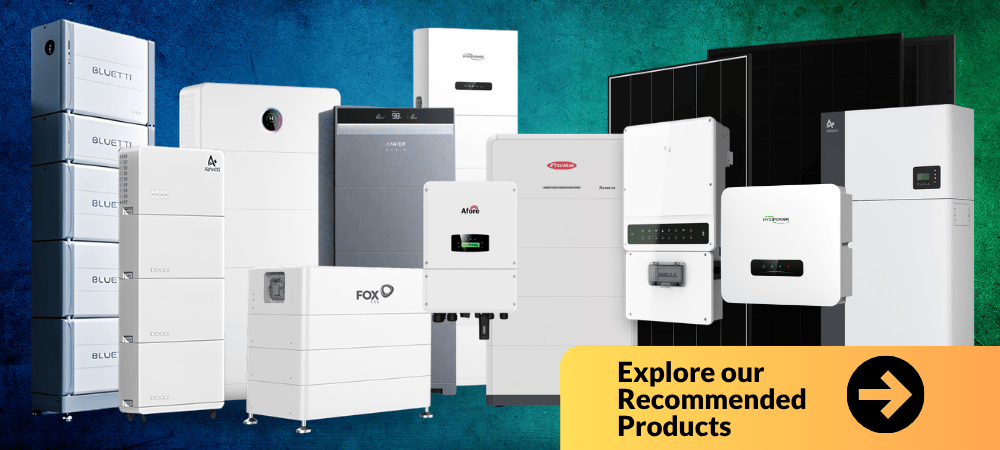
- Meter compatibility with solar batteries: Confirm your meter supports the interval data your solar battery requires before installation. Check our page for our recommended solar products.

Frequently asked questions
Do I need a smart meter if I already have solar panels?
Yes. Without a two-way smart meter, your retailer cannot measure the energy your solar system exports, so you won’t receive feed-in tariff credits. Most solar retailers now require a compatible smart meter before connecting your system to the grid.
Is smart meter installation for solar free in Australia?
In most states, yes. The accelerated national rollout, backed by the AEMC, aims to provide standard smart meter installations at no cost by 2030. Some older or non-standard installations may attract a fee, so confirm with your retailer.
What is the difference between net metering and a feed-in tariff?
True net metering credits exports at the same rate as imports. Australia instead uses a feed-in tariff system, where a two-way smart meter records exports separately, and retailers pay a set rate, usually lower than the import price.
How long does smart meter installation take for a solar system?
A standard swap takes 30 to 60 minutes on-site, with a short power interruption. From application to activation, the full process, including scheduling and data registration, usually takes 2 to 6 weeks, depending on your distributor.
Can a smart meter reduce my solar payback period?
Indirectly, yes. Accurate export data and access to time-of-use tariffs help you shift usage and maximise self-consumption, which can meaningfully shorten how long it takes your solar system to pay for itself.
Key takeaways
- A two-way smart meter is essential for any Australian home with solar panels to receive accurate feed-in tariff credits
- Australia’s accelerated rollout aims for universal smart meter coverage by 2030, with many installations provided free
- Net metering in Australia works via a feed-in tariff, not a direct one-for-one credit like some overseas systems
- Smart meter installation for solar is typically fast, but pairing it with your panel install avoids lost export credits
- Pairing a smart meter with solar unlocks better tariffs, real-time data, and a foundation for adding a solar battery storage system later
Switch to smart solar energy with Energy Matters
Ready to unlock the full value of your rooftop solar investment? Upgrading your energy system with a high-efficiency solar array and smart meter empowers you to take control of rising electricity costs. Energy Matters connects Australian homeowners with pre-vetted, Solar Accreditation Australia (SAA)-accredited solar installers nationwide.
Complete our simple online form today to receive up to 3 free, zero-obligation solar quotes tailored to your home. Energy Matters makes transitioning to clean, cost-effective solar energy fast, transparent, and easy!