





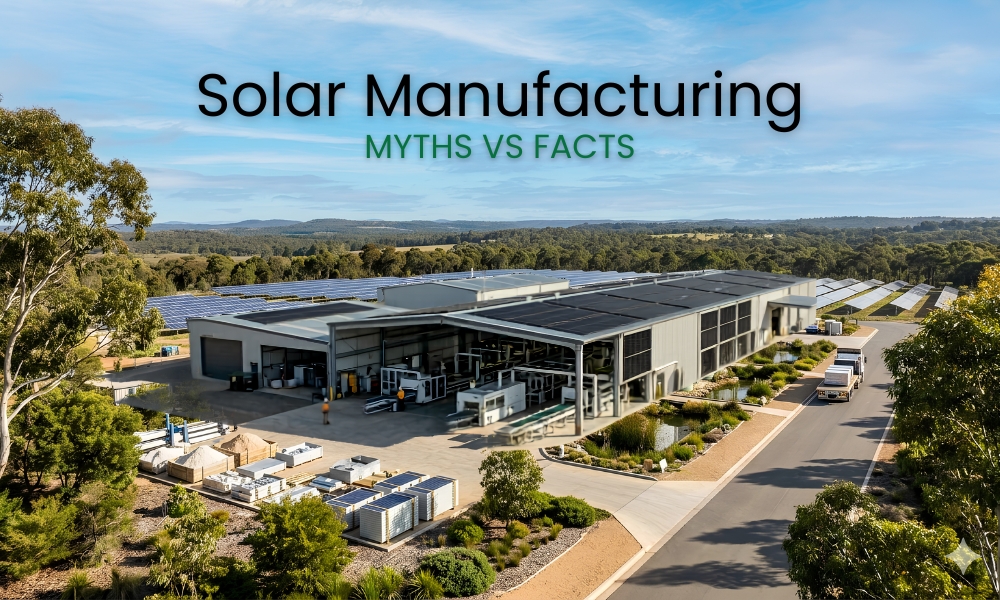
Solar manufacturing environmental impact is one of the most debated topics in Australia’s clean energy sector. Are solar panels truly green, or do they cause hidden harm? In this post, we separate the myths from the facts — so you can make a smarter, more informed decision about going solar.
Why the solar manufacturing environmental impact debate matters
Australia is one of the world’s fastest-growing solar markets. With millions of rooftop systems installed and more being added every day, it’s important to understand what goes into making those panels.
Critics often claim that solar panels are just as harmful as fossil fuels due to their manufacturing. But the data tells a very different story — and Australians deserve to know the full picture.




Myth 1: Solar manufacturing creates more pollution than it saves
This is one of the most common misconceptions about solar energy. Critics argue that the environmental impact of solar manufacturing outweighs the clean energy benefits. They claim that the raw energy used in production creates a permanent carbon debt.
The fact: Extensive lifecycle assessments prove this claim completely false. Most modern solar panels pay back their manufacturing energy footprint within 1 to 2 years of operation. Given that panels last for 25 to 30 years, they produce net-clean electricity for decades.
During its operational lifespan, a single solar panel prevents tons of carbon dioxide from entering our atmosphere. The environmental impact of solar manufacturing is a brief initial investment. This investment yields massive environmental dividends for Australian communities and businesses over time.
Myth 2: Toxic chemicals in production ruin the green benefits
Another prevalent concern is the use of hazardous chemicals during the manufacturing process. Silicon purification uses materials like silicon tetrachloride. Cell manufacturing also requires chemicals like hydrofluoric acid for etching circuits.
The fact: Strict Australian environmental laws and global manufacturing standards prevent these chemicals from harming ecosystems. Modern factories utilise closed-loop systems. These systems capture, treat, and recycle chemical byproducts instead of releasing them into the environment.
Therefore, the localised environmental impact of solar manufacturing is tightly controlled and minimised. Choosing reputable brands ensures that your solar assets are manufactured to meet strict safety standards. This guarantees excellent environmental management at every step of the supply chain.
Myth 3: Australia cannot manage the waste from solar manufacturing
Some critics suggest that solar waste will overwhelm Australian landfills. They worry about production scraps and broken panels. They claim that the environmental impact of solar manufacturing creates a permanent waste crisis that we cannot solve.
The fact: Australia is pioneering excellent circular-economy initiatives for renewable-energy assets. Victoria has already banned solar panels from entering landfills entirely. Other states are quickly rolling out similar regulations to encourage commercial recycling operations.
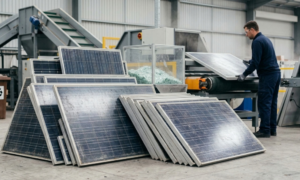
Advanced recycling facilities can recover up to 95% of materials from a solar panel. This includes premium components like silver, copper, high-purity silicon, and aluminium frames. Reusing these items drastically reduces the environmental impact of manufacturing raw solar panels for future generations.
Upgrade your solar system without sending your old solar panels to the landfill. Second Life Solar will cover the cost of removing outdated solar panels if you decide to replace your system. Thanks to our collaborations with CSIRO, the NSW Environment Protection Authority, and Energy Matters, we are happy to offer existing solar customers an option.
The true solar manufacturing environmental impact: Key facts
When analysing the real data, the benefits of solar deployment far outweigh the production footprint. Let us review the verified facts regarding the solar manufacturing environmental impact in the Australian marketplace:
- Rapid energy payback: Panels generate enough clean power to offset their manufacturing emissions within 12 to 24 months.
- Massive carbon reduction: A standard 6.6kW residential solar system saves around 9 tons of carbon dioxide emissions every single year.
- Water-efficient power: Solar systems require zero water to generate electricity, unlike coal or gas plants, which consume millions of litres.
- Circular economy growth: Local recycling initiatives are transforming old solar modules into raw materials for new manufacturing.


The real environmental costs: What we should actually focus on
Rather than perpetuating myths, it’s more useful to focus on the genuine environmental considerations in solar manufacturing. These include:
- Energy use during manufacturing: Most solar factories still use grid electricity, which may include fossil fuels. Shifting to renewable-powered factories — as many manufacturers are doing — is key to reducing this impact.
- Silicon mining: Extracting quartz for silicon production has land-disturbance impacts, though these are far smaller than those of coal mining.
- Panel recycling infrastructure: Australia needs to invest further in solar panel recycling facilities to prevent future landfill issues.
- Supply chain transparency: Ethical sourcing of raw materials, including polysilicon, remains an area requiring ongoing scrutiny in the global solar supply chain.
These are real issues — but they are being actively addressed by industry, governments, and researchers. The environmental impact of solar manufacturing continues to shrink as technology improves.
Australia’s solar future: Cleaner manufacturing is already here
The good news is that solar manufacturing is getting greener every year. Solar cells are becoming more efficient, meaning fewer materials are needed to generate the same amount of electricity.
The CSIRO and Australian universities are actively researching next-generation solar technologies, including perovskite cells and tandem solar cells, which promise even lower environmental footprints. Some of this research is already moving toward commercial production.


Learn more from Energy Matters
Want to explore how solar works in your home? Read our guides on home battery storage and solar panel maintenance to get the most out of your clean energy system.
You can also check your system’s eligibility for the Small-scale Technology Certificates (STCs) to maximise your savings.
Internal resources to explore:
Use Energy Matters’ easy-to-use solar power and battery storage calculator to determine the size of your solar system with storage! Our solar calculator will generate performance information and potential savings.
We can send this information to 3 of our pre-vetted, trusted local installers in your area so they can provide obligation-free solar quotes and take the first step toward true energy independence!

Ready to make the switch?
The environmental impact of solar manufacturing is real — but it is far smaller than many myths suggest, and it is shrinking fast. Solar panels deliver decades of clean energy with a fraction of the footprint of fossil fuels. As technology improves and recycling infrastructure grows, solar will only become greener. The evidence is clear: going solar is one of the best environmental decisions an Australian household or business can make.
Visit Energy Matters today to explore your solar options, start saving on energy, and reduce your environmental impact. Get your FREE solar quote from Energy Matters now — Australia’s most trusted solar comparison service.
Sources and References:
- Clean Energy Council – Approved Solar Products
- International Energy Agency (IEA) – Solar PV Lifecycle Emissions
- CSIRO – Next-Generation Solar Research
- Nature Energy (2022) – Life Cycle Greenhouse Gas Emissions of Solar PV
- National Reconstruction Fund – Clean Energy Manufacturing Investment
- Clean Energy Regulator – Solar Panel End-of-Life Management