




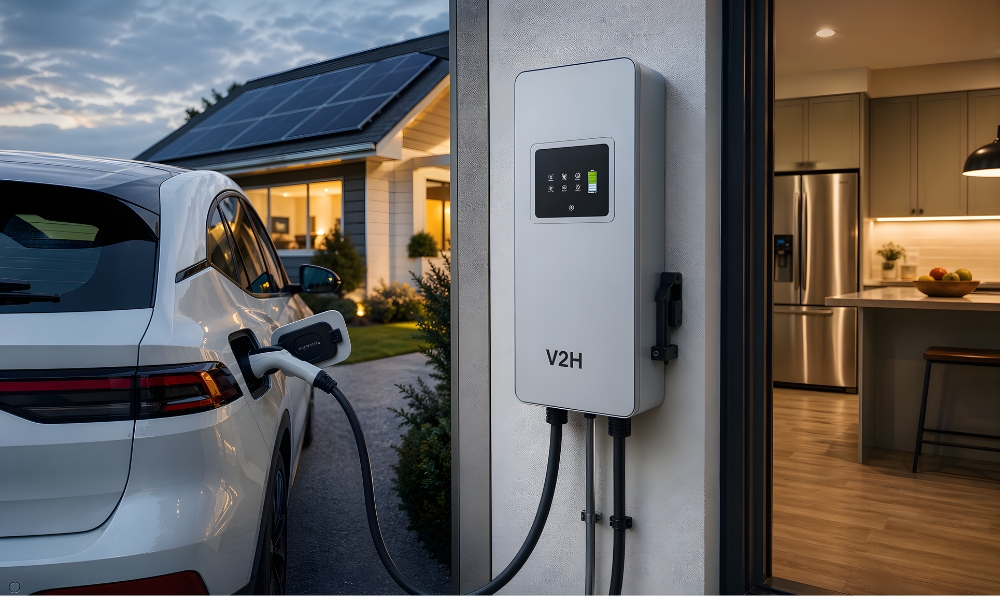
Imagine your electric vehicle (EV) doing more than just getting you from A to B. V2H technology — short for vehicle-to-home — lets your EV send power back into your home. Instead of paying peak electricity rates, your car becomes a giant home battery.
Australia is one of the most solar-savvy nations in the world, and V2H fits perfectly into that story. With V2H chargers in Australia now entering the market, this technology is moving from concept to reality fast. Energy Matters is here to help you understand exactly how it works.
What is V2H (Vehicle-to-Home)?
V2H stands for Vehicle-to-Home. It is a type of bidirectional charging that allows stored energy in your EV’s battery to flow back into your home’s electrical system.
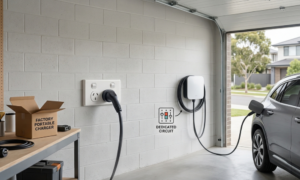
Most EV chargers only work in one direction — from the grid to your car. A V2H charger works both ways. Your EV charges from your home or solar system, and when needed, it pushes electricity back to power your lights, appliances, and more.
Think of your EV as a second home battery. A typical EV holds 50–100 kWh of usable energy — far more than most dedicated home batteries on the market.
Use Energy Matters’ easy-to-use solar power and battery storage calculator to determine the size of your solar system with storage! Our solar calculator will generate performance information and potential savings.
We can send this information to 3 of our pre-vetted, trusted local installers in your area to receive obligation-free solar quotes and take the first step toward true energy independence!

Comparing V2H to standard home batteries
Many Australians wonder whether they still need a dedicated home battery if they own a V2H-capable EV. While a home battery is always available, a vehicle-to-home setup offers significantly more storage capacity. The following table highlights the key differences between these two storage solutions.
| Feature | Standard Home Battery | Vehicle-to-Home (V2H) |
| Storage capacity | Typically 10kWh – 15kWh | Typically 60kWh – 100kWh |
| Portability | Fixed to the wall | Moves with your vehicle |
| Primary use | Daily cycling | Daily cycling + Transport |
| Back-up duration | ~1 night | ~3 to 5 nights |
| Hardware required | Hybrid Inverter | V2H Charger Australia |
How does V2H work in Australia?
The process behind V2H is straightforward once you have the right equipment in place.
- Your rooftop solar charges your EV during the day.
- In the evening or during a blackout, your V2H charger draws power from the EV’s battery.
- The charger converts the EV’s stored DC electricity into AC power that your home can use.
- A smart energy management system controls when energy flows in or out.
V2H vs V2G vs V2L: What’s the difference?
There are three types of bidirectional EV technology Australians need to know about. Each works differently and suits a different purpose.
| Feature | V2H (Vehicle-to-Home) | V2G (Vehicle-to-Grid) | V2L (Vehicle-to-Load) |
| What it does | Powers your home from your EV battery | Sends power to the electricity grid | Power appliances via a socket in the car |
| Grid connection needed? | No (works off-grid) | Yes | No |
| Requires a bidirectional charger? | Yes | Yes | No – built-in outlet |
| Backup during blackouts? | Yes | No (grid must be live) | Limited (portable use only) |
| Available in Australia? | Emerging – chargers in market from 2025–26 | Emerging – regulatory approval underway | Yes – widely available now |
| Compatible EVs (examples) | Nissan Leaf, Mitsubishi Outlander PHEV, some BYD/Hyundai/Kia models | Same as V2H (software approval required) | Hyundai Ioniq 5/6, Kia EV6/EV9, BYD, MG4 |
| Approx. charger cost (AUD) | $6,000–$10,000+ | $6,000–$10,000+ | Free (built-in) or low-cost adapter |
| Standards compliance | AS/NZS 4777.1:2024 and AS/NZS 4777.2:2020 | Same as V2H | Not required |
| Key benefit | Energy independence, blackout backup | Earn money from grid export | Flexible portable power |
V2L (Vehicle-to-Load) is the simplest and already common on many Australian EVs today, such as the Hyundai Ioniq 5 and Kia EV6. V2H requires a special charger but offers full home backup. V2G goes a step further by letting you sell power back to the grid.
Which EVs support V2H in Australia?
Not every EV on Australian roads can do V2H yet. Software approval from car manufacturers is still the biggest barrier — many vehicles have the hardware but lack the software unlock.
These are some of the most relevant models to watch in the Australian market:
- Nissan Leaf – one of the earliest V2H-capable EVs via CHAdeMO connection
- Mitsubishi Outlander PHEV – supports V2H and is widely available in Australia
- Hyundai Ioniq 5 and Ioniq 6 – V2L-capable now; V2H expected via software update
- Kia EV6 and EV9 – strong V2X roadmap and compatible with emerging chargers
- BYD Seal and Shark 6 – growing bidirectional support
- Tesla Model 3 and Model Y – bidirectional charging flagged for future software releases
Benefits of V2H for Australian homes
V2H technology offers real, practical advantages for Australian households — especially those already on solar.
- Lower power bills: Store cheap solar energy in your EV and use it at night to avoid peak tariffs.
- Blackout backup: Unlike V2G, V2H works independently from the grid, powering your home during outages.
- Better solar self-consumption: Use more of the solar you generate rather than exporting it at low feed-in rates.
- Future-proof your home: V2H is part of the smart home energy ecosystem that is rapidly becoming standard in Australian households.
- Replaces a home battery: An EV with 60–100 kWh of capacity dwarfs most home batteries, which typically hold 10–15 kWh.
Is V2H right for you? Key questions to ask
V2H is not for every household yet. Consider these questions before making a decision:
- Do you own or plan to buy a V2H-compatible EV? Not all vehicles support the technology yet.
- Do you have rooftop solar? V2H delivers the best savings when paired with solar panels.
- Is your switchboard modern enough? Older homes may need electrical upgrades.
- Are you in a state where approved V2H chargers are available? Check with your distributor network.
- Can you afford the upfront cost? The technology still carries a premium price in 2025–26.
Energy Matters can help you assess whether V2H is the right next step for your home energy setup. Contact our team today to get expert advice tailored to your situation.

Get ready for V2H with Energy Matters
The V2H revolution is arriving in Australia, and preparation now means savings and energy independence later. Energy Matters is your trusted partner in navigating solar, batteries, and the evolving world of smart home energy.
Whether you want to future-proof your solar system, add a home battery, or get expert advice on V2H compatibility, our team is ready to help.
- Get a free solar and battery quote from Energy Matters today — Australia’s most trusted clean energy marketplace.
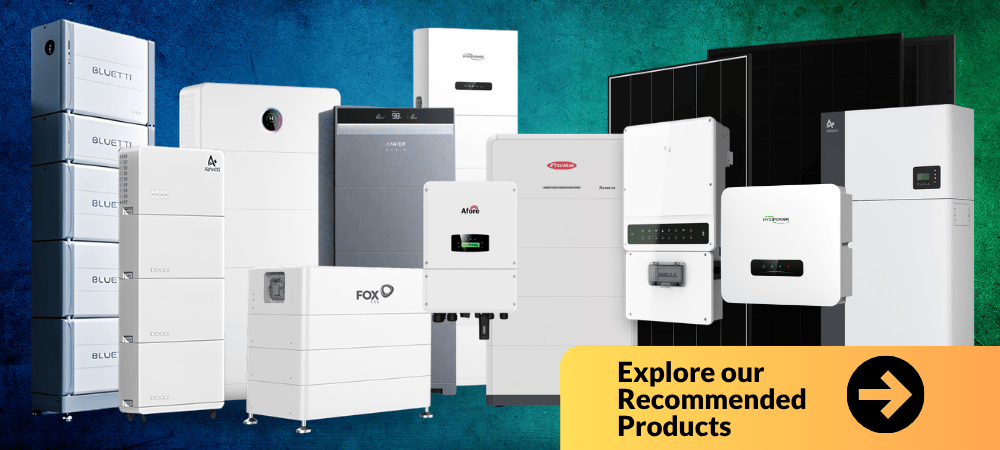
- Learn more about home battery storage options that can work alongside your future V2H setup.
- Already have solar? Explore EV charger solutions with Energy Matters to start your V2H journey.
Energy Matters is here to guide you through every step — from solar installation to EV charging and beyond. Get in touch today and make your home smarter, greener, and more resilient.