


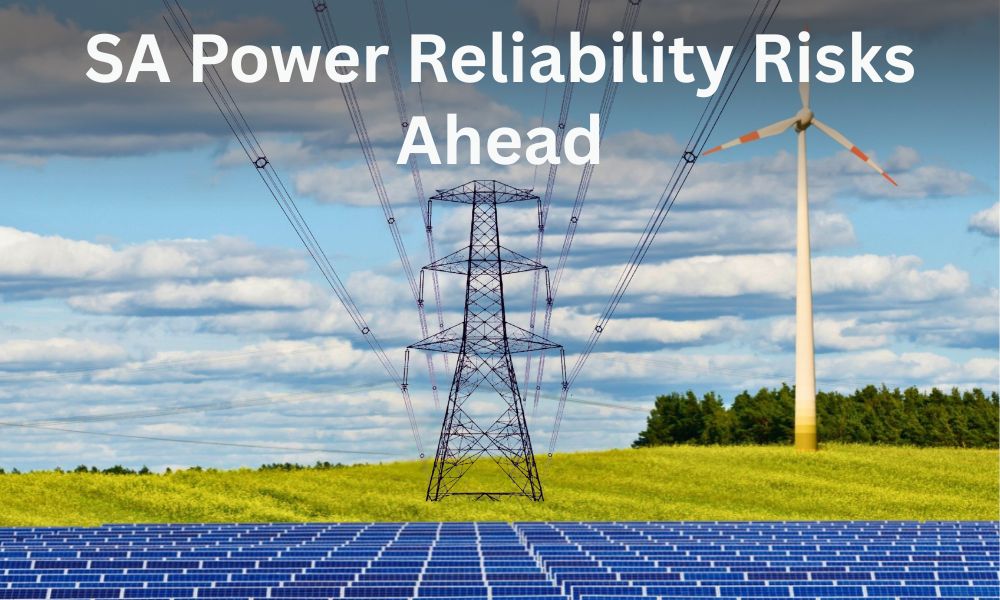
South Australia stands as a global leader in the clean energy transition, aspiring to reach a remarkable 100% net renewable electricity generation by 2027. This pioneering shift, however, brings unique and significant challenges to the state’s power grid.
Ensuring South Australia’s power reliability through this transition is the paramount energy security goal. Without robust infrastructure and clear regulatory frameworks, the risk of load shedding and price volatility will persist during times of high stress. We must act now to solidify a secure and sustainable energy future for all South Australians. Invest in stability—secure your future!

Key reliability risks for SA’s power system
1. Low inertia & system strength shortfalls
- Traditional spinning generators contributed rotational inertia and fault-current injection. As those close, the grid is “softer” and more susceptible to voltage/frequency instability.
- AEMO’s system strength assessments show emerging shortfalls in many regions—though South Australia currently remains one of the better-off states.
2. Solar & wind overgeneration, curtailment, and “Reverse Demand”
- At times of very high rooftop solar export and low demand, the grid can become unbalanced, requiring forced curtailment of solar output.
- Some large solar farms face the possibility of extreme curtailment rates—especially if transmission bottlenecks emerge.
- “Reverse demand” (times when net export is high) stresses voltage control and protection systems.
3. Transmission delays and congestion
- Key interconnector projects (e.g. EnergyConnect) face delays, reducing the capacity to move surplus power or import in emergencies
- When line capacity is constrained, regions can become isolated or face local shortages, especially during peak or outage events.
4. Firming & storage gaps
- The state is now consulting on long-duration energy storage (LDES) tenders that require at least 8-hour dispatch capabilities.
- Estimates suggest South Australia may need ~2,400 MW of LDES over the next five years to maintain reliability.
5. Cybersecurity and control risks of smart inverters
- As distributed solar and smart inverters proliferate, the grid’s dependence on remote control and communications increases vulnerability.
- A coordinated attack or failure in inverter controls could destabilise voltage or frequency if not properly managed.
Past lessons: 2016 SA’s blackout and curtailment tests
The 2016 statewide blackout in South Australia remains a cautionary tale. Storm damage triggered cascading failures in transmission and generator tripping. It underlined weaknesses in fault ride-through settings, coordination among assets, and a lack of robust fallback reserves.
More recently, SA Power Networks conducts annual “smarter homes” solar curtailment drills to validate that rooftop systems can be disconnected in emergencies.
This helps guard against destabilisation during abnormal export or fault events.


Strategic actions: Future infrastructure solutions
Addressing reliability risks requires a multifaceted approach that focuses on strengthening capacity, enhancing transmission, and integrating advanced technologies to improve overall system performance. Several major projects and policy initiatives are underway to secure South Australia’s energy transition.
Accelerate LDES deployment
- Fast-track the 30 MW/8-hour pilot projects under the current tender consultations.
- Use the Firm Energy Reliability Mechanism to guarantee revenue for dispatchable operators.
Install system-strength resources
- Deploy synchronous condensers or grid-forming inverters to enhance voltage stability and support during faults.
- Mandate enhanced performance standards for new generating assets.
Improve grid connectivity & upgrade lines
- Remove permitting and landholder delays for new transmission corridors.
- Implement dynamic congestion management and adaptive power flow schemes.
Enhance demand-side flexibility
- Incentivise load control, time-of-use (TOU) pricing, and demand response to absorb excess solar generation.
- Promote behind-the-meter storage and smart loads for households and commercial users.
Strengthen cybersecurity & inverter governance
- Impose security standards on smart inverter firmware and protocol resilience.
- Monitor and audit distributed PV controls; simulate intrusion scenarios.


The rise of solar battery storage and firm capacity in South Australia
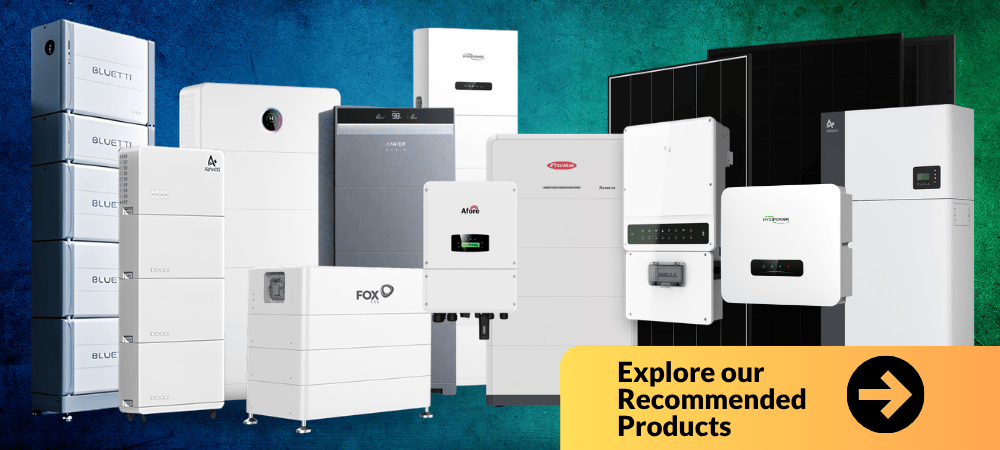
The need for dispatchable power is growing as gas generation capacity is forecast to decline. South Australia’s solar battery storage solutions are crucial for absorbing surplus renewable energy and providing instantaneous power during sudden drops in generation or during periods of peak demand.
- Long-duration firm capacity: A key emerging risk is the lack of long-duration firm capacity—storage or generation that can operate for many hours or days. The South Australian government has proposed the Firm Energy Reliability Mechanism (FERM) to support the development of sufficient long-duration, non-intermittent supply, which is critical for renewable energy in South Australia.
- Virtual Power Plants (VPPs): South Australia is a leader in aggregating distributed energy resources (DER). The state’s Virtual Power Plant (VPP) links thousands of home solar and battery systems, allowing them to be controlled centrally to act as a single power plant. This boosts the system’s resilience by unlocking a massive network of distributed firm capacity.
- Grid-scale batteries, South Australia: The state is home to the world-renowned Hornsdale Power Reserve (the ‘big battery’), which provides rapid frequency control. Numerous other utility-scale batteries, such as the Torrens Island battery project and the Limestone Coast North Energy Park, are in the pipeline. These large-scale batteries provide essential frequency regulation and short-duration power, bolstering grid-scale batteries in South Australia as a reliability service.
Use Energy Matters’ easy-to-use solar power and battery storage calculator to determine the size of your solar system with storage! Our solar calculator will generate performance information and potential savings.
We can send this information to 3 of our pre-vetted and trusted local installers in your area to receive obligation-free solar quotes and take the first step towards true energy independence!

Sources: SA Power Networks – Annual Smarter Homes Solar Curtailment Test | Energy-Storage.News – South Australia opens consultation into latest long-duration energy storage tender | Reuters – Australia runs risk of blackouts amid transmission lines delay | AEMC – Navigating the Energy Trilemma – Challenges and Opportunities Transitioning to a Low-Carbon Energy Future | IEEFA – A Grid Dominated by Wind and Solar Is Possible | Cornell University, arXiv – Destabilizing Power Grid and Energy Market by Cyberattacks on Smart Inverters
Charting a reliable course forward in SA
The reliability risks facing South Australia are primarily those of a world-first energy system, where intermittent generation threatens to outpace the enabling infrastructure. The state has an abundance of renewable resources, but the challenge lies in its effective management and storage.
The path to achieving South Australia’s power reliability hinges on the successful and timely delivery of the critical infrastructure projects currently underway, as well as the deployment of a range of new grid-scale batteries in South Australia.
While technical solutions exist, a coordinated, system-wide approach remains essential. The government, AEMO, and network operators must continue to foster regulatory certainty and investment in non-intermittent, firm capacity. South Australia’s energy security is within reach, provided we maintain our commitment to innovation and investment.
This transition is an opportunity, not just a risk. Act with us—drive the clean energy future! At Energy Matters, we’re here to help you navigate these challenges—let’s work together to secure a stable, renewable-powered future.
Going solar with confidence
Energy Matters is here to guide you every step of the way. We help Australian home and business owners receive personalised solar quotes through our large network of high-quality solar installers. We only work with reputable solar companies that have a proven track record of delivering high-quality solar systems.