




Why a 10kW solar system is the new 6.6kW and no longer just a trend. It is fast becoming the new standard for Australian homes, as there is a move towards full electrification and EV ownership.
A 6.6kW solar system once covered average household use. Today, rising electricity prices, electric vehicles, and electric appliances mean many homes need more power. A 10kW solar system is now the smart choice for future-ready households.
Ready to future-proof your home? Get up to 3 FREE quotes from Energy Matters today!
The evolution of home energy: Why 6.6kW is falling behind
In the past, solar was primarily used to offset daytime lighting and refrigeration. Today, our homes are becoming mini power plants. With the phase-out of gas and the rise of electric vehicles (EVs), the average household’s energy profile has changed.
Powering up your EV with solar
If you’re thinking of buying an EV, adding an EV charger to your solar system is a smart way to “fuel” your car with clean, renewable energy.
Key drivers shifting the standard to 10kW:
- Electric vehicle charging: Modern EVs require significant “headroom” in your solar production to charge quickly and for free.
- Work-from-home trends: More people are home during the day, using air conditioning and office equipment.
- Falling panel costs: The price gap between a 6.6kW and 10kW system has narrowed, making the larger system a better value-per-watt investment.
- The death of gas: Switching from gas heating to high-efficiency heat pumps increases your daily electrical load 10kW vs 6.6kW solar: Key differences.
If you are deciding between these two popular sizes, it helps to see the data side by side. While the 6.6kW system is still a great entry-level choice for small units, the 10kW system provides the surplus needed for a sustainable lifestyle.



| Feature | 6.6kW Solar System | 10kW Solar System |
| Average daily output* | 24–28 kWh | 38–45 kWh |
| Panels required (approx.) | 14–16 | 22–26+ |
| Typical inverter size | 5kW | 8.5kW – 10kW |
| Best for | Small-medium homes (2-3 person homes, low usage) | Families, EVs, Heat pumps (electrified homes) |
| Future battery ready | Limited | High compatibility |
| Future-ready | Moderate | High |
| ROI potential | Good | Excellent long-term |
*Output depends on location and weather.
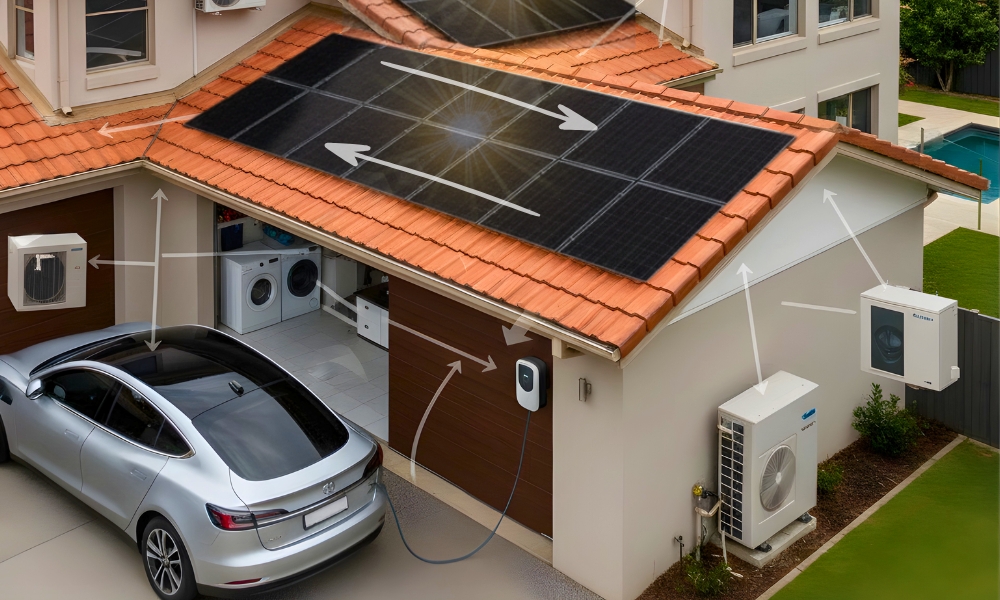
A 10kW solar system gives more headroom. It handles daytime loads and EV charging simultaneously
Powering your electric vehicle (EV)
The biggest game-changer for solar sizing is the electric vehicle. Charging an EV from the grid can be expensive, but charging from your roof is virtually free.
A 10kW system provides the “surge” capacity needed to run a 7kW home charger while still powering your fridge, dishwasher, and AC. With a smaller system, your EV often has to “steal” power from the grid because the solar output isn’t high enough to meet the charger’s minimum requirements during passing clouds or late afternoons.
- Self-consumption is king: In 2026, feed-in tariffs are at their lowest. The goal is to use every drop of energy you produce.
- Faster charging: A 10kW system reaches the required peak output for “fast” Level 2 home charging earlier in the morning and sustains it into the evening.
The roadmap to full electrification
Full electrification means removing gas from your property entirely. This transition is great for the environment, but it places a massive demand on your electrical system.
1. Heat pump hot water
Traditional electric or gas heaters are energy hogs. A heat pump is much more efficient, but it still needs a consistent power source. A 10kW system ensures your hot water is “free” even on overcast days.
2. Induction cooking
Modern induction cooktops offer professional-grade precision but can draw significant power during dinner prep. Having a larger solar array allows you to offset these peaks more effectively.
3. Reverse cycle air conditioning
As summers get hotter, air conditioning becomes a necessity rather than a luxury. A 10kW system can easily handle multiple split systems running simultaneously without a massive bill at the end of the quarter.
Pro tip: “Oversizing” your solar array (installing 13.2kW of panels on a 10kW inverter) is a common strategy to maximise production during low-light winter months.
Solar batteries and the 10kW advantage
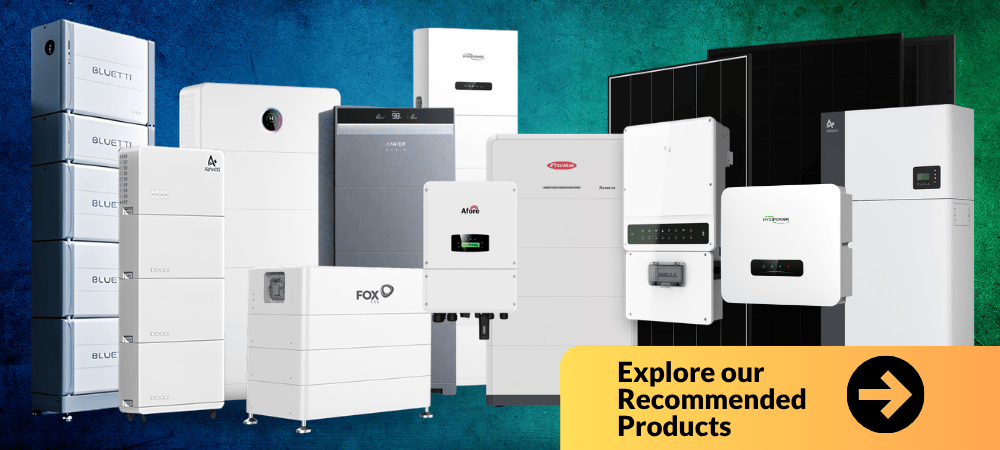
If you plan to add solar battery storage now or in the future, a 10kW system is almost mandatory. To effectively charge a 10kWh or 13.5kWh battery while also powering your home during the day, you need a large “harvest.”
A 6.6kW system often struggles to fill a large battery on anything but the sunniest days. A 10kW system, however, generates enough excess energy to top up your battery by midday, ensuring you have plenty of stored power to get through the night.
Use Energy Matters’ easy-to-use solar power and battery storage calculator to determine the size of your solar system with storage! Our solar calculator will generate performance information and potential savings.
We can send this information to 3 of our pre-vetted and trusted local installers in your area to receive obligation-free solar quotes and take the first step towards true energy independence!

Installation considerations: Roof space and phase power
Before jumping into a 10kW system, you need to check two things: your roof space and your electrical connection.
- Roof space: A 10kW system requires roughly 45–55 square meters of unshaded roof area. If your roof is small, you may need high-efficiency panels (such as N-Type or ABC panels) to meet the 10kW target.
- Single-phase vs. Three-phase: Most Australian homes are single-phase. While you can install 10kW on a single-phase home, some networks may limit how much you can export to the grid (often 5kW). However, this doesn’t limit how much you can use inside the home.
Maximising ROI with smart sizing
Many homeowners worry that a 10kW system is “too big.” However, the cost of adding extra panels during the initial installation is much lower than the cost of expanding a system later.
Why 10kW offers better ROI:
- Lower cost per watt: Labour and inverter costs are similar across both sizes, but the extra panels provide significantly more energy.
- Future-proofing: You won’t need to pay for a second installation when you eventually buy an EV or switch to electric heating.
- Winter performance: Larger systems perform better in winter when sunlight is weaker, ensuring you still get meaningful savings year-round.

Summary: Is 10kW right for you?
The move toward a 10kW system isn’t just a trend; it’s a response to our increasing reliance on electricity. If you plan to live in your home for the next 10 years, own an EV, or want to ditch gas, the 10kW system is the smartest investment you can make.
Is 10kW too big?
For small households with low usage, a 6.6kW solar system may still work.
But for growing families, EV owners, or those planning full electrification, the 10kW solar system is often ideal. It is better to size for tomorrow’s needs rather than upgrade later.
Choose a 10kW system if:
- You have a family of 3 or more.
- You own or plan to buy an electric vehicle.
- You want to install a battery.
- You are switching from gas to electric appliances.
- You work from home during the day.

Take the next step with Energy Matters
Choosing the right solar system sizing is critical. Do not guess.
The era of the 6.6kW system is coming to an end as our energy needs grow. By sizing your solar system for full electrification and EV use, you ensure your home remains efficient, sustainable, and cost-effective for decades. A 10kW system gives you the freedom to use your appliances whenever you want, without worrying about a high bill. It is time to embrace the new standard and take control of your energy future today.
Speak to the solar energy experts at Energy Matters today. Get free solar quotes and discover whether a 10kW solar system is right for your home.
- Book your free quotes with Energy Matters now to future-proof your home.
- Upgrade from 6.6kW to 10kW and power your EV with confidence.
- Start your full electrification journey today with Energy Matters.
Do not settle for yesterday’s sizing. Contact Energy Matters today and design a solar system built for your electrified future.