




It’s one of those moments that makes your heart drop.
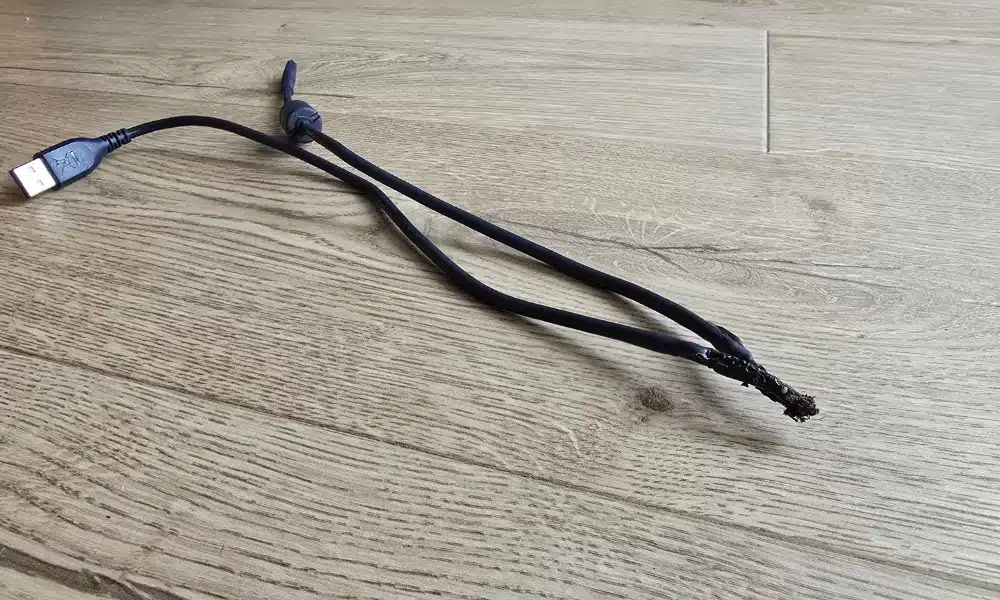
This morning, my kids plugged in their gaming console before heading off to school. Nothing unusual. This afternoon, I caught a whiff of something odd – the unmistakable smell of burning plastic.
After a frantic search, I found the culprit: the USB cable charging the console had caught fire. It had melted onto the leather couch but, thankfully, hadn’t spread. The console, packed with a lithium battery, stayed intact, which was extremely lucky. A lithium fire can be devastating and almost impossible to extinguish.
The experience rattled me. It also reminded me how often we leave things charging, running, or simply switched on at the wall without a second thought.
Quick answer: Yes — switching off at the wall saves electricity and reduces fire risk. It cuts standby (phantom) power that can account for up to around 3% of your household energy use and cost roughly $100 a year, and it fully removes the electrical current that can cause overheating, short circuits and battery failures. It’s a free habit that’s safe for most devices like TVs, computers, game consoles and phone chargers — with a few exceptions such as fridges, freezers, routers and medical equipment.
Key takeaways
- It saves money: Standby power can account for up to around 3% of household energy use and cost up to $100 a year.
- It cuts fire risk: Turning off at the wall removes the current that drives overheating, short circuits and battery failures.
- Lithium fires are rising: Fire and Rescue NSW recorded at least 318 lithium-ion battery fires in NSW in 2024, up from 272 in 2023.
- Electrical faults are a leading cause: Electrical appliances and faults cause almost 40% of home fires in NSW.
- Not everything should be switched off: Fridges, freezers, routers, smart-home hubs and medical devices are usually best left on.
- Unplugging is safest of all — but flicking the wall switch delivers most of the benefit for free.
The hidden dangers lurking in your lounge room
Your living room is one of the most common places for home electrical fires to start, because it’s where chargers, power boards, TVs and consoles cluster together and run for hours unattended.
In Australia, electrical appliances and faults are a leading cause of house fires. Fire and Rescue NSW’s current home-fire safety booklet says electrical appliances and faults cause almost 40% of home fires in NSW 1. In fact, statistics show that over 350 residential house fires are started by electrical faults in NSW each year2. That’s thousands of homes at risk simply because of overlooked or ageing appliances, dodgy cords, overloaded power boards, or devices left charging.
The rise of household electronics hasn’t helped either. On average, Aussies own over 17 connected devices per household3. Australians also used an average of 4.1 devices to access the internet in 2025, up from 3.7 in 2024, with 97% using a mobile phone and 64% using a smart TV4. That’s a lot of cords, batteries and chargers, and a lot of potential ignition points.
And it’s not just phones and game consoles. E-bikes, e-scooters and other lithium battery-powered gadgets have become everyday essentials. But with that convenience comes new risks.
Lithium battery fires, in particular, are no joke. These batteries can ignite spontaneously if damaged, overcharged or exposed to heat. Worse still, once a lithium battery fire starts, it burns extremely hot and fast, often releasing toxic gases.
Why switching off at the wall matters
Switching off at the wall matters because it does two things at once: it stops standby power waste and it removes the electrical current that can cause faults to turn into fires. Even a device that looks “off” can still be drawing power and generating heat.
You might think, “It’s just on standby, it’s fine.” But even appliances on standby draw power, and any faulty wiring, cheap charger, or poorly ventilated device can turn into a fire hazard without warning.
Here’s the kicker: simply switching off at the wall reduces the risk significantly. It cuts the power supply completely, stopping overheating, short circuits and battery failures before they start.
It also saves you money. So, by flicking that switch, you’re protecting your home and your hip pocket. Current Australian Government guidance says standby power can account for up to 3% of household energy use and could cost up to $100 a year3. Separate government advice notes that standby power for the average home contributes around 6% of electricity use, with the biggest standby costs coming from air-conditioners, TVs, home entertainment and computers5. So, by flicking that switch, you’re protecting your home and your hip pocket.





How much standby power costs Australian households
The average Australian household can spend up to $100 a year running appliances that are switched on but not being used. The exact amount depends on how many devices you have, their standby draw, and your electricity tariff.
To make it concrete, here’s a rough guide to what common appliances draw on standby and what they can cost each year (estimated at 30c/kWh — check your own tariff for accuracy).
| Appliance | Typical standby power | Estimated annual cost* |
|---|---|---|
| Game console (rest/standby mode) | ~10–15 W | ~$26–$39 |
| TV + home entertainment setup | ~5–15 W | ~$13–$39 |
| Desktop computer + monitor (sleep) | ~5–10 W | ~$13–$26 |
| Phone charger (plugged, no phone) | ~0.1–0.5 W | ~$0.30–$1.30 |
| Microwave (clock/display) | ~2–5 W | ~$5–$13 |
| Set-top box / modem-router | ~5–10 W | ~$13–$26 |
*Indicative estimates only, based on continuous standby draw at 30c/kWh. Actual figures vary by model and tariff.
The takeaway: switching off just a handful of the biggest offenders — the console, the TV setup and the computer — at the wall each night can trim a meaningful slice off your bill over a year, on top of the safety benefit. If you want to see exactly where your power goes, our guide to understanding kW vs. kWh breaks down how appliance power turns into dollars.
Charging safely: it’s not just common sense, it’s survival
Charging safely comes down to using quality gear, not charging unattended or overnight, keeping chargers ventilated, avoiding overloaded power boards, and inspecting cords and batteries regularly.
Charging safely isn’t about being paranoid. It’s about giving your devices (and yourself) the best chance of avoiding disaster.
A few quick tips to keep your home safe:
- Use quality chargers and cables: Always use manufacturer-approved gear. Cheap knock-offs can overheat and fail.
- Avoid charging unattended: Charge when you’re home and awake. Don’t leave devices charging overnight or while you’re out.
- Keep chargers ventilated: Don’t tuck chargers under pillows, behind couches or inside drawers where heat can build up.
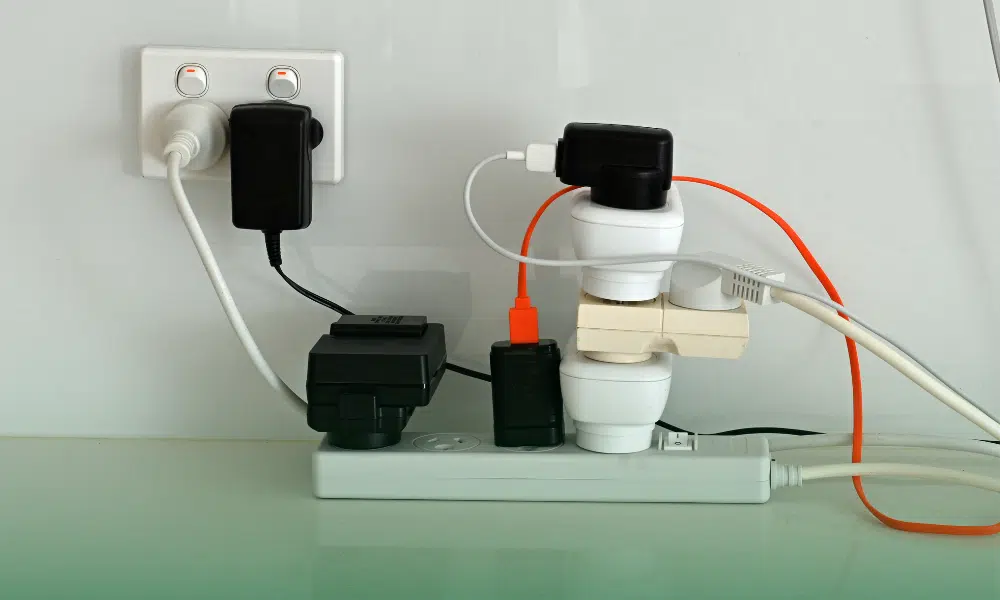
- Don’t overload power boards: One bad connection can spark a chain reaction.
- Inspect cords and devices regularly: Frayed wires, bulging batteries and loose connections are ticking time bombs.
- Charge e-bikes and scooters with care: Always in a ventilated, fire-resistant area – preferably not indoors if you can help it.
And remember, unplugging is even safer than switching off.
Want to make switching off effortless? Smart plugs let you cut power to standby appliances on a schedule or from your phone. Our guide on which appliances to automate first with smart plugs is a good place to start, and there are more ideas in our roundup of simple-to-smart home energy efficiency tips.
Which appliances should you NOT switch off at the wall?
Not every appliance benefits from being switched off at the wall. Fridges and freezers need constant power to keep food safe, and some electronics store settings or run background updates that require standby power.
Leave these on (or check the manufacturer’s instructions first):
- Fridges and freezers – switching off risks food spoilage and can damage some compressors.
- Modems, routers and smart-home hubs – repeated power cycling can shorten their life and interrupt security devices.
- Medical equipment – anything critical to health should stay powered and plugged in.
- Devices mid-update – TVs, consoles and computers can be damaged if cut off during firmware updates.
- Anything with shutdown instructions – some appliances need to power down properly before the switch is flicked.
For everything else — TVs, chargers, game consoles, microwaves, kettles and toasters — the wall switch is your friend.
The scary reality of e-bike and e-scooter fires
E-bike and e-scooter batteries are behind a rapidly growing share of home fires in Australia. Charging them unsupervised — especially overnight and indoors — is one of the biggest risk factors.
As much as we love our electric rides, they have made headlines for all the wrong reasons. Fire and Rescue NSW said there were at least 318 lithium-ion battery fires in NSW in 2024, up from 272 in 2023 and 165 in 20226. That’s a clear upward trend, underlining why safe charging habits matter more than ever.
Many of these incidents involved e-bikes and e-scooters charging unsupervised, often overnight. These fires aren’t just fast – they can be deadly, producing explosive flames and toxic smoke within seconds.
Some advice for e-bike and scooter users:
- Stick to certified brands: Avoid aftermarket or dodgy online batteries.
- Replace damaged batteries immediately: If it’s bent, cracked or dented, it’s dangerous.
- Never modify your battery or charger: DIY repairs are a recipe for disaster.
- Charge outside if possible: Or in a garage with a smoke alarm.

A simple switch for peace of mind
I keep thinking: if I’d gone out today instead of staying home, the outcome could have been catastrophic. Our home, our memories – gone, because of a simple USB cable. I’ll also remember to thank my husband, who persuaded me to get a leather couch. Had we gone with my choice, a fabric couch, I might be writing a very different blog right now.
Switching off at the wall isn’t just something your nan nags you about. It’s a simple, powerful habit that could save your home – and maybe even your life.
So next time you walk past that socket, remember: flick it off. You’ll sleep better for it.
If you’re rethinking how your home uses energy, switching off at the wall is just the start. From cutting standby waste to storing your own solar power, there are bigger wins available too — see our practical guide to easy ways to save money on your energy bills, or find out how a home battery could help you take control. Ready to talk options? Contact Us for tailored advice.
Frequently asked questions
Does switching off at the wall save electricity?
Yes. Many appliances keep drawing “standby” or phantom power even when they appear to be off. Australian Government guidance says standby power can account for up to around 3% of household energy use and cost up to $100 a year7, so switching off at the wall stops that waste.
Is switching off at the wall the same as unplugging?
Nearly. Both cut the current to the device, but unplugging is the most complete option because it also removes the appliance from a live socket. Flicking the wall switch delivers most of the benefit and is far more convenient for everyday use.
Is it safe to turn appliances off at the wall?
For most household electronics — TVs, chargers, game consoles, microwaves, kettles and toasters — yes, it’s safe and recommended. Turning off at the wall also reduces fire risk by removing the current that can drive overheating and faults.
Which appliances should NOT be switched off at the wall?
Fridges and freezers, modems and routers, smart-home hubs, medical equipment, and any device mid-update or with specific shutdown instructions should generally be left on. Check the manufacturer’s guidance if you’re unsure.
How much does standby power cost per year in Australia?
Standby power can cost the average household up to $100 a year and contributes around 6% of home electricity use, with air-conditioners, TVs, home entertainment and computers among the biggest culprits8.
Are lithium battery fires really that common?
Yes, and they’re rising. Fire and Rescue NSW recorded at least 318 lithium-ion battery fires in NSW in 2024, up from 272 in 2023 and 165 in 20229. Safe charging and switching off at the wall both help reduce the risk.
- Fire and Rescue NSW, 2023 Home Fire Safety Report ↩︎
- Fire and Rescue NSW – Electrical Power Boards ↩︎
- Telsyte Australian IoT@Home Market Study 2023 ↩︎
- ACMA – Trends and developments in telecommunications 2024-25 ↩︎
- YourHome – Appliances and technology ↩︎
- Fire and Rescue NSW – Spate of lithium-ion fires media release ↩︎
- energy.gov.au – Appliances ↩︎
- YourHome – Appliances and technology ↩︎
- Fire and Rescue NSW – Spate of lithium-ion fires media release ↩︎