


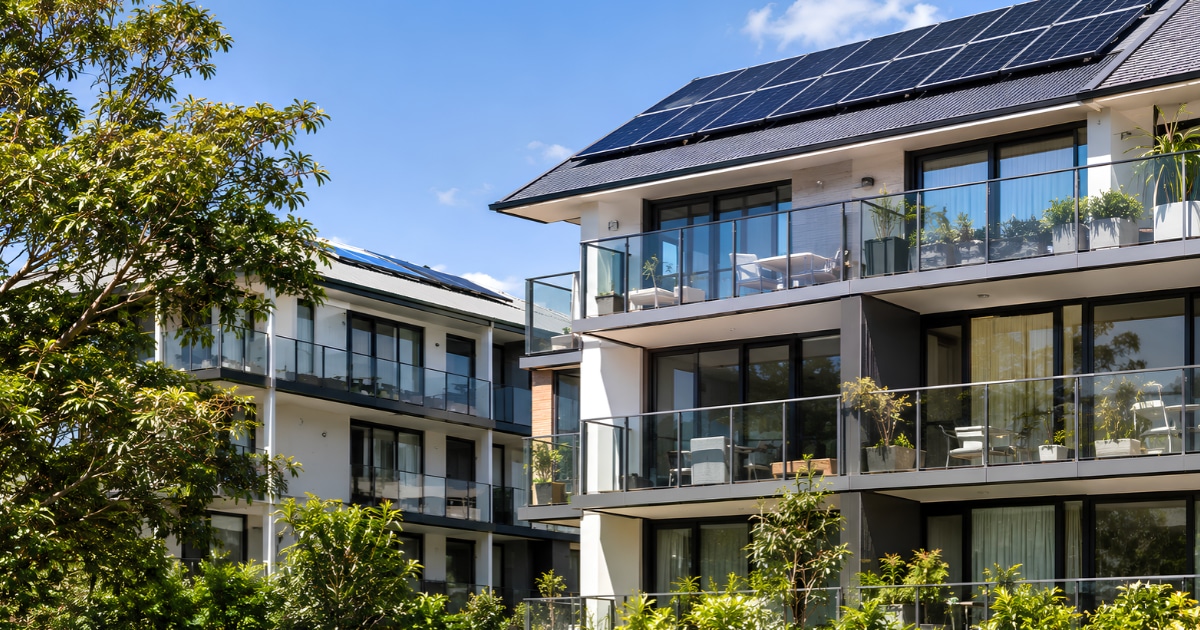
More than 15% of high-density apartment residents across Australian capital cities now receive their electricity through a private energy grid. When you move into a high-rise building, you are often automatically signed up with an embedded network provider rather than a traditional energy distributor. Understanding how this infrastructure works helps you manage daily power costs and protect your household rights.
If you want to maximise your home’s energy efficiency, taking control of your daily power setup is the first step toward reducing household spending.


What is an embedded network apartment in Australia and why does it matter?
An embedded network is a private energy infrastructure installed inside multi-tenant residential buildings, shopping centres, or gated communities. The entire complex connects to the main power grid through a single boundary meter called a parent meter.
Individual units measure their personal electricity consumption using a dedicated electric submeter for tenants or owners. The network operator purchases bulk electricity from the wholesale market or an off-grid solar system and bills each unit individually.
Key terminology
- Parent meter: The primary connection point measuring total electricity entering the apartment building from the main grid.
- Sub meter for electricity: A localised meter installed in each apartment to accurately track individual household usage.
- Embedded Network Manager (ENM): The accredited entity responsible for managing billing, metering data, and customer connections.
- Off-market retailer: An energy seller operating exclusively within an embedded network rather than serving the open retail market.
Why it matters for Australian homes
High-density living is expanding rapidly across Sydney, Melbourne, Brisbane, and Perth. Property developers install private grids because central solar arrays, centralised hot water systems, and bulk billing lower initial construction costs.
For residents, this setup shapes your daily electricity bills, determines whether you pay a higher supply charge electricity rate, and influences your overall energy freedom.
Expert tip: Definition & basics
Embedded networks let apartment complexes act as micro-grids, but residents must double-check their metering setup to ensure they are receiving fair market rates.
How an embedded network apartment in Australia works
Private building networks streamline power distribution by consolidating energy purchasing into a single high-voltage or bulk commercial contract
Step-by-step power flow
- Bulk purchasing: The network manager negotiates a commercial bulk electricity contract at the parent meter.
- On-site generation: Rooftop solar panels generate clean energy, which common property and individual units consume directly.
- Sub-meter tracking: Individual sub-meters for electricity units record precise kilowatt-hour usage inside each apartment.
- Billing distribution: The provider calculates individual energy use and issues monthly usage and daily supply charges.
Real-world examples
Consider a 100-unit apartment building in Melbourne using a strata embedded network. The body corporate installs a 50kW rooftop solar system tied directly into the internal wiring.
During peak sunny hours, common spaces and individual apartments run primarily on clean, self-generated power. This arrangement reduces total grid dependence, though individual savings depend heavily on how the network operator structures usage tariffs.
Expert tip: Operations
Always inspect your monthly electricity bill to verify whether your daily supply charges are capped at your state’s Default Market Offer (DMO) or Victorian Default Offer (VDO).

Embedded network apartment in Australia: Costs, charges, and potential savings
Understanding your utility bill requires breaking down network fees, wholesale power charges, and daily service costs.
Upfront costs and daily tariffs
Developers absorb the initial costs of setting up an embedded electricity network during construction. However, residents pay ongoing operational costs through their usage rates and fixed service charges.
The daily supply charge covers ongoing maintenance of internal wiring, sub-meters, and administrative billing services.
Savings calculation matrix
| Feature | Standard Retail Network | Embedded Network Apartment |
| Purchasing Power | Individual residential contract | Commercial bulk discount rates |
| Rooftop Solar Access | Direct individual system setup | Shared central rooftop array |
| Daily Supply Charge | Standard retail market rate | Provider dependent (subject to state caps) |
| Retailer Choice | Open market selection | Unbundling process required |
| Ombudsman Protection | Full EWON / EWOV access | Full access via energy ombudsman schemes |
Payback period for on-site solar
When embedded systems incorporate rooftop solar arrays or centralised battery storage, building operational costs drop significantly. Strata schemes typically achieve full payback on shared solar infrastructure within 3 to 5 years.
Residents can also explore individual home battery systems or investigate the federal solar battery rebate to assess personal energy storage options.
Expert tip: Financial transparency
Compare your embedded tariff against your state's benchmark rate using a digital solar battery calculator to measure true long-term savings.
Use Energy Matters’ easy-to-use solar power and solar battery storage system calculator to determine the right size for your solar system with storage. Our solar calculator will generate performance information and potential savings.
We can send this information to 3 pre-vetted, trusted local installers in your area so they can provide obligation-free solar quotes and help you take the first step toward true energy independence!

State-by-state considerations for embedded network apartment residents in Australia
Regulations governing embedded networks in apartments vary considerably across Australian states.
- Victoria (VIC): Victoria implemented strict bans on new embedded networks unless they deliver at least 50% renewable energy on-site to occupants.
- New South Wales (NSW): The parliamentary NSW inquiry led to tighter consumer protection rules, ensuring easier pathways to transfer providers.
- Queensland (QLD): Embedded network operators must register with the Australian Energy Regulator (AER) and observe strict price caps.
- South Australia (SA): Residents maintain explicit rights to access external market offers through unbundled network tariffs.
- Western Australia (WA): Operating outside the National Electricity Market (NEM), WA uses tailored local regulations to protect apartment tenants.
Embedded network apartments in Australia: Comparison with alternatives
Evaluating private building networks against conventional utility setups highlights clear trade-offs between bulk pricing and retailer choice.
| Operational Factor | Standard Grid Connection | Embedded Network Connection |
| Primary Metering | Direct distributor connection | Central parent meter with internal sub-metering |
| Provider Switching | Instant online market transfer | Requires explicit unbundling of network charges |
| Green Energy Access | Individual green power options | Central solar arrays or optional join a Virtual Power Plant plan |
| Consumer Protections | National Energy Retail Rules | Covered by AER exempt seller framework |
| Metering Equipment | Standard smart meter | Private electric submeter for tenants |
Expert tip: Network comparisons
Before signing a residential lease or purchase contract, request the exact tariff schedule to confirm your daily supply charges match open market rates.
How to navigate your connection: Step-by-step guide
Moving into an embedded network apartment building in Australia requires clear communication with property managers and utility providers.
- Verify your network status: Check your residential tenancy agreement or strata disclosure statement to confirm if the building uses a private network.
- Review the utility tariff: Request a full fee breakdown, including usage rates, daily supply charges, and electricity fees.
- Ask your strata manager: Ask whether strata managers assist with power connection requirements when moving into a new unit.
- Compare market offers: Evaluate open market rates against your provider's pricing to check for competitive alignment.
- Explore green energy upgrades: Request details on shared solar power, centralised hot water, or communal EV chargers installed on site.
Powering up your EV with solar
If you're thinking of buying an EV, adding an EV charger to your solar system is a smart way to "fuel" your car with clean, renewable energy.
Expert tip: Setup guide
Ask your strata manager for the National Metering Identifier (NMI) standing data to determine whether your sub-meter is ready for external market matching.
Common mistakes residents should avoid
Residents living in private energy networks often make avoidable errors when setting up their accounts.
- Assuming you cannot switch: Many tenants assume they are permanently locked in, missing opportunities to switch energy suppliers.
- Ignoring tariff schedules: Not reviewing peak and off-peak electricity hours leads to unexpectedly high monthly power bills.
- Overlooking shared hot water: Conflating general power use with centralised gas or a solar hot water system distorts monthly budget plans.
- Skipping ombudsman assistance: Omitting formal complaints to official energy ombudsman bodies delays standard billing dispute resolution.
Expert tip: Common pitfalls
Do not pay exit fees without verifying your contract. Current Australian regulations prevent operators from charging unfair exit fees when unbundling your meter.
Frequently asked questions
How do I tell if I'm on an embedded network?
Check your utility invoice for your provider's name and meter details. If your bill comes from a specialised billing firm or body corporate rather than a major energy retailer, you are likely on a private grid connection.
Can you opt out of an embedded network apartment setup in Australia?
Yes, residents can legally choose an external retailer. However, you must convert your sub-meter to an unbundled market meter, which may involve administrative steps with your network manager.
Can I leave embedded network pricing and switch retailer?
You have the right to switch energy supplier to an external provider. Your chosen retailer will bill you for energy usage, while your embedded provider continues billing for physical grid network access.
Are embedded networks more expensive for apartment residents?
Not necessarily. Many bulk networks offer lower electricity usage rates due to commercial volume discounts, though daily supply charges can vary depending on operator contracts.
What protections and ombudsman access do residents have?
Residents enjoy consumer protections enforced by the Australian Energy Regulator (AER). You can access free dispute resolution services through your state's Energy Ombudsman, such as EWON or EWOV.
How do the Victorian ban and NSW inquiry affect tenants?
Victoria bans new embedded networks that don't integrate at least 50% renewable energy. The NSW inquiry established stricter price caps and improved switching rights for all high-density building occupants.
Key takeaways
- Private apartment networks bulk-buy grid power and redistribute electricity using internal sub-meters.
- State regulations across Victoria, NSW, and Queensland set strict consumer protection rules and price caps.
- Residents retain the legal right to request competitive quotes and unbundle their retail energy services.
- On-site solar arrays and shared batteries reduce overall carbon footprints and lower building operating costs.
- Comparing your default tariffs with regional benchmarks helps prevent unexpected spikes in household energy prices.
Take control of your energy costs
Living in an apartment building does not mean giving up on energy savings. Explore competitive solar options, compare local green energy plans, and discover simple ways to optimise your household power consumption today.
Get expert guidance, compare zero-obligation power estimates, and connect with trusted energy professionals in your region. Take charge of your power costs and secure your household savings now with Energy Matters. Compare your options, explore solar solutions and request free quotes from SAA-accredited installers to find a system suited to your home.
Sources and References
- Australian Energy Regulator (AER): Customer Protections in Embedded Networks
- Energy and Water Ombudsman NSW (EWON): Embedded Network Resident Rights
- Energy and Water Ombudsman Victoria (EWOV): Victorian Embedded Network Rules
- Australian Energy Market Operator (AEMO): National Electricity Market Data