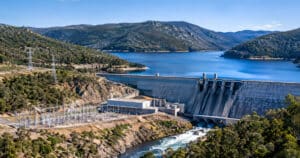
Australia’s clean energy transition is accelerating at a historic pace. As coal-fired power stations retire, securing long-duration storage has become an urgent national priority. Pumped hydro energy storage leads this shift in Australia, acting as a massive water-powered battery that keeps our power grid stable, reliable, and affordable.
From Snowy 2.0 in New South Wales to Queensland’s ambitious energy hub projects, large-scale hydro facilities are reshaping our national electricity infrastructure. Understanding how these mega-projects interact with household solar power gives Australian families a clear picture of future energy costs. Discover how grid-level storage shapes your home electricity setup by requesting free solar quotes from Energy Matter’s SAA-accredited local installers.
Quick answer: Pumped hydro energy storage in Australia
- What it is: Pumped hydro energy storage acts as a massive natural hydro battery, pumping water uphill using excess solar or wind power and releasing it downhill through turbines when grid demand peaks.
- Why it matters: It delivers long-duration, grid-scale storage, providing continuous power for 8 to 24+ hours to stabilise the national grid as coal power plants retire.
- Homeowner impact: By capturing surplus rooftop solar energy across the network and reducing expensive peak demand spikes, large-scale pumped hydro helps keep retail electricity tariffs affordable and reliable.


What is pumped hydro energy storage in Australia and why should homeowners care?
- Pumped hydro is a form of large-scale electricity storage that uses water and gravity. Unlike conventional hydroelectric power stations that depend on natural river flows, pumped hydro systems can actively move water between reservoirs to store energy.
- For Australian homeowners, the technology matters because electricity prices depend on the balance between supply and demand. Storage can help manage periods when renewable generation is plentiful and when the grid needs additional electricity.
The key facts
| Feature | Pumped hydro explained |
| Technology | Water pumped between two reservoirs at different elevations |
| Main purpose | Store electricity and release it when required |
| Energy source | Electricity, ideally surplus renewable generation |
| Storage duration | Commonly several hours to multiple days, depending on design |
| Typical application | Grid-scale electricity storage |
| Main advantage | Long-duration storage and flexible generation |
| Main limitation | High upfront construction costs and site requirements |
| Australian examples | Snowy 2.0, Wivenhoe, Tumut 3 and Shoalhaven |
Pumped hydro is not new. It is a mature technology used internationally to balance electricity supply and demand, with Australia adapting it to a grid increasingly powered by renewable energy.
Why this matters right now in Australia
- Australia’s electricity system is undergoing a major transformation. Rooftop solar and large-scale renewable generation are increasingly producing electricity during the middle of the day, while demand can peak in the evening.
- This creates a mismatch between when electricity is generated and when households need it. Storage helps bridge that gap.
- According to Infrastructure Australia, deep storage projects such as Snowy 2.0 and Borumba are expected to play an important role during extended periods of low renewable generation. Its published figures identify Snowy 2.0 at approximately 350 GWh and Borumba at 48 GWh of planned storage capacity.
Expert insight: Energy storage is not simply about generating more electricity. It is about making electricity available at the right time, which is increasingly important as Australia’s renewable energy share grows.
How pumped hydro works and the current state in Australia
Pumped hydro: How it works, a simple explanation
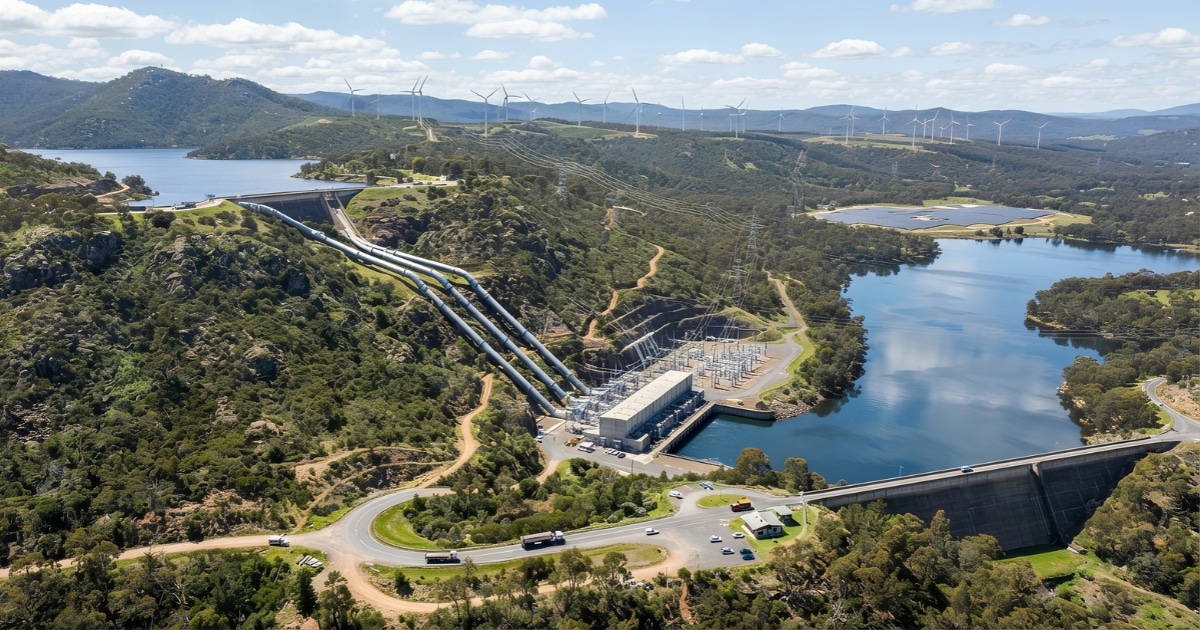
Understanding how pumped hydro works is straightforward. A typical facility has two reservoirs positioned at different elevations, connected by tunnels or pipes and a powerhouse. The system operates in two main modes:
- Pumping: When electricity is plentiful or inexpensive, pumps move water from the lower reservoir to the upper reservoir.
- Generating: When electricity demand rises, water flows downhill through turbines to generate electricity.
The water is reused rather than consumed like fuel. However, evaporation, seepage and environmental water requirements mean projects still need careful water management.
Pumped hydro is not a perpetual energy source. Because of energy losses, more electricity is required to pump water uphill than can later be recovered through generation. The advantage is that electricity can be stored and dispatched when it is more valuable to the grid.
Australian examples and data
New projects are designed to increase the amount of energy that can be stored for extended periods. Australia already operates pumped hydro facilities, including:
- Wivenhoe Power Station, Queensland: An established pumped hydro facility supporting Queensland’s electricity supply.
- Tumut 3, NSW: Part of the Snowy Mountains Hydro-electric Scheme.
- Shoalhaven, NSW: Existing pumped hydro infrastructure providing storage and generation flexibility.
Snowy 2.0
Snowy 2.0 is one of Australia’s largest energy infrastructure projects, designed to provide approximately 2,200 MW of generating capacity and 350 GWh of storage.
The project links existing reservoirs through underground tunnels and a new power station. It is intended to provide long-duration storage and support renewable electricity across the National Electricity Market.
However, its cost and delivery schedule have changed significantly. On 23 October 2026, the Australian Government announced that Snowy Hydro’s updated target cost to complete was $22.2 billion, with an allowance of $25 billion, and that commissioning was scheduled for late 2029.
Borumba pumped hydro
Queensland’s proposed Borumba project is planned to provide around 2,000 MW of generation and 48 GWh of storage.
The project is intended to support Queensland’s renewable energy transition by storing electricity during surplus periods and releasing it when demand increases.
As with other major infrastructure projects, its future depends on construction costs, planning, financing and government decisions.
Expert insight: Australia has significant potential for pumped hydro, but not every proposed project will proceed. Site suitability, transmission access, financing and environmental impacts determine whether a project becomes operational.

What does pumped hydro energy storage in Australia mean for your electricity bills?
The relationship between large-scale storage and household electricity prices is indirect.
Pumped hydro can improve the electricity system’s ability to respond to demand, but household savings depend on several factors, including wholesale electricity prices, network charges, retailer pricing and government policies.
Short-term impact
Large pumped hydro projects require years of planning and construction. Homeowners should not expect immediate reductions in electricity bills simply because a project is announced.
During construction, projects can also involve substantial costs, financing requirements and infrastructure investment.
Once operational, storage can potentially reduce the need for expensive electricity generation during peak periods. It may also help manage price spikes when renewable output is low.
However, these benefits depend on how often the facility operates, its efficiency and the wider electricity market.
Long-term implications
Over time, pumped hydro could support a more flexible electricity system by:
- Storing excess renewable generation.
- Reducing reliance on expensive peak electricity generation.
- Supporting grid stability.
- Providing backup during extended renewable shortages.
- Helping manage the retirement of coal-fired power stations.
The effect on retail bills is not guaranteed. Wholesale savings may not immediately translate into lower electricity prices, particularly if transmission costs, network charges or other market costs increase.
For homeowners, the best strategy is to combine awareness of grid developments with practical energy-saving measures. Consider exploring energy efficiency improvements alongside your electricity plan.
Energy Matters recommends switching to energy-efficient appliances now to save money and live more sustainably.
Expert insight: Storage is one part of a broader electricity system. Transmission, renewable generation, market competition and household energy consumption all influence electricity prices.
What Australian homeowners can do right now?
Pumped hydro is a grid-scale technology, meaning households cannot install it at home. However, homeowners can benefit from the broader renewable energy transition by producing, storing and using electricity more efficiently.
Actionable steps
1. Consider rooftop solar: A residential solar system allows you to generate electricity during daylight hours and reduce reliance on grid electricity. Explore home solar systems to understand available options and potential savings.
2. Compare solar battery storage: A home battery stores excess solar electricity for evening use. Unlike pumped hydro, it is installed at your property and can directly reduce your household’s grid electricity consumption. Learn about solar panels and battery compatibility before choosing a system.
Use Energy Matters’ easy-to-use solar power and solar battery storage system calculator to determine the right size for your solar system with storage. Our solar calculator will generate performance information and potential savings.
We can send this information to 3 pre-vetted, trusted local installers in your area so they can provide obligation-free solar quotes and help you take the first step toward true energy independence!

3. Review your electricity tariff: Check whether your retailer offers time-of-use pricing, demand tariffs or suitable solar feed-in rates. A battery may provide greater financial value when you can store electricity during low-price periods and use it when electricity prices are higher.
4. Improve household energy efficiency: Simple improvements can reduce electricity consumption regardless of grid storage developments.
- Improve insulation and draught sealing.
- Choose energy-efficient appliances.
- Consider a solar hot water system.
- Charge electric vehicles during suitable low-cost periods.
- Explore EV chargers for home charging.
Powering up your EV with solar
If you’re thinking of buying an EV, adding an EV charger to your solar system is a smart way to “fuel” your car with clean, renewable energy.
5. Compare installation quotes: Before investing in solar or batteries, compare system sizes, warranties, equipment quality and installer credentials.
Energy Matters helps Australian households compare solar and battery options through its solar quotes service.
Questions to ask your installer or retailer
Before purchasing a solar or battery system, ask:
- How much electricity does my household use during peak periods?
- What battery capacity would suit my consumption?
- Can my existing solar inverter support battery integration?
- What happens during a grid outage?
- Is the system compatible with my electricity tariff?
- What warranties apply to the battery and inverter?
- Are government rebates or incentives available?
- What is the estimated payback period under realistic assumptions?
Expert insight: The most effective household energy strategy is based on actual consumption data, not simply buying the largest available battery.
State-by-state considerations for pumped hydro energy storage in Australia
Australia's geography, electricity markets and renewable energy policies differ significantly between states. These differences influence where pumped hydro is developed and how households may benefit.
Victoria (VIC): Victoria is transitioning away from coal-fired generation and increasing renewable energy and storage capacity.
Pumped hydro could help balance wind and solar generation, particularly during periods of low renewable output. Victoria's renewable energy zones and transmission upgrades will influence which storage projects can connect effectively.
New South Wales (NSW): NSW is a major pumped hydro development centre, with Snowy 2.0 and several proposed projects.
WaterNSW has identified potential storage opportunities at Blowering, Burrendong, Hume and Wyangala dams. The state is also progressing projects through its Renewable Energy and Storage Program.
Queensland (QLD): Queensland has existing pumped hydro infrastructure at Wivenhoe and proposed developments such as Borumba.
The state's abundant sunshine makes rooftop solar particularly attractive for households. Solar batteries can help homeowners use daytime generation during evening demand.
South Australia (SA): South Australia has a high share of variable renewable electricity, particularly wind and solar.
Storage is important for managing periods of excess renewable generation and maintaining electricity reliability. Pumped hydro may complement batteries and other flexible resources.
Western Australia (WA): Western Australia's electricity system operates separately from the National Electricity Market. This means pumped hydro and grid storage developments in eastern Australia do not directly determine WA electricity prices or reliability.
Expert insight: State-level energy policies matter. A storage project in NSW may support the eastern electricity market, but its benefits don't automatically spread equally across every Australian state.
Pumped hydro energy storage Australia: expert predictions for 2027 and beyond
The future of pumped hydro will depend on Australia's need for long-duration storage, construction costs and how quickly battery technology continues to improve.
1. Long-duration storage will remain important: AEMO's planning recognises that Australia will need substantial dispatchable storage as renewable energy expands. Pumped hydro can store energy for longer periods than many conventional grid batteries, making it potentially valuable during extended periods of low wind and solar generation.
However, batteries are also becoming increasingly capable of supporting the grid for longer durations.
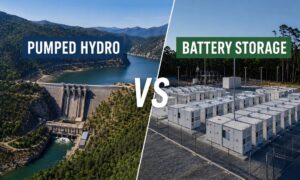
2. Battery competition will reshape project economics: Pumped hydro projects require extensive civil engineering, reservoirs, tunnels and suitable geography.
By comparison, batteries can often be installed more quickly and in locations closer to existing transmission infrastructure.
The ABC reported in October 2026 that Alinta Energy had abandoned its proposed 900 MW Oven Mountain pumped hydro project in NSW, citing economic and timing challenges, including transmission infrastructure. The report also highlighted competition from falling battery costs.
This shows why not every pumped hydro proposal becomes operational.
3. Hybrid storage systems may become more common
The technologies can complement each other rather than compete directly. Future electricity systems may combine:
- Pumped hydro for long-duration storage.
- Grid-scale batteries for rapid response.
- Rooftop solar for distributed generation.
- Wind farms for renewable electricity.
- Transmission upgrades to connect energy resources.
4. Environmental and community considerations will remain critical
Pumped hydro developments can affect waterways, ecosystems, land use and nearby communities. Future projects will need careful environmental assessments, community engagement and responsible water management.
Expert insight: Pumped hydro is likely to remain part of Australia's energy storage mix, but project success will depend on whether developers can deliver affordable, reliable and environmentally responsible infrastructure.

Frequently asked questions
What is pumped hydro energy storage?
Pumped hydro energy storage is a technology that stores electricity by pumping water from a lower reservoir to an upper reservoir. When electricity is needed, the water flows downhill through turbines to generate power. It is widely used for grid-scale storage and can provide electricity for extended periods.
How does pumped hydro work in Australia?
Pumped hydro uses electricity to pump water uphill when electricity supply is plentiful. When demand increases, it releases water downhill through turbines to generate electricity. Australian projects such as Snowy 2.0 are designed to store renewable energy and provide electricity when solar and wind generation are insufficient.
Is pumped hydro cheaper than batteries?
Pumped hydro can be cost-effective for long-duration storage, particularly where suitable geography and infrastructure exist. Batteries are generally quicker to install and more flexible in location. The best option depends on storage duration, construction costs, site conditions, financing and electricity market requirements.
Will pumped hydro reduce Australian electricity bills?
Pumped hydro may help reduce wholesale electricity price spikes by storing energy and releasing it during periods of high demand. However, savings are not guaranteed to flow directly to household electricity bills. Retail prices also depend on network costs, electricity retailers, government policies and market conditions.
Can homeowners install pumped hydro?
Most homeowners cannot install conventional pumped hydro because it requires substantial elevation differences, reservoirs and infrastructure. Residential solar batteries are a more practical option for storing electricity at home. They can store surplus rooftop solar generation and provide electricity in the evening or during selected grid outages.
Do I still need a home battery if Australia builds more pumped hydro?
Yes, if you want to cut your bills. Grid storage helps the whole system, but it does not stop you from paying evening peak prices. A home battery lets you use your own solar after sunset and may earn VPP credits.
Key takeaways
- Pumped hydro stores electricity by moving water between two reservoirs.
- Snowy 2.0 and Borumba are major projects intended to support Australia's renewable energy transition.
- Pumped hydro provides long-duration storage, while batteries offer greater installation flexibility.
- Large-scale storage may help stabilise electricity prices, but household savings are not guaranteed.
- Homeowners can act now by comparing solar, batteries, electricity tariffs, and energy-efficiency upgrades.
Get your free, no-obligation battery and solar quote
Pumped hydro energy storage projects in Australia will play an important role in supporting renewable electricity, improving grid flexibility, and managing periods of high demand. However, their impact on household electricity bills will depend on project costs, market conditions and how effectively storage integrates with Australia's electricity system.
Homeowners do not need to wait for major infrastructure projects to take control of their energy costs. Explore home solar systems, compare battery options and request a personalised quote from Energy Matters today.
Sources and References
- AEMO: 2026 Integrated System Plan
- Infrastructure Australia: Delivering Net Zero and a Clean Energy Economy
- Australian Government: Snowy 2.0 update, October 2026
- Australian National Audit Office: Snowy 2.0 delivery audit
- ABC News: Snowy 2.0 still has a place as batteries reshape Australia's power grid, Oven Mountain pumped hydro scheme abandoned
- WaterNSW: Renewable Energy and Storage Program
- ABC News: Pumped hydro and solar project approved for Gloucester