Your home battery app can show a system charging perfectly. It can’t tell you whether the safety switch is correctly configured for a blackout. That gap between a system that works and an installation that meets the standards runs through the Clean Energy Regulator’s latest inspection report. The CER found 61.19% of randomly inspected solar battery installations were substandard, compared with 23.11% of randomly inspected solar PV installations.
The regulator classified fewer than 1% of installations in each random sample as unsafe. Other findings ranged from missing warning labels to problems with wiring, circuit protection, and physical protection.
Australia has made batteries easier to buy through the Cheaper Home Batteries Program. The CER’s annual report recorded more than 438,000 battery installations in 2025/26. The first year of inspections shows how much work remains to make good installation routine.
Key points
- The Clean Energy Regulator completed a record 6,554 solar and battery inspections in the 2025/26 financial year.
- Of 3,373 randomly selected battery installations, 61.19% were substandard and 0.95% were unsafe.
- Of 3,129 randomly selected solar PV installations, 23.11% were substandard and 0.93% were unsafe.
- The battery substandard rate fell from 68.3% for August 2025 installations to 54.9% for April 2026 installations in the sample.
- The SRES also supports eligible heat pump hot water, solar hot water, small wind, and small hydro. This report publishes findings for solar PV and batteries.
What the 2025/26 SRES inspection report found
| Inspection outcome | Solar battery installations | Solar PV installations |
|---|---|---|
| Randomly selected installations inspected | 3,373 | 3,129 |
| Adequate | 37.86% | 75.97% |
| Substandard | 61.19% | 23.11% |
| Unsafe | 0.95% (32) | 0.93% (29) |
| Installation dates covered | 1 July 2025 to 30 April 2026 | 1 July 2024 to 30 April 2026 |
Percentages are as published by the CER and may total slightly over 100% due to rounding. The regulator conducted a further 52 battery inspections outside the random sample, bringing the battery total to 3,425. The table uses the random samples for both technologies.
Those installation dates matter. The battery figures cover the first ten months of eligibility, while the solar sample includes nearly two years of installations. The comparison shows a gap between the two samples. It cannot isolate what caused that gap.
The CER samples installations, and owners or occupiers must give written consent before an inspection proceeds. The findings describe the installations inspected. Applying those percentages to every system in Australia would give a level of precision the report cannot support. The battery data also ends before the 1 May 2026 incentive changes, so it cannot tell us what happened to installation quality after those changes.
What do adequate, substandard, and unsafe mean?
- Adequate: The installation met the requirements assessed during the inspection.
- Substandard: The inspector found a technical issue, and the system could safely remain in operation. Items marked for rectification still need to be fixed.
- Unsafe: The system could not safely remain in operation. The inspector shut it down immediately or otherwise made it safe.
A missing label and an incorrectly configured safety switch can both land an installation in the substandard column. The rating tells you whether the system could stay on. The inspection report tells you what actually needs attention.
What went wrong with solar battery installations?
Labelling was the leading reason for a substandard battery outcome. Inspectors found missing or incorrect warning labels and inadequate identification of circuits supplied by backup power.
That matters when someone arrives to work on a switchboard. A battery with backup can keep selected circuits live when the grid supply is off. Clear labels help electricians and emergency responders identify the alternate supply and know what they’re dealing with.
Three other categories featured prominently.
| Problem | What inspectors found |
|---|---|
| Wiring | Some backup supply arrangements had a missing or incorrectly configured residual current device (RCD), commonly called a safety switch. |
| Overcurrent protection | Some circuits had protection with an inadequate rating. That protection is there to interrupt excessive current. |
| Mechanical protection | Some batteries or cables lacked adequate protection from physical damage. |
One installation can have issues in several categories. The CER’s list describes the types of work inspectors found, so adding the categories together would count some installations more than once.
Did battery installation quality improve?
The substandard share fell 13.4 percentage points from its August 2025 peak to April 2026. That’s a meaningful drop. It still left more than half of the sampled April installations in the substandard category.
The CER added inspection providers, contacted installers directly, and worked with Solar Accreditation Australia (SAA) on training, including a free labelling course. From 1 March 2026, installers had to provide photo evidence of compliant battery labelling. The regulator used timestamps, location data, and automated image checks to help verify the evidence.
A photo can show whether a label is there. Testing the safety switch under backup supply requires a different check. The next set of results needs to show whether both kinds of problems are becoming less common. The published figures also leave open how much of the overall improvement came from any one intervention.
What went wrong with rooftop solar installations?
About three in four randomly inspected solar PV installations earned an adequate rating. Roughly one in four landed in the substandard or unsafe categories, including 29 systems rated unsafe.
The recurring problems included the parts a customer is least likely to see from the driveway.
- Cables and conduits: Poorly secured, routed, sized, or protected cables.
- Earthing: Inadequate electrical bonding or earthing of panel frames and other equipment.
- DC connectors: Incompatible, loose, or incorrectly installed connections.
- Mounting hardware: Issues with rails, clamps, or other parts that secure the panels.
- System design: Layouts, sizing, or equipment configurations that missed the applicable standards.
The CER saw a lower share of adequate outcomes among the solar systems installed in early 2026. It also said the sample was too immature to represent 2026 installations. The solar industry has been doing this work for years, and the recurring defects warrant attention regardless of where that trend lands.
What does the Small-scale Renewable Energy Scheme cover?
The Small-scale Renewable Energy Scheme (SRES) is part of Australia’s federal Renewable Energy Target. It helps reduce the upfront cost of eligible renewable energy equipment through Small-scale Technology Certificates (STCs).
The CER validated 138.5 million STCs across the scheme in 2025/26. That figure counts certificates. A single installation can generate many certificates.
Most households and businesses assign the right to create those certificates to a registered agent in exchange for an upfront discount. That’s the amount many quotes call the federal solar or battery rebate. The CER determines scheme eligibility after installation when it assesses the claim.
| Technology | What can qualify under the SRES |
|---|---|
| Solar PV | Eligible rooftop and other solar PV systems. From 1 October 2026, eligibility expanded to include qualifying mid-scale systems up to 1 MW, with additional requirements. |
| Solar batteries | Eligible batteries with 5 to 100 kWh of nominal capacity, connected to new or existing solar PV. STCs apply to the first 50 kWh of usable capacity. |
| Solar hot water | Eligible models listed on the CER’s register of solar water heaters. |
| Air-source heat pump hot water | Eligible registered water-heating models with a capacity of up to 425 litres. |
| Small wind | Eligible turbines up to 10 kW, subject to an annual generation limit. |
| Small hydro | Eligible systems up to 6.4 kW, subject to an annual generation limit. |
For household solar and batteries, eligibility involves approved equipment, appropriate installer accreditation, and compliance with applicable standards and electrical safety rules. Hot water systems have their own product register and eligibility rules.
The Cheaper Home Batteries Program delivers the federal battery discount through the SRES. Batteries became eligible on 1 July 2025, and CER battery inspections began on 15 July.
From 1 May 2026, the battery certificate factor started tapering across three bands of usable capacity. The first 14 kWh receives 100% of the applicable factor. The next 14 kWh receives 60%, and capacity above 28 kWh up to 50 kWh receives 15%. These percentages apply to the certificate calculation. The dollar discount depends on the certificates and the quote.
This report gives us a view of installation quality for two technologies within a much broader scheme. It offers no comparable inspection rates for heat pump hot water, solar hot water, wind, or hydro. The October 2026 solar expansion also falls outside the installation dates covered here.
That distinction matters as the scheme expands. A record number of inspections tells us more about the systems the CER checked. Comparable public data across eligible technologies would tell Australians more about how installation quality holds up across the scheme.
Who makes installers fix the work?
The CER runs the federal inspection program and oversees compliance with the certificate scheme. Solar Accreditation Australia (SAA) manages installer accreditation and follows up required rectification. State and territory electrical safety regulators enforce the electrical safety rules in their jurisdictions.
Where a substandard or unsafe outcome relates to the installer’s work, the installer must return to fix the items marked for rectification. The installer must then provide evidence to SAA. The CER can conduct further checks and take compliance action where warranted.
The regulator says it contacted more than 830 installers about adverse inspection findings and their obligations since 1 July 2025. Across the period it reported, it issued 716 initial advisory letters, 121 repeat non-compliance warnings, and one notice of intent to suspend an installer from the SRES. That notice is a proposed action. The CER can suspend installers in specified cases, including three or more adverse inspection reports or three or more false or misleading written statements.
The highlights count letters and warnings. Homeowners also need to know how many faults installers closed out, how long repairs took, and how often the same faults returned. Those figures would show how well the process works after the first letter goes out.
For 2026/27, the CER says it will work to shorten the time between installation and inspection. It also plans more follow-up, ongoing education, and regulatory action proportionate to repeated non-compliance. Faster checks matter when the homeowner has already paid and the system is in daily use.
What should you do before buying solar or a battery?
A quote will tell you the brand, the size, and the price. Get the retailer to put the installation details in writing while you’re comparing offers.
- Know who will do the work. Ask who will install and commission the system. Check the installer’s relevant SAA accreditation and electrical licence.
- Confirm exactly what backup covers. Ask which circuits will stay on during a blackout and how the installer will demonstrate backup at handover.
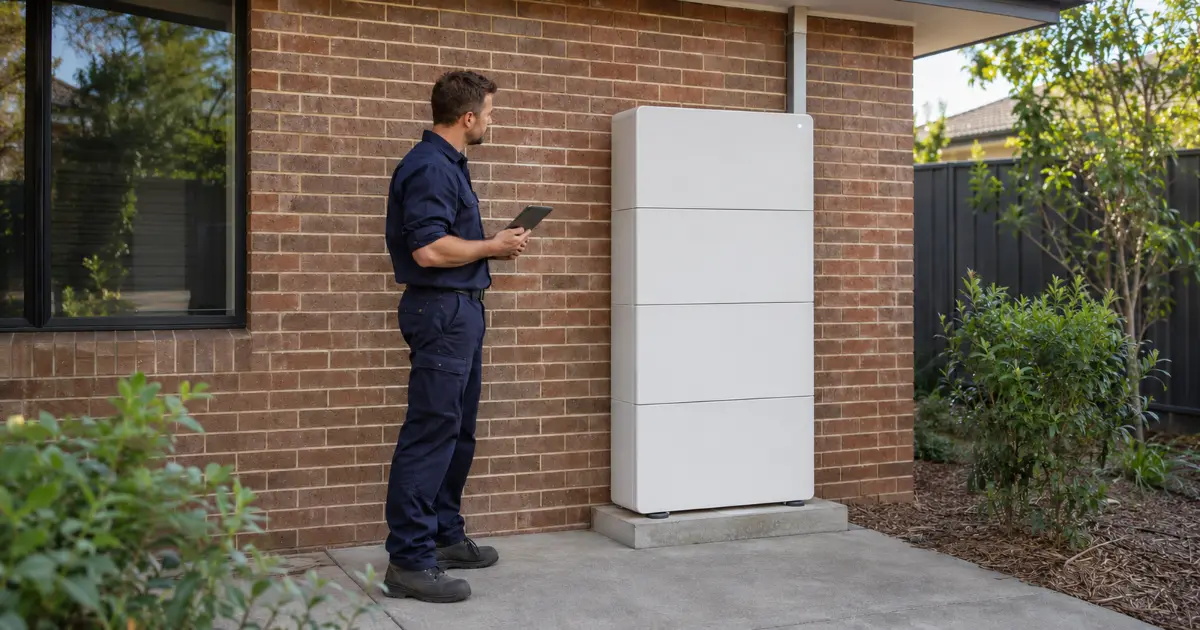
- Ask where the battery will go. Have the installer explain the location, cable route, and how they’ll protect the equipment and cables from damage.
- Ask what you’ll get at handover. Request the applicable electrical safety or compliance paperwork, shutdown instructions, and the contact for installation defects.
- Compare the scope as well as the sticker price. Check whether the quote includes switchboard work, backup wiring, and any protection your site needs.
If you already have a system and suspect a problem, contact the retailer or installer in writing and ask for a licensed electrician to assess it. If the installer is unavailable or you have an unresolved electrical safety concern, contact your state or territory electrical safety regulator. Leave switchboard and battery wiring checks to a licensed electrician.
Frequently asked questions
Were 61% of inspected battery installations unsafe?
The CER rated 61.19% substandard and 0.95% unsafe in the random battery sample. The substandard installations could stay in operation, with identified issues requiring attention where marked for rectification.
Does getting the federal rebate mean my system passed a CER inspection?
The CER physically inspects a sample of installations. A certificate discount on your invoice confirms the commercial arrangement for the discount. Your installation paperwork and any inspection report are the documents to check for the work carried out and assessed.
Can I request a free CER inspection?
The CER selects systems for its inspection program. Selected households can participate for free, with written consent. If you want a check of your own system, contact your retailer or arrange an independent assessment with a suitably licensed electrician.
Does the inspection report cover heat pump hot water?
The SRES supports eligible air-source heat pump water heaters and solar hot water systems. The 2025/26 report presents inspection results for solar PV and batteries. It gives no equivalent rate for hot water installations.
Who fixes a substandard solar or battery installation?
The installer must correct installation issues marked for rectification and provide evidence to Solar Accreditation Australia. If the CER inspected your system, keep a copy of the report and ask the retailer or installer to confirm the repair arrangements in writing.
The discount gets the system through the door
Australians should be able to take up a federal discount and expect the job to be done properly the first time. The CER found a lower share of substandard battery jobs in April than at the August peak. Even after that improvement, more than half of the April sample fell short.
The test for the next report is whether the same wiring, protection, and labelling issues show up less often. It should also tell Australians how quickly faulty work gets fixed. A fast rollout is easy to count. A job that holds up after the installer leaves is what households are paying for.
Comparing systems? Get free solar and battery quotes through Energy Matters. Ask each installer to quote on the same backup features, switchboard work, and handover.
Sources
- Clean Energy Regulator | 2025/26 SRES inspection report highlights
- Clean Energy Regulator | Inspection report release and enforcement powers
- Clean Energy Regulator | How the inspection program works
- Clean Energy Regulator | Annual report and scheme volumes
- Clean Energy Regulator | Small-scale system requirements
- Clean Energy Regulator | Renewable Energy Target eligibility
- Clean Energy Regulator | Solar battery eligibility and certificate rates
- Clean Energy Regulator | Mid-scale solar eligibility