





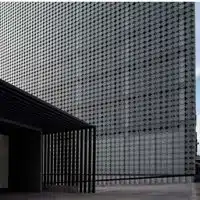
The façade of RMIT’s Design Hub building in Melbourne is about to get a major solar facelift.
Officially opened in 2012, Design Hub’s current façade consists of 17,000 semi-translucent, sandblasted glass cells; which contribute to energy efficiency and a high quality indoor atmosphere. The cells not replaced with Building Integrated PV (BIPV) will also be upgraded.
The upgrade is part of realising the original concept for the building to have “smart-skin” façade.
“The entire façade will be fitted with high performance interlayer toughened laminated glass, an initiative that will also improve the façade’s performance in terms of health and safety by addressing the issue of a small number of discs breaking since the building’s completion,” said Pro Vice-Chancellor Design and Social Context, Professor Paul Gough.
“As well as generating power for the building, the BIPV will act as an applied learning and teaching showcase and a research test bed, advancing practical solar research.”
The Bendigo Advertiser reports RMIT hopes the solar façade may eventually generate enough electricity to power the entire building, and surplus could be stored on-site using battery systems.
According to Energy Matters, the Melbourne city area receives solar irradiation levels of around 4.12 kilowatt hours per square metre daily.
“The Design Hub was always intended to be beacon of what is possible in design and sustainability,” Professor Gough said.
“This latest initiative will enhance the building’s already strong ESD credentials as well as taking advantage of breakthrough innovations in BIPV – the futuristic cousin of traditional rooftop solar panels – and in power storage.”
The Design Hub façade project is expected to be finished by February next year.
Formed primarily out of glass, concrete, steel and black rubber, Design Hub is also designed for rainwater and storm water harvesting. The building also incorporates a grey water treatment facility and a computer-based control system monitoring the building’s mechanical and electrical equipment.
The upgrade is part of RMIT’s $98 million plan to slash energy and water use and greenhouse gas emissions across the institution.
The Sustainable Urban Precincts Program (SUPP) has a goal of cutting electricity use over eight years by an estimated 239 million kilowatts, resulting a 30,000-tonne reduction in greenhouse gas emissions. Water use will be reduced by an estimated 68 million litres; enough to fill 27 Olympic-sized swimming pools.
Last year, RMIT joined the Melbourne Renewable Energy Project; an initiative involving 16 organisations across the city using their collective buying power to purchase renewable energy from sources such as wind and solar power at competitive pricing.