







Extreme heat events will threaten the health of residents in south-eastern South Australia, including the major metro area of Adelaide, unless urgent action is taken to combat climate change.
That’s the verdict of a new report predicting a rapid increase in the number of days over 35°C in South Australia.
The ‘Heatwatch’ report by The Australia Institute is based on CSIRO and Bureau of Meteorology (BOM) data projections. However, the report says lowering carbon dioxide emissions could limit the number and scale of future extreme heat events.
More 40°C-plus days in future than 35°C days
The report shows extreme heat events have increased in frequency over recent decades.
It focuses on the two largest communities in the state’s south-east: Murray Bridge and Mount Gambier. The number of days over 35°C has doubled in both towns – at Murray Bridge since the late 1960s and in Mount Gambier since the 1940s.
The average number of days per year over 35°C will also keep rising, claims the report. By 2090 this will increase from 21 to 56 at Murray Bridge and from seven to 22 in Mount Gambier.
The data also predicts more days over 40°C. The average could rise from 4.1 days to an alarming 22 days per year for Murray Bridge.
As a result, days over 40°C will become more frequent than days over 35°C have been in the past, the report states.
The harmful effects of extreme heat events
According to Climate Council figures quoted in the report, major heatwaves caused more deaths in Australia last century than all natural disasters combined.
Many regulators now use 35°C as the threshold for the work and safety cut-off. Studies show that productivity and health both take a hit above this temperature. Results of sustained heat include:
- Heat-related deaths and illness rise;
- People get less sleep;
- Incidence of domestic violence increases;
- People are less prone to exercise;
- Accident and bushfire risk increase;
- People suffer increased physical and psychological stress;
- Heat aggravates cardio-vascular and diabetic conditions; and
- Power outages occur as infrastructure is disrupted.
Climate change action can peg extreme heat events
Current levels of extreme heat may already be exceeding projections for 2030, the report concludes.
In addition to this extreme heat statistic, Australia also ranks as one of the lowest countries globally on climate action. Domestic carbon emissions per person are among the highest in the world.
The report projected that a low emissions policy by 2090 would reduce projected annual 35°C-plus days by 23 for Murray Bridge and 40°C-plus days by 12.
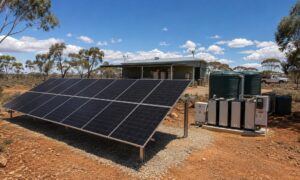
Meanwhile, households can play their part in the fight against excessive heat by installing solar panels and battery storage systems. Emissions-free electric cars can also be charged at home using solar energy.