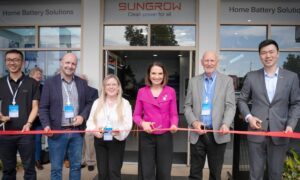




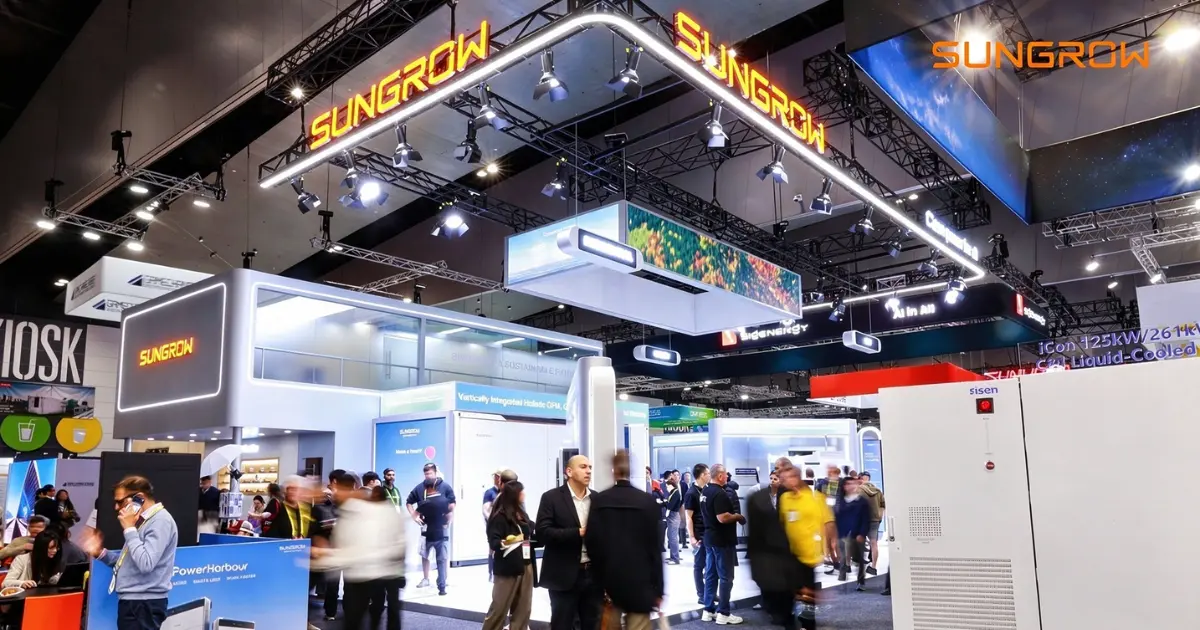
Australian homes, businesses, and remote communities face different energy challenges, but reliable power and smarter energy management connect them all. Sungrow brought those priorities together at All Energy Australia 2026, held in Melbourne on 28 and 29 October. Its showcase spanned home batteries, integrated EV charging, commercial storage, utility-scale systems, and microgrid technology.
Two Australian debuts led the line-up: the PowerHarbour residential energy storage platform and the iNexGrid microgrid solution. Alongside them, Sungrow demonstrated technologies designed to help businesses manage electricity costs and support a grid running on more renewables.
TL;DR
- PowerHarbour combines home battery storage and intelligent energy management, with supported configurations expandable to 120 kWh.
- PowerHarbour Pro introduces integrated EV charging in selected configurations, with availability and future V2X functions subject to local requirements.
- PowerKeeper and PowerStack 255CS target commercial energy management, including peak shaving and eligible electricity market services.
- PowerTitan 3.0 and the 1+X modular inverter support large renewable energy and storage projects.
- iNexGrid connects generation, batteries, and controls for demanding applications, including mines, data centres, businesses, and island communities.
PowerHarbour brings home energy systems together
For households, managing solar, battery storage, and an electric vehicle can quickly become a juggling act. PowerHarbour brings these technologies into a more integrated home energy platform.
The all-in-one residential storage system combines flexible battery capacity with intelligent energy management and a streamlined installation approach. Sungrow positions it for both new solar and storage installations and compatible upgrades to existing systems.
Its AI-driven energy management analyses weather forecasts, predicted solar generation, household consumption patterns, and electricity prices to schedule energy use. The aim is to help households make better use of available electricity as conditions change throughout the day.
For example, a household’s strongest solar generation may occur while everyone is at school or work. Storing that energy can help meet demand when cooking, cooling, and other evening activities begin.
Flexible capacity for changing household needs
PowerHarbour offers 7 kWh and 10 kWh battery modules, with supported combinations expandable to 120 kWh. That maximum requires an approved arrangement of the integrated unit and additional battery clusters.
The platform supports up to 200% solar PV oversizing in applicable configurations. This allows compatible systems to connect solar panel capacity above the inverter's nominal rating, within specified design limits.
New-generation SMD battery modules can also pair with selected compatible Sungrow SHT and SHRS storage inverters. Compatibility depends on the particular inverter and battery configuration.
Another feature addresses a familiar question for battery buyers: what happens if the household needs more storage later?
PowerHarbour supports expansion using compatible new and existing modules without requiring state-of-charge calibration or pre-charging. This simplifies the upgrade process, although installers must still follow the applicable product requirements.
PowerHarbour Pro adds integrated EV charging
Selected PowerHarbour Pro configurations incorporate EV charging, bringing charging hardware, the inverter, and energy management into a compact power core.
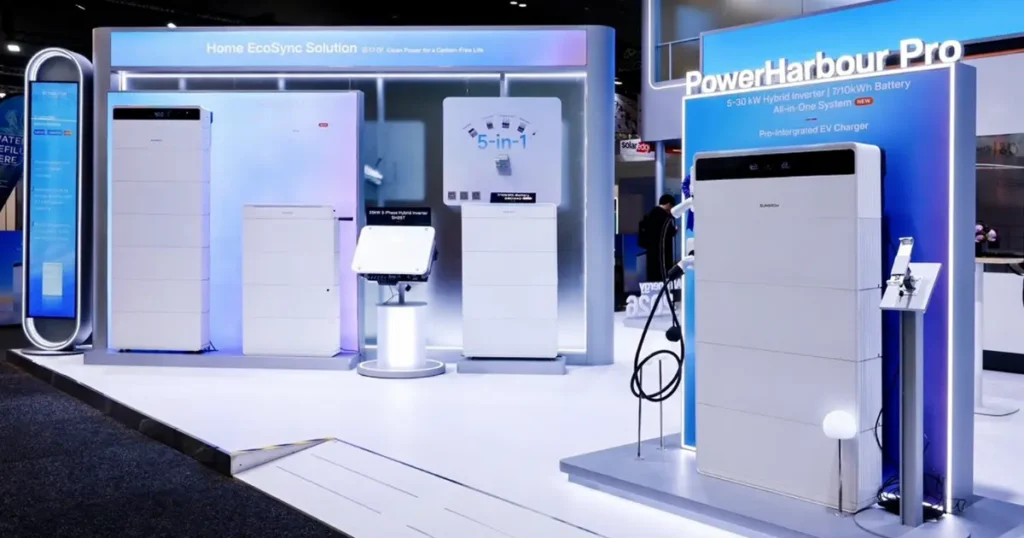
Sungrow has also designed the platform with future vehicle-to-everything, or V2X, applications in mind. V2X describes technology that allows compatible electric vehicles to supply energy beyond their batteries, potentially serving homes or the grid.
However, future capability should not be confused with an available feature. Sungrow lists the SHSA-Pro model as coming soon in its Australian presentation. Product availability and V2X functionality remain subject to local release and compatibility requirements.




Outdoor protection and simpler installation
Sungrow has designed PowerHarbour for demanding outdoor environments, including coastal and inland conditions. The platform features IP66 ingress protection and C5 corrosion resistance, while the event showcase also highlighted AFCI 3.0 arc-fault protection.
Other design features include high-capacity 314+ Ah battery cells and battery optimisers built into the stackable modules. Specific configurations measure just 255 mm deep, although dimensions vary between models.
The system's cooling design supports operating noise below 30 dB(A), according to Sungrow.
For installers, stackable modules and plug-and-play connections aim to reduce wiring and installation complexity. Applicable configurations also include EnergyBridge backup hardware, combining five electrical functions in one device.
The plug-in iHomeManager Mini and upgraded iSolarCloud platform support commissioning and monitoring. Homeowners can view solar generation, stored energy, and household consumption through the monitoring system.
Scott Su, Technical Service Director at Sungrow Australia, said integration was central to the company's approach:
"Australia's transition towards more connected home energy systems presents a significant opportunity for the industry. We believe the next step is not simply adding more features, but making solar, storage and energy management work together more effectively. With PowerHarbour, our focus is on bringing these technologies together in a practical, flexible solution that can support different household needs as the market evolves."
Commercial batteries tackle business energy demands
Sungrow's commercial showcase focused on businesses managing substantial loads, fluctuating demand, and opportunities to use more of their own solar.
PowerKeeper offers modular commercial storage
Paired with the SH110CX inverter, PowerKeeper provides modular storage scalability from 100 kWh to 1 MWh. Sungrow also highlighted integration using existing cabling and meters, subject to the project's design requirements.
The paired solution features 10 maximum power point trackers, or MPPTs, and a 2.0 DC/AC ratio. MPPTs help manage solar generation across different panel groups and operating conditions.
At the event, Sungrow demonstrated PowerKeeper's water-submersion resilience and state-of-charge stability, alongside its IP66 protection rating. Its broader safety and management features include Safe 7 Tech, AI self-diagnosis, real-time monitoring, and one-tap setup.
Potential applications include peak shaving, which uses stored electricity to reduce periods of high grid demand. Businesses can also increase solar self-consumption and explore virtual power plant participation and Frequency Control Ancillary Services, or FCAS.
Access to these services depends on the site's configuration and relevant market participation arrangements.

PowerStack 255CS adds liquid-cooled storage
Sungrow also presented PowerStack 255CS, rated at 110 kW of power and 257 kWh of storage capacity.
The system combines liquid cooling with three-level over-current protection and DC/AC conversion efficiency of up to 98.5%. Its FCAS capabilities offer another potential pathway for businesses participating in electricity market services.
Together, the commercial products address different project requirements, from modular expansion to larger integrated storage installations.
PowerTitan 3.0 supports storage at grid scale
At the larger end of the showcase, Sungrow presented full-scale demonstrations of PowerTitan 3.0 and its 1+X modular inverter.
PowerTitan 3.0 combines a 1.8 MW power conversion system with 7.14 MWh of lithium iron phosphate batteries. The equipment fits within a 20-foot container and uses a fully liquid-cooled design.
Sungrow also highlighted operating noise below 65 dBA and intelligent grid-forming capabilities for strong and weak grid conditions.
Grid-forming technology helps establish and maintain voltage and frequency, supporting stable operation as power systems incorporate more renewable generation.
The complementary 1+X modular inverter supports DC-coupled grid-forming applications and fast control response. Sungrow highlighted rapid deployment and a maintenance approach designed around one-hour servicing.
The company reported a project pipeline exceeding 10 GW across Australia and New Zealand, supported by local engineering and project management teams.
iNexGrid connects energy assets in demanding locations
Sungrow's other major launch, iNexGrid, addresses sites where coordinating electricity supply can be especially challenging.
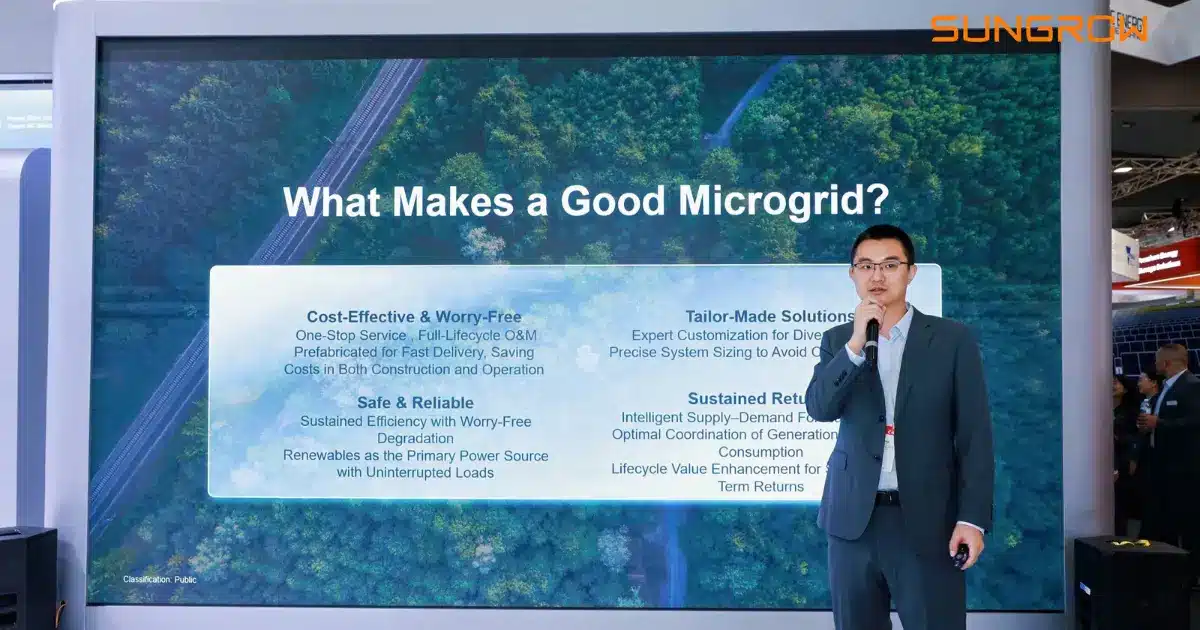
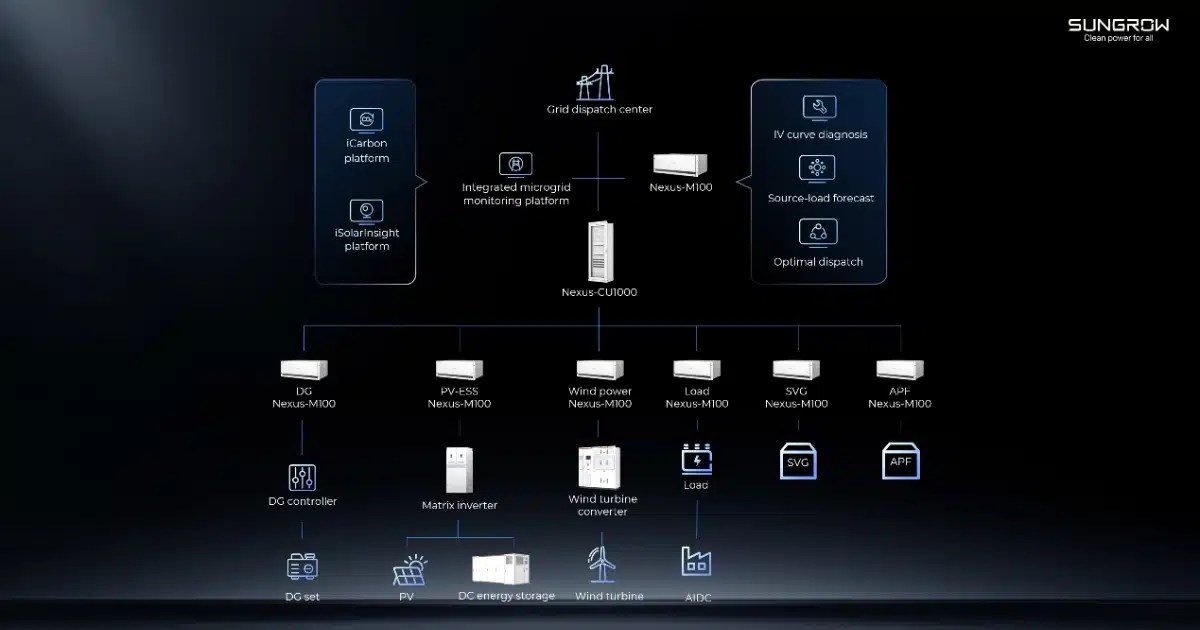
A microgrid connects local generation, storage, and electricity users within a controllable system. Depending on its design, it can operate with the main grid or independently.
For remote mines and island communities, that can mean coordinating solar and batteries with diesel generators. For data centres, the priority may involve responding quickly to sudden power changes while maintaining electricity quality.
iNexGrid integrates Sungrow's solar, wind, storage, EV charging, and cloud technologies. Its architecture uses PowerTitan 3.0 grid-forming storage and the Nexus-M100 microgrid controller to coordinate connected assets.
Five layers of protection
Sungrow organises iNexGrid around five protection layers, each addressing a different operating condition:
- Normal operation: AI forecasting anticipates renewable generation and electricity demand to improve energy scheduling.
- Small disturbances: Millisecond-level local support helps manage minor voltage and power fluctuations.
- Large disturbances: Coordinated control supports grid transitions and frequency and voltage regulation to sustain important loads.
- Major faults: Coordinated battery and diesel controls work with automatic fault disconnection to provide emergency responses.
- Grid collapse: Black-start technology supports restoring power after a complete shutdown.
Black start means restarting a power system without relying on an already energised external grid.
Sungrow says its large-scale technology can restore a full microgrid power supply within one minute in supported GW-scale applications. Actual performance depends on the project's equipment, configuration, and operating conditions.


Applications across mines, data centres, and businesses
For mining, iNexGrid uses a control strategy Sungrow calls "Regulation Instead of Shedding". The controller dynamically adjusts storage and diesel output to support supply continuity and reduce interruptions to production.
For artificial intelligence data centres, the system coordinates storage and power controls to smooth rapid electricity demand changes. This targets the voltage and frequency stability required by sensitive computing equipment.
Commercial and industrial applications use AI-driven scheduling to manage peaks and coordinate energy assets. Island applications address another challenge: maintaining reliable supply while reducing dependence on diesel in harsh environments.
Sungrow also highlighted tools supporting project design and ongoing operation. These include iSolarDesign for annual simulations and scenario optimisation, prefabricated delivery, and iCarbon for carbon accounting and predictive maintenance.
Australian project experience underpins the microgrid launch
Sungrow pointed to its Northern Goldfields deployment in Western Australia as an example of its microgrid experience.
The project combines 14.7 MW of solar with a 20.64 MWh PowerTitan storage system and incorporates megawatt-level black-start capability.
Sungrow reports operating costs 70% lower than traditional diesel generation for that project. This is a project-specific comparison, rather than a savings forecast for every microgrid installation.
The company also cited international projects involving Naipu Mining Machinery in Zambia and the HyIron Oshivela project in Namibia.
Local support connects the portfolio
Sungrow's showcase covered a substantial range, from household batteries to energy systems serving remote industrial operations.
Supporting that portfolio, Sungrow reports more than 13 years of Australian experience, a 100-person local team, and over 300 service partners. Its Australian infrastructure also includes a 3,000-square-metre Service and Logistics Centre.
For households, PowerHarbour focuses on bringing storage, solar, and selected EV charging configurations together. Businesses gain more options for managing demand, while iNexGrid targets the coordination required for complex local power systems.
Across the line-up, the shared focus is practical: managing energy assets together as Australia's electricity needs change.
Frequently asked questions
What is Sungrow PowerHarbour?
PowerHarbour is an all-in-one residential energy storage platform combining battery storage, an inverter, and intelligent energy management. Selected PowerHarbour Pro configurations also integrate EV charging.
How much battery storage does PowerHarbour support?
Supported configurations can reach 120 kWh using the integrated unit and additional battery clusters. Available capacity depends on the model and approved expansion arrangement.
Can PowerHarbour work with an existing Sungrow inverter?
New-generation SMD battery modules can pair with selected compatible SHT and SHRS storage inverters. An installer should confirm the exact model and configuration before recommending an upgrade.
Does PowerHarbour Pro support bidirectional EV charging in Australia?
Sungrow has designed the platform with future V2X applications in mind. This does not confirm currently available bidirectional charging. Local release, vehicle compatibility, and product requirements determine which functions become available.
What does iNexGrid do?
iNexGrid coordinates generation, battery storage, and other energy assets within a microgrid. It targets applications including mining, data centres, commercial facilities, and island power systems.
How does grid-forming storage help a microgrid?
Grid-forming storage helps establish voltage and frequency, supporting stable operation. With suitable equipment and controls, it can also support restarting a microgrid after a complete shutdown.