


Single-Phase | Hybrid/AC Inverter
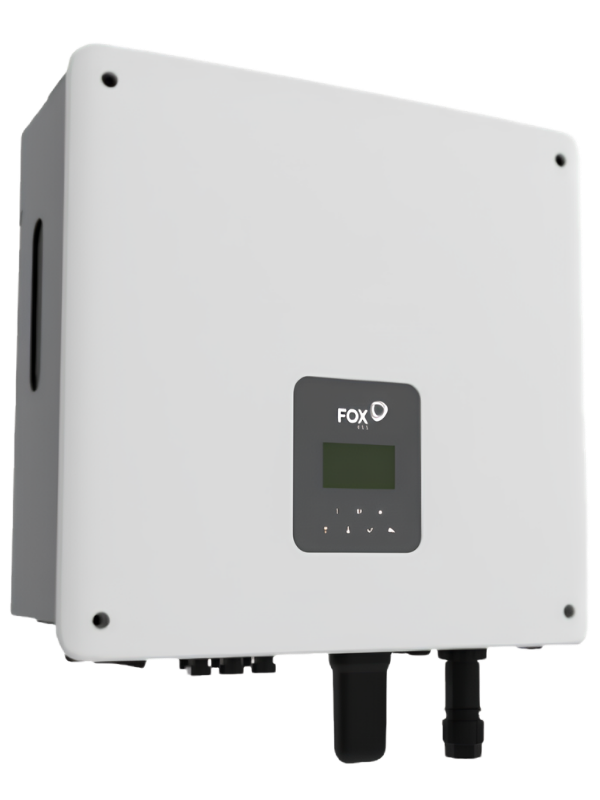
Australia’s residential solar market is rapidly shifting toward energy independence, making battery-ready, hybrid solar inverters essential for modern home energy installations. The Fox ESS H1/AC1 Single-Phase Hybrid Inverter series offers an efficient solution that integrates solar power and high-voltage battery storage into Australian homes.
Whether you’re installing a new solar-plus-storage system or retrofitting an existing PV array with AC-coupled storage, understanding the capabilities of the Fox ESS H1 and AC1 models is vital. This review explores the key features, performance specifications, warranty coverage, and practical applications of the Fox ESS H1/AC1 series in Australia.




Did you know Energy Matters is Australia’s largest renewable news, blog and educational resource? Subscribe to Energy Matters’ weekly newsletter and keep updated even with incentives, rebates and recommended solar product offers.
Key features of the Fox ESS H1/AC1 Hybrid Inverter
The Fox ESS H1/AC1 Single-Phase Hybrid Inverter family offers options for homeowners looking to connect solar generation with battery storage. However, the H1 and AC1 serve different installation purposes, so buyers should identify the correct series and model before comparing performance or requesting a quote.
- High-voltage battery compatibility: The Fox ESS H1/AC1 series is engineered to work seamlessly with high-voltage battery systems like the Fox Energy Cube. High-voltage architectures reduce current losses during charge and discharge cycles, delivering maximum round-trip efficiency across daily energy transfers.
- Flexible DC and AC coupling options: The H1 model is a standard hybrid inverter with dual MPPT trackers for direct solar panel input. Meanwhile, the AC1 model operates as a dedicated AC-coupled battery charger, allowing homeowners to retrofit battery storage to an existing solar system without replacing their original inverter.
- Emergency Power Supply (EPS) Backup: Equipped with EPS functionality, the unit can supply essential household circuits with backup power during grid outages. It features an uninterrupted switchover time under 20ms, ensuring critical appliances like refrigerators and lights remain powered without interruption.
- IP65 weatherproof enclosure: Built to withstand harsh Australian conditions, the unit features an IP65-rated dustproof, waterproof casing. This rating supports indoor and outdoor wall-mounted installations across varying ambient temperatures.
- Real-time remote monitoring: Integrated Wi-Fi connectivity pairs directly with the FoxCloud mobile application and web portal. Users can track daily solar production, home load demand, grid import/export, and battery state of charge in real time from anywhere.
Specifications of the Fox ESS H1/AC1 Hybrid Inverter
The Fox ESS H1/AC1 series is available in power ratings ranging from 3.0kW to 6.0kW, satisfying the energy demand profile of most single-phase Australian residences. The table below outlines the core technical parameters for the H1-G2 / AC1-G2 model range.
Feature / Specification | Fox ESS H1-3.0 to H1-6.0 / AC1 Series |
Rated AC Power Output | 3.0kW / 3.7kW / 4.6kW / 5.0kW / 6.0kW |
Max. Efficiency | Up to 97.08% |
Max. DC Input Power (H1) | Up to 12,000W (model dependent) |
MPPT Operating Range | 80V – 560V DC |
No. of MPPTs / Strings | 2 MPPT Trackers / 1 String per MPPT |
Battery Type | Lithium-ion / LFP (High Voltage) |
Battery Voltage Range | 80V – 480V DC |
Max. Charge/Discharge Current | 40A |
EPS Backup Output Power | Up to 6,000VA (model dependent) |
Ingress Protection | IP65 (Indoor / Outdoor) |
Cooling Method | Natural Convection (Fanless Design) |
Dimensions (W x H x D) | 434 x 418 x 185 mm |
Weight | ~22.0 kg |
Communication Protocols | Wi-Fi, LAN, 4G (Optional), RS485, CAN, DRM |
Compliance Standards | AS/NZS 4777.2, IEC 62109-1 / 62109-2 |
Fox ESS H1/AC1 Hybrid Inverter Warranty
Standard warranty terms:
In Australia, Fox ESS provides a 5-year to 10-year standard product warranty depending on registration and installer promotion terms. This warranty covers manufacturing defects and internal hardware failures under normal operational conditions.
Australian Consumer Law Protection:
In addition to manufacturer warranties, all Fox ESS inverters sold in Australia come with consumer guarantees under Australian Consumer Law (ACL). Customers are legally entitled to repair, replacement, or refund for major operational failures.
Pros of the Fox ESS H1/AC1 Hybrid Inverter
The Fox ESS H1/AC1 family offers two approaches to residential solar and battery integration. Its suitability depends on choosing the right inverter architecture, verifying compatibility, and matching system performance to household energy needs.
Six potential advantages are worth considering.
- Flexible system design: The H1 and AC1 offer different integration pathways for new solar installations and battery upgrades, depending on the model.
- Potential for greater solar self-consumption: A correctly configured compatible battery system can store surplus solar energy for later household use.
- Options for existing solar systems: The AC1 architecture suits homeowners who want to add battery storage without replacing a compatible existing solar inverter.
- Integrated energy management: Compatible equipment and monitoring tools can help homeowners track generation, battery operation and electricity flows.
- Residential single-phase suitability: Appropriate models can suit homes with compatible single-phase electrical supplies.
- Potential to reduce grid electricity purchases: Storing and using surplus solar energy may reduce grid imports when household demand, tariffs and system performance align.
These advantages do not guarantee financial savings or specific performance. Actual results depend on the selected model, installation design, battery specifications, electricity tariffs and household usage patterns.
Cons of the Fox ESS H1/AC1 Hybrid Inverter
The Fox ESS H1/AC1 is not automatically the best choice for every home. Buyers should weigh these limitations alongside the potential benefits.
- Different architectures can cause confusion: The H1 and AC1 serve different purposes, so selecting the wrong family may lead to an unsuitable system design or unnecessary equipment costs.
- Battery compatibility must be verified: Not every battery is necessarily supported, and the available charging and discharging performance depends on the approved configuration.
- Backup power may require additional equipment: Homeowners seeking power during a grid outage must confirm the required hardware, supported circuits and operating limitations.
- Total costs extend beyond the inverter: Batteries, electrical work, installation, monitoring requirements and possible system modifications can increase the overall investment.
A careful quotation comparison can help identify these limitations before installation. Ask each installer to explain the complete system design, expected performance, warranty coverage and any additional equipment costs.
Applications for the Fox ESS H1/AC1 Hybrid Inverter
The Fox ESS H1/AC1 Single-Phase Hybrid Inverter family can suit several residential solar scenarios. The right configuration depends on whether the household is installing a new system, upgrading existing equipment or prioritising battery storage.
- New residential solar installations
Homeowners installing solar panels and a compatible battery as part of a coordinated system may want to consider the H1. Integrating the equipment during initial installation helps the designer plan electrical connections, monitoring, and future energy requirements together.
This option is particularly relevant when a household wants to assess solar and battery storage at the same time. The installer should size the array and battery around the property’s consumption patterns rather than relying on inverter capacity alone.
- Adding a battery to an existing solar system
Homeowners with solar panels may want to store more of the electricity their system produces. An AC-coupled approach using a suitable AC1 inverter can be relevant where the existing solar inverter is retained, and the system is compatible.
Before proceeding, the installer should assess the age and condition of the existing inverter, available electrical capacity, battery location and monitoring arrangements. In some cases, replacing the inverter or choosing a different system architecture may offer better long-term value.
- Households with high evening electricity use
Families who consume substantial electricity after sunset may benefit from a battery system that stores surplus daytime solar generation. The potential benefit depends on available excess solar, battery capacity, and how consistently stored energy can replace grid electricity.
Households should review their interval electricity data, if available, before choosing a battery size. A larger battery isn’t necessarily more economical if it stays undercharged or rarely displaces expensive grid electricity.
- Homes planning future electrification
Electric vehicles, heat pumps and other electrical appliances can change a home’s daily consumption profile. When planning a new solar and battery installation, homeowners should consider expected future demand alongside current usage.
Homeowners should check the selected Fox ESS configuration against these anticipated needs. A single-phase inverter isn’t a universal solution for every property, especially where supply arrangements, larger loads, or future three-phase requirements affect system design.
- Homes considering backup power
Some households want a battery system to provide electricity during a grid outage. However, standard grid-connected solar and battery operation does not automatically mean a home can keep running during a blackout.
Before selecting the H1 or AC1, confirm whether the exact configuration supports backup operation, what additional equipment is needed, which circuits can be supplied and what power limits apply. An appropriately qualified installer should design and commission the backup arrangement.
Is the Fox ESS H1/AC1 Hybrid Inverter right for you?
The Fox ESS H1/AC1 Single-Phase Hybrid Inverter family is worth investigating if you’re planning a residential solar and battery system or considering a battery upgrade. The key is to choose the right model for your installation, not treat the H1 and AC1 as interchangeable.
The H1 may suit you if:
- You’re planning a new solar installation with compatible battery storage.
- You want to coordinate solar generation and battery operation within a hybrid system.
- Your property’s electrical supply and planned system capacity suit the selected model.
The AC1 may suit you if:
- You already have a compatible solar installation.
- You want to add a battery while keeping your existing solar equipment.
- An AC-coupled design makes sense for your property’s electrical configuration and upgrade plans.
You may want to compare alternatives if:
- You need a specific backup-power arrangement that the proposed configuration cannot support.
- Your planned energy demand requires a different inverter capacity or electrical architecture.
- Your preferred battery is not on the approved compatibility list.
- Another system offers a better combination of installation costs, warranty coverage, monitoring and long-term performance.