


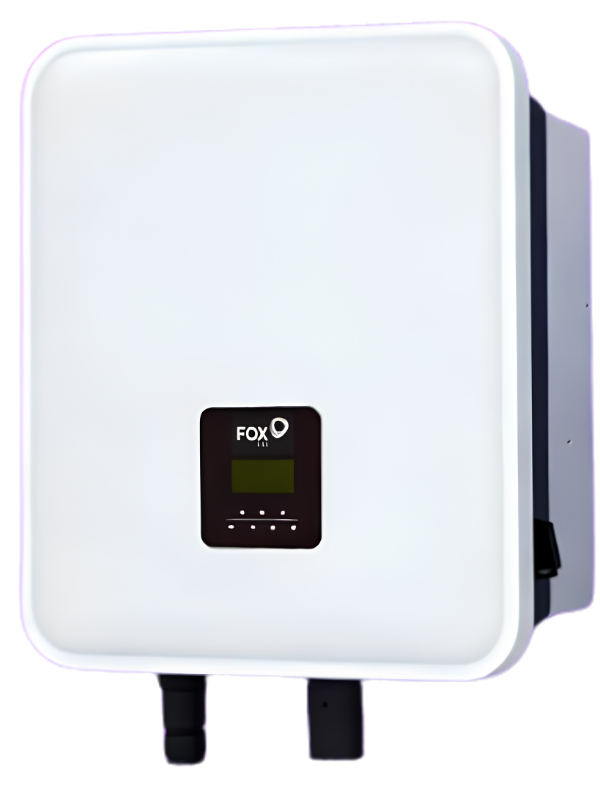
Single-Phase | Hybrid/AC Inverter
The Fox ESS KH/KA Single-Phase Hybrid Inverter is worth evaluating if you’re planning a residential solar and battery system in Australia. Its suitability depends on verified model specifications, approved battery compatibility, warranty support, and how the complete system matches your household’s energy needs.
Before choosing an inverter, compare quotes for the installed system and ask a qualified installer to explain expected savings, backup capabilities, and future expansion options. Explore Energy Matters’ solar and battery resources to make a more informed decision and take the next step towards a system designed for your home.


Did you know Energy Matters is Australia’s largest renewable news, blog and educational resource? Subscribe to Energy Matters’ weekly newsletter and keep updated even with incentives, rebates and recommended solar product offers.
Key features of the Fox ESS KH/KA Hybrid Inverter
The KH/KA series combines modern power electronics with flexible grid-integration options, making it a standout choice for new solar-plus-storage setups or retrofitted energy storage systems.
- High-voltage battery compatibility: By operating with high-voltage lithium battery systems (ranging up to 480V/500V), the unit minimises internal resistance and heat losses. This yields higher overall round-trip conversion efficiency when storing and discharging solar power.
- EPS Emergency Power Supply functionality: Features an Emergency Power Supply (EPS) switchover time under 10ms during mains grid outages. This near-instantaneous switch rate acts like an Uninterruptible Power Supply (UPS) for critical home loads.
- Dual MPP trackers with high-current input: Equipped with multiple Maximum Power Point Trackers (MPPTs) that accommodate high-current solar PV modules. This configuration ensures flexible string design across varying roof orientations and tilt angles.
- FoxCloud 2.0 monitoring suite: Provides full mobile app and web portal integration for comprehensive system tracking. End users can adjust charge/discharge schedules, track yield history, and remotely perform over-the-air firmware upgrades.
Specifications of the Fox ESS KH/KA Hybrid Inverter
Understanding the technical parameters is vital to assess how this system aligns with your clean energy goals. The table below details key electrical, battery, and mechanical parameters for the series.
Technical Parameter | Specification / Details |
Model Variants | KH (Hybrid with PV input) / KA (AC-Coupled Inverter) |
Rated Power Range | 7.0 kW to 10.5 kW (Single-Phase Output) |
Max. Efficiency | 97.8% (MPPT Efficiency: 99.9%) |
Battery Voltage Range | 85V – 480V (High-Voltage Architecture) |
Max. Charge/Discharge Current | 50A / 50A |
Switchover Time (EPS Mode) | < 10 ms |
Ingress Protection (IP Rating) | IP65 (Suitable for outdoor installation) |
Dimensions (W x H x D) | 450 mm x 527 mm x 208 mm |
Weight | ~29 kg (KH Series) / ~27.5 kg (KA Series) |
Communication Protocols | RS485, CAN, Wi-Fi, DRM, 4G (Optional) |
Fox ESS KH/KA Hybrid Inverter Warranty
When investing in solar energy infrastructure, long-term warranty support offers critical financial protection and peace of mind.
- Fox ESS provides a standard 5- to 10-year factory warranty on its inverter range in Australia, depending on the promotional period and the installer registration pathway.
- Warranty validity requires installation by a Clean Energy Council (CEC)- accredited installer who strictly follows local AS/NZS 3000 wiring standards and Fox ESS installation guidelines.
Pros of the Fox ESS KH/KA Hybrid Inverter
The advantages of a Fox ESS KH/KA hybrid inverter depend on the model you choose and how well it fits your property’s electrical setup. For homeowners considering solar battery storage, here are some reasons to explore the range.
- High single-phase power output: Generates continuous output up to 10.5kW, accommodating larger residential energy consumers without requiring a three-phase grid upgrade.
- Rapid EPS switch time: Under-10 millisecond response time provides continuous backup during power grid blackouts.
- High-voltage efficiency: Pairing with high-voltage batteries optimises round-trip efficiency, losing less power as heat during charge/discharge cycles.
- Flexible AC-coupled option (KA Series): The dedicated KA variant lets you add battery storage to existing grid-tied solar systems without replacing the original PV inverter.
- IP65 weatherproof enclosure: A strong protective casing ensures reliable outdoor mounting in tough climates.
- Intuitive FoxCloud app: Streamlined cloud portal and app interface make real-time monitoring and parameter adjustments simple.
Cons of the Fox ESS KH/KA Hybrid Inverter
A hybrid inverter is not automatically the best option for every property. Buyers should weigh the following potential drawbacks against the benefits of integrated solar and battery management.
- Shorter track record in Australia: As Fox ESS entered the local Australian market relatively recently compared to legacy brands, long-term field reliability data is still developing.
- Slightly heavier unit: At roughly 29 kg, installation usually requires a multi-person lift or reinforced mounting surface.
- Proprietary battery ecosystem: Best performance and seamless integration rely primarily on pairing with official Fox ESS high-voltage battery modules rather than third-party low-voltage setups.
- Derating at high ambient temperatures: Thermal derating begins above 45°C, which may temporarily reduce maximum power output during extreme heatwaves.
Applications for the Fox ESS KH/KA Hybrid Inverter
The flexibility of the KH (hybrid) and KA (AC-coupled) variants lets this equipment suit a broad range of residential energy scenarios.
- New solar and battery installations (KH Series): Ideal for new residential builds or total system overhauls where solar panel inputs and battery connections route directly into one unit.
- Retrofitting existing solar systems (KA Series): Ideal for homes with a functional grid-tied solar array that want to add high-voltage energy storage without rewiring their existing solar inverter.
- Blackout-prone regional properties: The fast EPS backup switchover keeps essential domestic circuits—such as refrigeration, lighting, and internet—running during grid failures.
Is the Fox ESS KH/KA Hybrid Inverter right for you?
The Fox ESS KH/KA Single-Phase Hybrid Inverter may suit Australian homeowners looking for an integrated solar and battery solution. Whether it is the right choice depends on the model’s capabilities, your property’s electrical configuration, and the cost of a complete installation.
It may suit you if:
- Your home has a single-phase electricity supply, and the selected model meets your requirements.
- You want to coordinate solar generation and compatible battery storage.
- You are installing a new solar and battery system or evaluating a suitable upgrade.
- You value energy monitoring and want better visibility of household electricity flows.
- You have checked the manufacturer’s battery compatibility and warranty conditions.
Consider alternatives if:
- You need three-phase inverter output or the selected model cannot meet your electrical requirements.
- You need backup power, but the proposed configuration doesn’t support it.
- You want freedom to choose from a wide range of third-party batteries without compatibility restrictions.
- A different system architecture offers better value for your existing solar installation.
Questions to ask your solar installer
Before accepting a quotation, ask the installer to confirm:
- What is the exact Fox ESS model number, and which Australian datasheet applies?
- What are its rated AC output, maximum PV input and MPPT specifications?
- Which battery models are approved, and what are the charging and discharging limits?
- Does the proposed system support backup power, and what additional equipment is required?
- What warranty applies, and who handles service and warranty claims in Australia?
- What is the estimated annual bill saving based on the property’s actual consumption and electricity tariff?
- Are network approval, export limits, switchboard upgrades or additional metering required?
These questions help establish whether the inverter is technically suitable and whether the overall system represents good value.