




New South Wales is staring down a monumental shift. Coal power stations, the workhorses of our grid for decades, are on the way out. The question is not if, but when, and more importantly, what fills the gap.
This change comes with challenges, but also with enormous opportunities. As we step into an era of residential and commercial-scale battery storage, NSW has the potential to enjoy cleaner, cheaper, and more reliable energy than ever before.
Why coal closures are shaking things up
Coal plants have been the backbone of NSW’s electricity supply. But like old cars, the older they get, the more often they break down. Liddell Power Station closed in 2023. Eraring, the state’s largest, will now run until at least 2027, possibly 2029. Others, like Bayswater and Vales Point, are earmarked for the 2030s.
Every closure means the grid loses a big chunk of generation. It also loses a source of ‘system strength’, the stability that coal plants naturally provided. That’s why headlines about blackouts pop up whenever a station shuts down.
But here’s the kicker: coal is leaving, whether we like it or not. The smarter play is making sure the replacement arrives on time.
The good news: batteries are already stepping up
This isn’t a case of NSW standing still. In August 2025, the Waratah Super Battery went live on the Central Coast. Sitting on the old Munmorah coal site, it is the biggest of its kind in the Southern Hemisphere.

Waratah acts like a ‘shock absorber’ for the grid. When demand spikes or a fault hits, it kicks in almost instantly. That means we can push more power through existing lines, and keep the lights on while renewables expand.
It’s a glimpse into the future. Batteries won’t just be giant grid assets; they’ll be in households, businesses, and even electric cars, all working together to balance supply and demand.



Transmission: the unsung hero of the energy transition
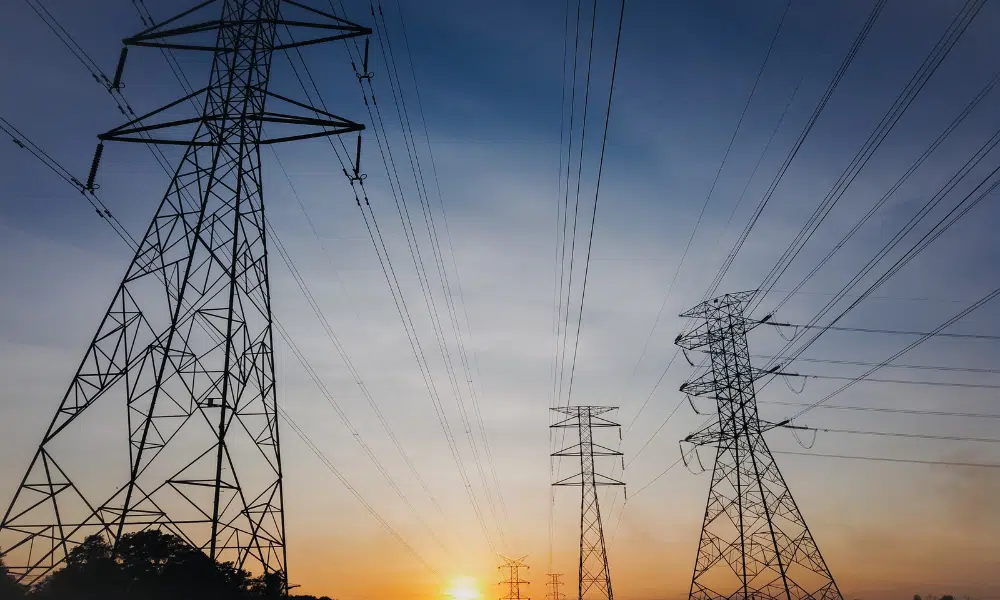
You can’t get solar or wind power to Sydney homes without strong transmission. NSW is investing heavily in Renewable Energy Zones (REZs), starting with the Central-West Orana project. These REZs act like hubs, connecting new solar, wind, and storage projects to the main grid.
Interstate links are also strengthening. Project EnergyConnect will soon allow NSW and South Australia to swap clean power across borders. This is vital. When the wind’s not blowing in one state, it often is in another.
Think of it like upgrading the highways for our electricity. Without them, clean power gets stuck in traffic.
Balancing risk and opportunity
The Australian Energy Market Operator (AEMO) has been blunt: reliability risks grow if projects stall. On-time delivery of renewables, storage, and transmission is the difference between a smooth transition and a messy one.
But there’s optimism too. AEMO’s outlook shows that if projects in the pipeline are built as planned, the grid will remain reliable. In other words, we don’t need to cling to coal, we just need to get moving.
What solutions are already working
- Grid-scale batteries like Waratah can stabilise frequency and voltage.
- Household batteries soak up excess rooftop solar during the day, then feed it back at night.
- Virtual power plants stitch thousands of small batteries together, creating a resource as powerful as a coal unit.
- Demand response pays households and businesses to shift usage to sunny hours, reducing the evening peak.
- Firming generation like pumped hydro and fast-start batteries, provide backup without the emissions.
Each piece adds flexibility. Together, they replace the ‘always on’ coal model with a smarter, cleaner system.

Policy that keeps the lights on
The NSW and federal governments are backing this shift with underwriting schemes. These give investors confidence to build clean energy projects, knowing there’s a safety net. Approval reforms, community benefit schemes, and workforce planning are also critical. Speed is no longer a luxury; it’s the currency of reliability.
At the same time, regulators are tightening environmental controls on coal plants still in service. This balances reliability with the reality of cutting emissions.
What it means for households and businesses
For households, the shift will be obvious. Rooftop solar will keep booming. Smart meters and time-of-use tariffs will make it cheaper to run appliances in sunny hours. EV owners will be able to charge when renewable generation is plentiful.
For businesses, batteries and smart energy systems are becoming a way to dodge peak prices and keep operations running smoothly. Many will also earn extra revenue by feeding energy back into the grid.
The result is a more interactive energy system, where customers aren’t just consumers, but active players.
Why we should stay optimistic
Coal closures make people nervous. But focusing only on the risks misses the bigger picture. NSW already has solutions online, from the Waratah Super Battery to renewable energy zones under construction. Transmission projects are moving forward. New storage is being backed by policy and investment.
The reality is clear: renewables are not the problem. Delays are. If projects are delivered on time, NSW will get a grid that is not only stable but also cleaner, cheaper, and more resilient than the coal era ever allowed.
The transition is not about clinging to the past. It’s about building a system fit for the future, one that keeps the lights on, cuts bills, and leaves behind a healthier planet.