



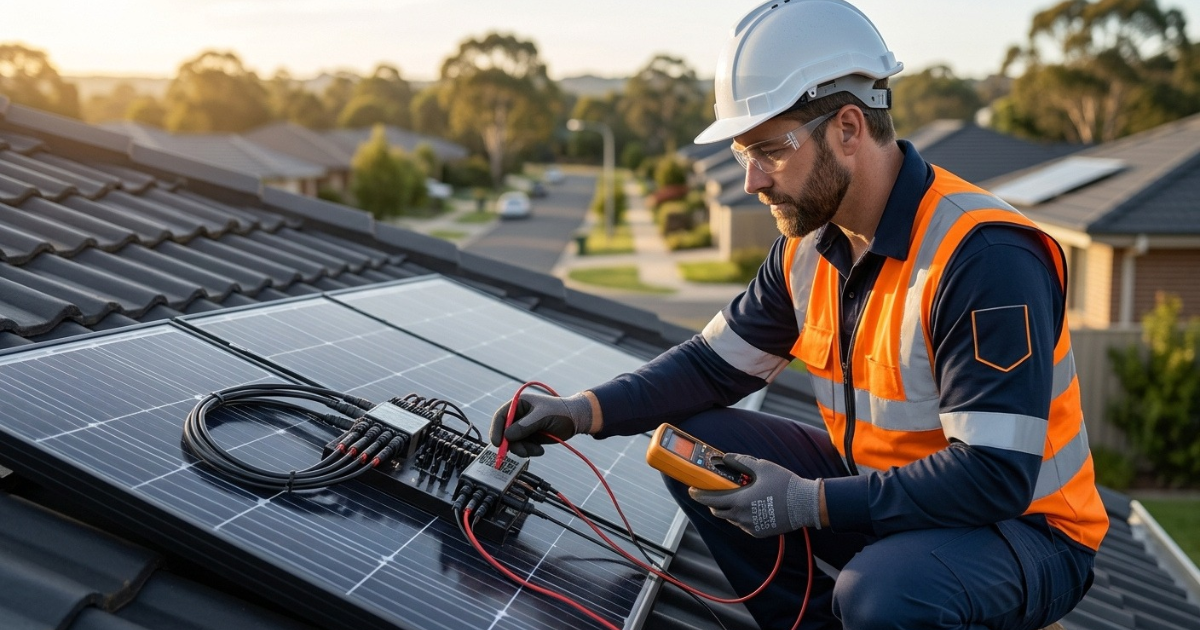
Australia’s solar industry is growing rapidly, but the workforce needed to support it is struggling to keep pace. According to the Clean Energy Council, more than 180,000 rooftop solar systems were installed in the first half of 2026, representing a record 1.89 GW of new capacity. At the same time, the solar installer shortage in Australia is creating challenges for businesses trying to meet demand and homeowners hoping to install solar sooner.
The problem extends beyond rooftop solar. Electricians are also needed for battery storage, new housing and major infrastructure projects, creating competition for a limited pool of qualified workers. With more Australians investing in renewable energy, the availability of skilled tradespeople is becoming increasingly important.
So, why is solar taking longer to install in some parts of Australia, and what can homeowners do to avoid unnecessary delays?
Quick Summary
- Australia needs more skilled electricians. Workforce projections show rising demand for electrical trades across clean energy and other industries.
- Solar installation delays have several causes. Installer availability, accreditation requirements, grid approvals and seasonal demand can affect scheduling.
- Planning ahead makes a difference. Choosing a qualified installer, confirming availability and preparing your property can help reduce avoidable delays.
Why is Australia facing a solar installer shortage?
Australia’s renewable energy expansion has increased demand for electricians with specialist solar and battery installation skills. However, the number of qualified workers available to undertake these projects cannot increase as quickly as demand.
The Powering Skills Organisation’s 2025 Workforce Plan identified a need for approximately 42,000 additional energy trades workers by 2030. This estimate covers the broader energy sector, rather than rooftop solar installers alone.
The workforce challenge is particularly significant because electricians are required across several industries undergoing rapid expansion. Residential construction, commercial developments and electricity network upgrades all compete for similar skills.
Jobs and Skills Australia’s 2026 Jobs and Skills Report also found that 29% of Australian occupations remained in shortage in 2025. Although labour market conditions have eased compared with previous years, skilled trades continue to face recruitment difficulties.
Solar installation requires specialised qualifications
Installing rooftop solar involves much more than securing panels to a roof. Electrical design, wiring, inverter configuration and safety testing must meet Australian requirements.
Under the Small-scale Renewable Energy Scheme, eligible solar installations must be completed by appropriately licensed and accredited professionals.
The Clean Energy Regulator requires solar installers to hold accreditation through Solar Accreditation Australia (SAA) and an unrestricted electrical licence where applicable.
Battery installations can require additional specialist accreditation and technical capabilities.
Consequently, the solar electrician shortage cannot simply be addressed by transferring workers from unrelated trades. Existing electricians may also need additional training before undertaking accredited solar and battery installations.
Training new electricians takes time
Becoming a fully qualified electrician generally involves completing an apprenticeship lasting around four years.
Even when more people enter training, it takes several years before they can work independently as licensed electricians.
There are encouraging signs. According to the National Centre for Vocational Education Research, electrician apprenticeship commencements increased by 19% in the March quarter of 2026 compared with the same quarter in 2025, reaching 6,870.
However, that growth will not immediately eliminate the skills gap.
Expert Tip
Before accepting a solar quote, confirm that the person responsible for the installation holds the appropriate SAA accreditation and electrical licence. Ask whether the company uses its own installation team or accredited subcontractors, as this can affect scheduling.
How the clean energy workforce shortage affects solar installation times
The clean energy workforce shortage in Australia can affect the time between requesting a quote and having an operational solar system.
The actual installation may take only a short period once a crew arrives. However, completing the necessary work beforehand can involve several separate stages.
Longer waits for installation appointments
An installation company must coordinate appropriately qualified workers, equipment deliveries and available installation dates.
When demand is high, installers may have more confirmed bookings than their existing teams can complete within their usual scheduling windows.
Smaller businesses can be particularly vulnerable because they may depend on a limited number of accredited subcontractors.
Our report published in September 2026 highlighted research from solar software provider Pylon showing that smaller solar businesses were having difficulty scaling their operations during the battery rebate boom. The availability of qualified subcontractors was a significant constraint.
Read more about how the solar installer shortage is leaving small firms behind.
Competition between solar and battery installations
Australia’s growing interest in home batteries has added another source of demand for qualified electrical workers.
The Clean Energy Council reported that 276,011 home batteries were installed during the first six months of 2026, a 52% increase compared with the preceding six months.
The Australian Government’s Cheaper Home Batteries Program has helped encourage this growth by reducing upfront costs for eligible systems.
However, installing batteries also requires qualified workers, often drawing from the same workforce involved in rooftop solar.
The Clean Energy Regulator reported that installer resources shifted towards battery retrofits in 2025, contributing to reduced standalone rooftop solar installation activity.
For homeowners, this means that solar installer wait times may be affected by local demand for battery upgrades, even when they only want panels.
Regional areas face additional workforce pressures
Solar tradesperson shortages can be particularly difficult to manage outside major metropolitan areas.
Regional businesses may have fewer qualified installers available locally, requiring workers to travel considerable distances between jobs.
Infrastructure Australia’s 2025 Infrastructure Market Capacity Report projected that regional infrastructure workforce shortages could increase substantially by 2027, partly because of major energy projects.
These forecasts concern infrastructure workers broadly, rather than rooftop solar installers specifically. Nevertheless, they demonstrate the competition for skilled workers in regional communities.
Homeowners in remote locations may consequently face additional scheduling challenges involving travel, site inspections and specialist electrical work.
Expert Tip
Request a realistic installation window before paying a deposit. Ask whether the quoted timeframe includes network approval, equipment availability and final commissioning, rather than only the date technicians will arrive.



Why does solar take so long to install in Australia?
Although workforce shortages can contribute to delays, they are not the only reason a solar installation might take longer than expected.
The process involves several stages, and the time required depends on the property, system design and local electricity network requirements.
| Installation stage | What can affect timing |
| Initial assessment | Availability of consultants and site inspectors |
| System design | Roof suitability, electricity usage and switchboard requirements |
| Network approval | Distributor processing times and export restrictions |
| Equipment supply | Availability of specified panels, inverters and batteries |
| Installation | Accredited electrician and installation crew availability |
| Inspection and commissioning | Electrical compliance, inspections where required and meter arrangements |
Grid connection approvals can cause delays
Before installing a grid-connected solar system, the installer generally needs to obtain the relevant approval from the local electricity distribution network.
Network operators must consider whether the proposed system can connect safely and whether export limitations apply.
Applications involving unusual electrical configurations or network constraints may require additional assessment.
Following physical installation, further steps may be necessary before the system can operate as intended, including meter configuration and final compliance documentation.
This means a homeowner could have solar panels installed but still be waiting for permission or arrangements to export electricity.
Equipment and property conditions also matter
Some installations require additional preparation before work can begin.
Older switchboards may need upgrading, while damaged roofs may require repairs. More complex properties can also require additional electrical design work.
Equipment availability can create another scheduling challenge. If a particular inverter or battery is unavailable, the installer may need to wait for stock or obtain approval for a suitable alternative.
Weather can also interrupt rooftop work, particularly during heavy rainfall or high winds.
These factors explain why solar installer wait times vary across Australia and why a national average may not accurately reflect an individual household’s circumstances.
Expert Tip
Ask your installer to identify which approvals must be completed before installation and which steps will follow. A written schedule with clear milestones can help distinguish genuine network delays from installation scheduling problems.
How the solar tradesperson shortage could affect installation costs
When qualified electricians are in short supply, solar businesses may face higher recruitment and subcontracting costs.
Businesses competing for experienced workers may need to offer higher wages or pay additional costs to bring installation crews into areas where local availability is limited.
These expenses can influence installation quotes, particularly for complex systems requiring specialist expertise.
However, labour costs represent only part of the total solar installation price.
Panels, inverters, mounting equipment, transport and electrical upgrades also contribute to the final amount.
It would therefore be misleading to attribute every increase in solar installation costs to workforce shortages.
Infrastructure Australia’s 2025 report found that 63% of surveyed infrastructure firms identified labour costs as a substantial threat to delivery, while 59% identified labour and skills shortages.
Although these figures relate to the broader infrastructure sector, they illustrate the financial pressures associated with workforce constraints.
Could cheaper installation quotes carry additional risks?
A lower quote does not automatically indicate poor workmanship. However, homeowners should be cautious when a significantly cheaper offer comes with vague installation details or unrealistic completion promises.
The Clean Energy Regulator requires installations claiming small-scale technology certificates (STCs) to meet relevant accreditation and licensing requirements.
Homeowners should check the proposed equipment, warranties, accreditation details and any potential additional charges before accepting an offer.
Expert Tip
Compare the complete installed price rather than the advertised system price alone. Ensure each quote specifies the equipment, electrical work, grid connection responsibilities, warranties and expected installation date.
What is being done to address Australia’s clean energy workforce shortage?
Addressing the shortage requires long-term investment in electrical training and greater capacity across the apprenticeship system.
The Powering Skills Organisation’s Electrician Workforce Capacity Study estimates that Australia needs approximately 42,000 additional licensed electricians for clean energy by 2030, alongside further demand from housing and data centres.
The study also found that electrical contractors train 71% of electrician apprentices, yet only around one-third of those contractors employ an apprentice.
This highlights the importance of supporting businesses that provide practical training opportunities.
Increasing apprenticeship places is only part of the solution. Employers also need the resources to supervise apprentices and support them through their qualifications.
Better workforce planning is essential
The Australian Energy Market Operator has identified workforce availability as a risk to electricity infrastructure development.
Its workforce projections highlight how competition for electricians and other skilled workers could increase project costs and affect delivery schedules.
The challenge is not limited to finding additional workers. The industry also needs people with the appropriate experience for specific technologies and project requirements.
According to Clean Energy Council chief executive Jackie Trad:
“The clean energy transition is not a future ambition. It is filling a gap that is opening now. The pace of the build-out must keep pace with coal’s decline.”
The statement, published alongside the Council’s 2026 Clean Energy Australia report, reflects the importance of matching investment in renewable energy infrastructure with the industry’s ability to deliver it.
Expert Tip
For solar businesses, developing ongoing relationships with accredited electricians and investing in apprenticeships can help strengthen workforce capacity. Homeowners benefit when installation businesses have reliable access to appropriately trained workers.
How homeowners can avoid unnecessary solar installation delays
While homeowners cannot directly solve Australia’s solar electrician shortage, they can take practical steps to reduce the likelihood of delays.
Compare installers before making a decision
Obtaining multiple quotes allows homeowners to compare equipment specifications, costs and installation availability.
Ask each provider about its expected installation window and whether it has confirmed access to accredited workers.
It is also worth checking who will handle network applications and any required inspections.
Energy Matters offers access to up to three free quotes from pre-vetted local installers, subject to availability in your area.
Prepare your property early
Before arranging installation, check whether the roof needs maintenance and whether your electricity switchboard may require upgrading.
Providing recent electricity bills can also help installers assess an appropriate system size.
If you are considering adding a battery later, discuss this during the initial design stage. Selecting compatible equipment and planning battery placement may help avoid costly changes.
Plan around rebates and incentives
Government incentives can influence demand for solar and battery installations.
The Cheaper Home Batteries Program, introduced in July 2025, has encouraged more Australian households to invest in energy storage.
The Clean Energy Regulator’s 2026 reporting also identified changes in installation activity around adjustments to the program.
Homeowners considering an incentive should confirm its current eligibility requirements and timing before committing to installation.
Get written confirmation of the installation schedule
Before paying a deposit, request written confirmation of the expected installation timeframe and any circumstances that could lead to changes.
Check how delays will be communicated and whether the agreement contains provisions for cancellation or refunds.
Avoid selecting an installer solely because it promises immediate availability.
Expert Tip
Start comparing solar installers before your preferred installation period. Early planning gives you more opportunity to assess available installers without compromising on equipment quality or electrical safety.
Compare solar installation options with Energy Matters
Australia’s solar installer shortage makes choosing a reliable installation provider particularly important.
Energy Matters can help you compare solar and battery options from local installers based on your property and energy requirements.
Use our free Solar and Battery Calculator to explore suitable system sizes, then request quotes to compare available installation options.
Get Your Solar Installation Plans Moving
Compare free solar and battery quotes from local installers. Explore system options, indicative pricing and installation availability before making your decision.
Frequently asked questions
1. Is there a solar installer shortage in Australia?
Yes. Australia faces shortages of appropriately skilled electrical workers, including electricians needed for solar installations. Growing demand from renewable energy, housing and infrastructure is increasing competition for qualified tradespeople. The impact varies by region and business, so not every homeowner will experience installation delays.
2. How long does it take to get solar installed in Australia?
Solar installation timeframes vary depending on installer availability, equipment supply, property requirements and network approvals. Physical installation of a straightforward residential system may take one or two days, but the complete process can take several weeks or longer. Ask your installer for a property-specific timeline before committing.
3. Why are solar installers so busy in Australia?
Demand for rooftop solar and home batteries has grown as Australians seek greater control over electricity costs. Installers also face competition for electricians from other sectors. Battery rebate programs can create additional demand, placing pressure on businesses that already have limited installation capacity.
4. Can a regular electrician install solar panels in Australia?
An electrical licence alone is generally insufficient for installing grid-connected solar systems eligible for Small-scale Renewable Energy Scheme incentives. Installers must also hold the appropriate Solar Accreditation Australia accreditation and meet relevant state or territory requirements. Battery installations may require additional accreditation.
5. How can I find a qualified solar installer faster?
Start by comparing local installation providers and checking their accreditation details. Ask for realistic scheduling information, confirm whether equipment is available and prepare necessary property details. Energy Matters can help homeowners request quotes from pre-vetted local installers, although availability depends on location and installation requirements.
Key Takeaways
- Australia’s solar installer shortage is part of a wider skills challenge, with electricians increasingly needed across renewable energy, housing and infrastructure.
- Growing demand for rooftop solar and batteries is increasing workforce pressure, particularly for installation businesses with limited access to accredited workers.
- Solar installer wait times depend on several factors, including workforce availability, network approvals, equipment supply and property conditions.
- Industry investment in apprenticeships and specialist training is essential to expanding Australia’s clean energy workforce over the coming years.
- Homeowners can reduce avoidable delays by comparing qualified installers, preparing their properties and confirming installation timelines before paying a deposit.
The clean energy workforce shortage represents a significant challenge for Australia’s solar industry. However, careful planning and choosing properly qualified installers can help households move forward with solar while the industry works to expand its skilled workforce.