




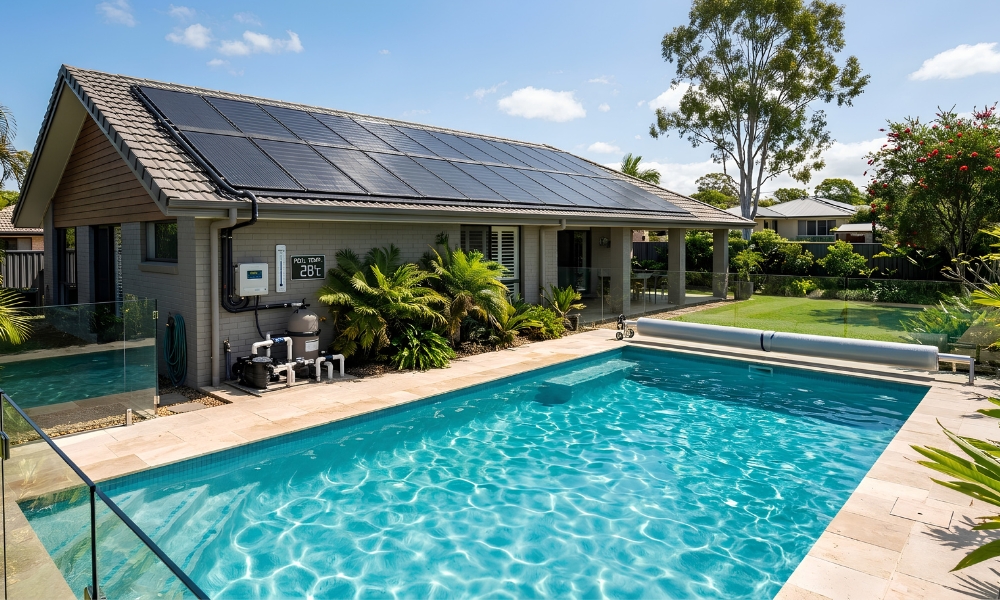
Across Australia, millions of homes have a backyard pool, yet most only use them fully for four or five months a year. Solar pool heating in Australia has become the standard fix for that short swim season, using free sunlight to lift water temperature instead of running an expensive gas or electric heater. Rather than paying peak electricity rates, a solar pool heating system pumps water through roof-mounted collectors, where it absorbs solar radiation before returning to the pool several degrees warmer.
For homeowners weighing up their broader renewable options, Energy Matters’ guide to how solar hot water works explains the same solar thermal principles used in pool heating. This article breaks down how solar pool heating works, what it costs to install and run, and which systems perform best across Australian climates.
Key takeaways
- Solar pool heating in Australia costs $2,500–$8,000 installed and just $50–$400 a year to run, the lowest running cost of any pool heating option.
- Unglazed collectors suit most Australian climates; glazed collectors perform better in cooler states and shoulder seasons.
- Collector area should cover roughly 50 to 100 per cent of your pool’s surface area for meaningful heat gain.
- Solar pool heating collectors are not eligible for STC rebates, unlike solar hot water systems for the home.
- Pairing solar pool heating with a pool cover meaningfully extends your swim season and protects your investment.



How does solar pool heating work in Australia?
A solar pool heating system uses your existing pump, or a dedicated booster pump, to push pool water onto the roof and through a bank of solar collectors. Sunlight warms the water as it passes through, and it flows back into the pool several degrees warmer.
No electricity generates the heat itself, only the circulation, which is why running costs stay so low. A differential controller compares roof and pool temperatures, so water diverts to the roof only when it will actually gain heat.
The role of a solar pool collector
The solar pool collector is the heart of the system, and it has the biggest impact on performance. Collectors are typically sized at 50 to 100 per cent of the pool’s surface area and mounted on a sun-exposed roof section.
- Unglazed collectors: black rubber or polypropylene strips, the most common and affordable choice for warm to temperate climates.
- Glazed collectors: copper tubing behind tempered glass, costing more but holding heat better in cooler regions.
- Orientation and roof pitch matter almost as much as collector area for overall heat gain.
Expert tip
Size your solar pool collector array to at least 70 per cent of your pool’s surface area if you want to comfortably extend swimming into spring and autumn, not just peak summer.
What does solar pool heating cost in Australia?
Installed solar pool heating systems generally cost between $2,500 and $8,000, depending on collector type, pool size and roof complexity. A typical 40,000 to 50,000-litre pool with unglazed collectors sits toward the lower end, while glazed systems in cooler states cost more.
Solar pulls ahead on running costs. Because electricity only pumps the water rather than heating it, most households spend just $50 to $400 a year, versus several thousand for continuous gas or heat pump heating.
| System | Typical installed cost | Typical annual running cost | Heats through winter? |
| Solar pool heating | $2,500 – $8,000 | $50 – $400 | Limited (needs direct sun) |
| Heat pump pool heating | $3,500 – $10,600 | $250 – $2,000+ | Yes, most conditions |
| Gas pool heating | $2,500 – $6,500 | $1,200 – $4,000+ | Yes, on demand |
What affects solar pool heating cost?
- Pool size and the collector area required
- Collector type: Unglazed versus glazed
- Roof pitch, orientation and distance from the pool
- Whether a dedicated booster pump is needed
Best solar pool heating systems for Australian conditions
Unglazed strip and mat collectors
Unglazed collectors are the most popular solar pool heater option in Australia. They are inexpensive, lightweight and perform well in the warm-to-hot climates found across most of the country, from Queensland to inland New South Wales.
Glazed panel collectors
Glazed collectors use copper tubing under tempered glass, similar to solar hot water panels. They cost more upfront but deliver stronger heat gain in cooler regions such as Victoria, Tasmania and the ACT, stretching the swim season into shoulder months.
Pairing solar pool heating with a pool cover
A pool cover is one of the cheapest upgrades for any solar pool heating system. According to the Australian Government’s household energy guide, solar is cheaper to run than electricity or gas, and a well-fitted cover further cuts evaporation and overnight heat loss, leaving less ground for the collectors to make up the next day.
Expert tip
Run your solar pool heating pump during the hottest part of the day, generally 10 am to 4 pm, and fit a cover overnight to lock in the heat you have already gained.

Is solar pool heating eligible for rebates in Australia?
Unlike solar hot water for the home, solar pool heating is not eligible for Small-scale Technology Certificates (STCs) under the federal scheme. The Clean Energy Regulator limits STC eligibility to domestic solar water heaters under 700 litres and air source heat pumps, not pool collectors.
That said, running your pool pump from a SAA-accredited solar panel system can still cut overall running costs. Always confirm current eligibility with your installer in writing before assuming a rebate applies.

FAQs about solar pool heating in Australia
How much does solar pool heating cost in Australia?
Installed solar pool heating systems in Australia typically cost $2,500 to $8,000, depending on pool size, collector type and roof layout. Running costs are low, usually $50 to $400 a year, since the only electricity used is to pump water through the collectors, not to generate heat.
How long does a solar pool heating system last?
Most solar pool heating systems last 10 to 20 years, depending on collector quality and UV exposure. Unglazed rubber or polymer collectors typically last 10 to 15 years, while glazed panel collectors can last 20 years or more with correct installation and regular maintenance.
Does solar pool heating work in winter?
Solar pool heating works best with strong, direct sunlight, so performance drops in winter or on overcast days. In most of Australia, it comfortably extends the swim season into spring and autumn, but you need a heat pump or gas backup for reliable winter heating.
Is solar pool heating better than a heat pump?
Solar pool heating is cheaper to install and run, making it the better value option if you mainly swim in the warmer months. A heat pump costs more but heats reliably in any weather, so many Australian households choose whichever matches their swim season and budget.
Do I need a pool cover with solar pool heating?
A pool cover isn’t compulsory, but it significantly boosts the value of solar pool heating. Covers reduce evaporation and overnight heat loss, meaning your collectors don’t have to work as hard the next day to bring the pool back to a comfortable swimming temperature.
Ready to extend your swim season with solar pool heating?
For Australian homeowners, solar pool heating offers a practical way to extend the swimming season without committing to the high ongoing energy costs associated with gas or conventional electric heating. Its effectiveness comes down to correct collector sizing, good solar exposure, efficient circulation and retaining the heat you generate.
If you are considering a solar pool heater in Australia, do not rely on a generic system size or price. Talk to Energy Matters today, a solar energy expert, to compare your options and request a free solar quote to find a solution suited to your home and pool.
Sources and References
- Clean Energy Regulator: Solar water heaters and air source heat pumps, Small-scale renewable energy system
- Australian Government: Pool pumps