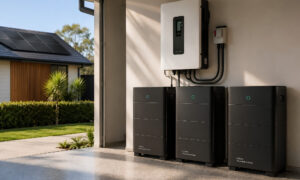

Australia’s coal-fired power stations will retire over the next decade or two and other forms of energy, like wind and solar power, will take over. Alongside this change will be the need for large-scale national battery storage.
Batteries are important because energy operators need to “firm up” the intermittent power from solar and wind. Even large-scale wind and solar farms are at the mercy of the elements: no sun or wind equals no electricity.
However, with appropriate energy storage technology, generators can store electricity made now for use later.
Firming up energy supply
One of the solutions is for renewable generators to enter into contracts with coal-fired or gas generators.
One of these is AGL’s Wind Product Firming Unit service for wind generators in South Australia and Victoria.
The wind generators enter into contracts to pay AGL the spot price on electricity at times when they aren’t producing because of weather conditions. AGL then supplies the ‘missing’ energy to fulfil the wind farm’s contractual obligations.
Pumped storage hydro – energy from water
Another way to regulate supply from renewables is to store energy from high generation days for later. This large-scale national battery storage could use electrochemical batteries, compressed air or pumped storage hydro.
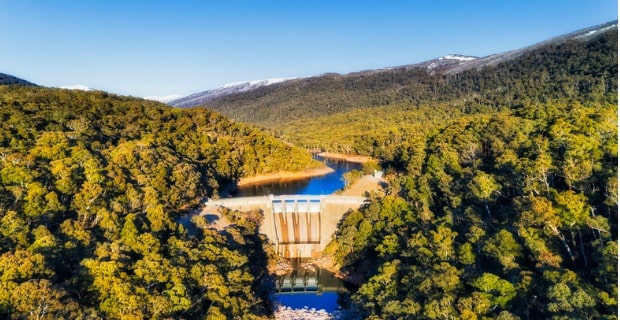
Hydro storage works by pumping water up to an elevated reservoir using renewable energy. Later, the gravitational energy created by lifting the water releases as the water runs back to the lower reservoir through a turbine creating electricity.
This is the concept behind the Snowy 2.0 energy storage large-scale national battery storage project.
Large-scale national battery storage
Last week, AGL won the right to develop a 250 MW pumped hydro facility in South Australia. The location is the Kanmantoo copper mine in the Adelaide Hills region.
The large-scale national battery storage will take over an old open pit mine. The mining company meanwhile continues operations elsewhere on the lease.
AGL says it will lodge a development application next year for the large-scale national battery storage. Executive general manager of Wholesale Markets Richard Wrightson said if successful it would then be an important addition to the state’s technology mix.
“It would help us to meet the changing needs of the South Australian energy market, in which energy storage assets are likely to be needed to provide dispatchable capacity as renewables generation increases over coming years.”
He added that if things go to plan, the large-scale national battery storage facility will be operational by 2024.
South Australia relies heavily on renewable energy and gas for its power and no longer has any coal-fired plants. With projects like AGL’s as well as the Hornsdale Power Centre’s ‘big battery’ already operational, it will remain the national leader in renewable energy use.