





A new wave of free, AI-powered electrification advisors is making it easier than ever for Australian households to get a sense of where to start. Tools like Rewiring Australia’s recently launched “Electric Saul” can take a postcode and a few household details and generate a personalised-feeling plan, complete with rough savings figures, in a matter of seconds. It’s a genuinely useful development for a topic that many homeowners find overwhelming.
But it raises a fair question: what can an AI tool actually know about your specific home, based on that little information, and where does it make sense to still get a proper, in-person assessment? This guide walks through both sides honestly, so you can get the most out of AI electrification advice without mistaking it for a finished plan.
Quick Summary
- AI electrification tools are genuinely useful for high-level guidance, giving you rough costs, general appliance priorities, and typical savings for a home like yours.
- They generally work from general and postcode-level data. Treat their numbers as a starting point for further conversation with an installer.
- The best way to use one of these tools is as a first step that leads into a proper in-home or phone assessment.
What AI electrification tools are actually good at
The strongest use case for these tools is exactly what they’re designed for: giving someone who knows very little about electrification a fast, personalised-feeling starting point. A homeowner can plug in their postcode, housing type, and a few details about their car or goals, and get back something that at least feels tailored to them, a step up from a generic guide written for every Australian home in theory.
This matters more than it might seem. Electrification involves a lot of decisions, gas hot water or heat pump, which appliance to tackle first, whether solar and a battery make sense alongside it, and for many people, simply not knowing where to start is the biggest barrier to doing anything at all. A tool that can suggest a sensible starting point and a rough savings figure lowers that barrier significantly, and can be a genuinely helpful nudge toward taking the first real step.
Expert tip: Use an AI electrification tool’s output as a checklist of questions to bring to an installer. Questions like “does a heat pump make sense for my household size” or “roughly what would I save switching my cooktop” are exactly the kind of thing worth confirming with a professional who can see your actual home.
What these tools generally can’t see
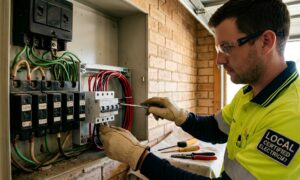
The honest limitation of any AI advisor working from a postcode and a short set of answers is that it can’t see your house. It doesn’t know the actual condition of your switchboard, whether your roof has shading from a neighbouring tree in the afternoon, how old your existing appliances really are, or whether your home has had renovations or additions over the years that complicate a straightforward electrification plan.
These are exactly the kinds of details that can materially change the right approach and the real-world cost. A switchboard that needs upgrading before a battery can be safely added, for example, is hard to detect from a postcode and a housing type alone. The same goes for wiring quirks from a decades-old renovation, or a roof orientation that makes solar less effective than the postcode average would suggest.
It’s a structural limit that applies to giving advice without physically seeing the property, the same reason a real estate estimate based on suburb averages differs from a formal valuation that accounts for the specific property.
Expert tip: If an AI tool’s plan assumes your home is a “typical” example of your area, and your home has anything unusual about it (an older switchboard, an unusual roof shape, a past renovation), mention that upfront to any installer or assessor you speak with next, since it’s exactly the kind of detail that can change the numbers.
Why “average home in your postcode” isn’t the same as your home
Most of these tools work, at least in part, from general and postcode-level data: typical housing stock in your area, average electricity usage patterns, and common appliance setups for homes similar to yours. That’s a reasonable way to generate a fast, useful first estimate, but it also means two houses on the same street, built in different decades or renovated differently over the years, can have quite different real-world electrification needs even though a postcode-based tool would treat them similarly.
This is worth keeping in mind particularly for older homes, homes that have been extended or subdivided, or homes in areas with a wide mix of housing ages and styles. The more your home differs from the “typical” example for your postcode, the more a generic estimate is likely to differ from your actual costs and priorities.
Expert tip: If your home is notably older, newer, or different in structure from most homes in your area, treat any AI-generated savings figure as a rough range, and ask a professional to sanity-check it against your specific situation.





How to use an AI electrification plan well
The most useful way to think about an AI electrification tool is as a well-informed starting conversation. Used that way, it can genuinely save time and help you walk into a conversation with an installer already knowing roughly what questions to ask.
A few ways to get the most out of one:
- Treat the output as a hypothesis to test. It’s a reasonable first estimate based on general data, worth checking against your actual home before you act on it.
- Bring the plan to an installer or assessor as a reference point. Ask them to confirm which parts match your home and which parts might differ once they can see your switchboard, roof, and appliances directly.
- Use it to set priorities. If a tool suggests hot water is your best starting point, that’s useful direction. The exact cost is still worth getting a real quote for.
- Don’t skip a physical assessment for anything involving your switchboard or wiring. These are the areas where general data is least able to predict your specific situation.
Expert tip: When you do get a quote or assessment, ask the installer directly whether their recommendations differ from what an AI tool suggested, and why. A good installer will be happy to explain where your home differs from the general case.
When an in-person or phone assessment still matters most
There are a few situations where getting a proper assessment makes a bigger difference than usual:
- Older homes with original or unknown wiring, where switchboard capacity and wiring condition can’t be reliably assumed from a postcode.
- Homes that have been renovated, extended, or previously subdivided, since these often have wiring or layout quirks that general data won’t capture.
- Properties with unusual roof structures or significant shading, where solar output can vary a lot from the area average.
- Rural or off-grid properties, where typical suburban assumptions about grid connection and average usage may not apply at all.
- Heritage-listed or council-restricted homes, where planning constraints can affect what’s actually possible, regardless of what’s technically ideal.
In these cases, an AI tool’s plan is still a useful starting point; it just needs to be paired with a proper look at the property before any real decisions or spending happen.
FAQs
Are AI electrification tools accurate? They’re generally accurate as a starting estimate, based on general and postcode-level data for homes similar to yours. For your specific costs and priorities, particularly anything involving wiring or switchboard capacity, a proper assessment is more reliable.
Can an AI tool replace a solar or electrician quote? Not entirely. An AI tool can give useful general guidance and help you prioritise, but a formal quote requires someone to assess your actual switchboard, roof, and appliances, which general data alone can’t fully capture.
What information do AI electrification advisors use to generate a plan? Most use your postcode, housing type, and details you provide about your car, appliances, and goals, combined with general or average data for homes in your area. A physical inspection of your specific property is a separate step.
Is free AI electrification advice worth using in Australia? Yes, as a starting point. It’s a fast, low-effort way to understand your general options and rough savings before speaking with an installer, though it shouldn’t be treated as a final plan or exact budget.
What’s the best way to start electrifying my home? Use a general planning tool or guide to identify priorities, then get a proper assessment or quote from a licensed installer who can confirm those recommendations against your home’s actual switchboard, roof, and appliances.
Key Takeaways
- AI electrification tools are genuinely useful for a fast, personalised-feeling starting point, especially for homeowners who don’t know where to begin.
- They generally rely on general and postcode-level data, so their figures are a reasonable estimate to confirm before you rely on them.
- Homes that differ from the “typical” example for their area, due to age, renovations, or unusual structure, are the most likely to see a gap between the AI estimate and reality.
- The best use of these tools is as a well-informed first step that leads into a proper in-home or phone assessment.
- For anything involving your switchboard, wiring, or roof specifics, a physical assessment is still the most reliable way to get an accurate plan.