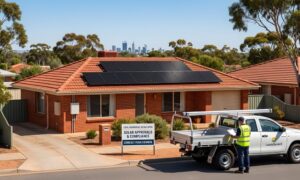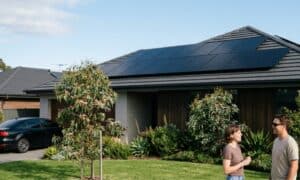





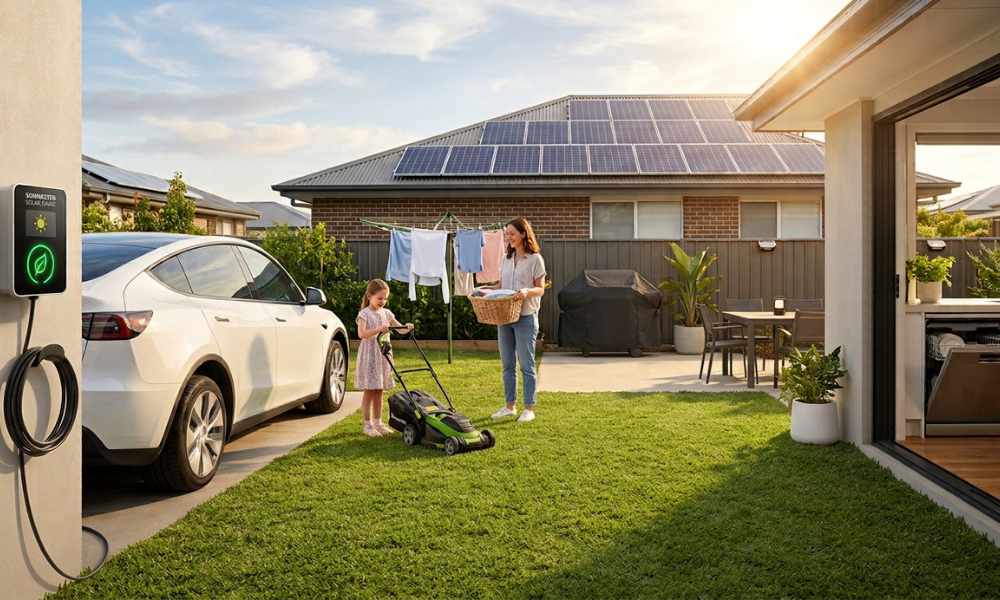
Sunday 11 October was a classic spring weekend. The mower was out, the washing was on the line, and the barbecue was warming up. Meanwhile, at midday, Australia’s rooftop solar panels quietly set a new national record.
Behind that record are millions of household systems, yet few of their owners benefited much from it. On days like Sunday, exported solar earns very little. The same energy used at home is worth far more, because it replaces grid power you would otherwise buy at full price. Weekends, when most people are home during the sunniest hours, are the easiest time to make that shift.
This guide explains what happened during the record weekend and why weekends create a solar surplus. It also shows how simple changes to your weekend routine, new free midday power plans and the federal battery rebate can help cut your power bills.
Quick summary
- Rooftop solar hit a record 17,488 MW on Sunday 11 October 2026, during a weekend of low grid demand.
- Midday solar is now so plentiful that exports earn little, so using your own solar saves more than selling it.
- Moving weekend chores into the 10am to 3pm window, and using a free midday plan or a battery, can lower your power bills.
What happened over the weekend
At 12 pm AEST on Sunday 11 October, rooftop solar across the National Electricity Market (NEM) produced 17,488 MW. That beat the previous record of 16,993 MW, set just three weeks earlier on 20 September.
It capped a five-day run of records. Between 7 and 11 October, rooftop solar output records fell in South Australia, Victoria and New South Wales, as well as across the NEM as a whole.
The growth is fast. Sunday’s peak was about 16% higher than the comparable figure from early October 2025. On the same day, rooftop and large-scale solar together supplied a record 72.29% of the NEM’s electricity use.
Expert tip
Check your inverter app or monitoring portal after a sunny weekend. It shows exactly when your own panels peak, so you can plan chores around your system rather than a general rule.
Why weekends make the surplus bigger
It’s no accident the record fell on a Sunday. Weekends combine strong sunshine with low demand for power from the grid.
Offices, shops and factories are mostly quiet. Mild spring weather means few homes are running heaters or air-conditioners. And with rooftop panels powering millions of homes directly, households draw even less from the grid in the middle of the day.
The result is simple: around midday on a sunny weekend, there’s far more electricity available than anyone needs.
Expert tip
Mild spring and autumn weekends produce the biggest surplus. Save energy-hungry jobs, like a full laundry day or a long pool pump cycle, for these days.
What is solar curtailment and why do prices go negative?
The grid has to match supply and demand every second. When there’s more power than people are using, something has to give.
Often, that means curtailment: wind and solar farms are told to turn down, even though the sun is shining and the wind is blowing. On 11 October, Victoria hit a record 5,709 MW of curtailed renewable output at 12:15 pm. Across the NEM, about 82.3 GWh of renewable energy went unused that day.
Prices tell the same story. When supply floods the market, wholesale prices can fall below zero. In South Australia, the price dropped to about -$415 per megawatt-hour just after midday. At that moment, demand on the state’s main grid actually went negative, because rooftop solar was covering more than the state needed.
Expert tip
Negative wholesale prices don’t flow straight to your bill on most standard plans. Ask your retailer whether a time-of-use or free midday plan would pass more of those cheap hours on to you.




A tale of four states
Not every state handled the surplus the same way. Some soaked up much more of their spare power with big batteries and pumped hydro, which store energy to use later.
| State | Share of surplus absorbed by storage on 11 October |
| Queensland | about 59% |
| New South Wales | about 51% |
| South Australia | about 12% |
| Victoria | about 10% |
Victoria and South Australia also carried most of the day’s curtailment, together accounting for about 81% of the NEM total. Both states have lots of wind on top of solar, so their surplus is bigger. Storage and transmission lines haven’t kept pace with that growth.
That doesn’t mean these states wasted 90% of what they could have used. Timing, network limits and costs all play a part. Some curtailment is a sensible trade-off, because building enough storage to catch every spare sunny hour would cost more than the power is worth.
Expert tip
If you live in Victoria or South Australia, prioritise using your solar at home over exporting it. These states have the largest midday surplus, so exports are often worth the least.
What this means for your bill
When the grid is swimming in midday solar, the power you export is worth less. That’s a big reason feed-in tariffs have been falling, and why some retailers now offer very low rates for exports in the middle of the day.
So the smart move is to use more of your own solar while the sun is up. Every kilowatt-hour you use yourself is one you don’t have to buy back from the grid in the evening, when prices are usually highest.
There’s a hidden factor too. Many home systems have export limits, which cap how much they can send to the grid. On very sunny days, some of your own solar may already be going unused without you knowing.
If you’re in Victoria or South Australia, this matters even more. Those states have the biggest midday surplus, so shifting your energy use into the day is especially worthwhile.
Expert tip
Compare your feed-in tariff with the price you pay for grid power. The bigger the gap, the more each kilowatt-hour you use at home is worth.
Your weekend solar playbook
Your panels produce the most between roughly 10 am and 3 pm. Move these weekend tasks into that window:
- Run the washer and dryer late morning. Use the delay timer instead of starting a load first thing.
- Run the dishwasher after breakfast or lunch. Avoid running it after dinner.
- Cook the Sunday roast or meal prep at midday. Your oven runs on solar instead of peak-priced grid power.
- Set the pool pump and chlorinator for midday. They are among the biggest power users in many homes.
- Charge garden tools while you’re outside. Plug in mower, trimmer and leaf blower batteries.
- Charge your EV at home. Weekends are when the car is most likely parked under your own panels.
- Heat your water during the day. Set an electric or heat pump hot water timer to the solar window.
- Pre-cool the house in the early afternoon. Your air-conditioner will work less in the pricey evening hours.
- Let your home battery fill up. It will then cover the evening peak, when everyone is home.
Get More Value from Your Solar Power
Make the most of Australia’s abundant sunshine with a solar and battery system suited to your home. Compare quotes from trusted local installers and discover your potential savings.
Bigger moves worth considering
If you want to go further than changing your habits, a few upgrades can help you capture more of your own solar.
A home battery. Storing your midday solar for the evening is the most direct way to use more of it. The federal Cheaper Home Batteries Program takes around 30% off the upfront cost of an eligible battery. Since 1 May 2026, the discount has been tiered by size: batteries up to 14kWh keep the full discount, while larger systems get less. The discount also steps down every six months, so it will be lower for batteries installed from January 2027. Make sure your quote clearly shows the discount you qualify for.
A free midday power plan. Since 1 July 2026, larger retailers in NSW, South Australia and south-east Queensland must offer a Solar Sharer plan with at least three hours of free electricity a day, capped at 24kWh. The free window runs from 11 am to 2 pm in NSW and south-east Queensland, and from midday to 3 pm in SA. Victoria’s version, the Midday Power Saver, started on 1 October with free power from 11am to 2 pm. These plans need a smart meter and often come with higher supply or peak rates. They suit households that can move a lot of use into the free window, such as battery owners. If your panels already cover your daytime use, the savings may be small.
Smart timers and controls. Smart plugs, appliance timers and solar diverters for hot water make it easy to run things automatically when your panels are producing the most.
More records are coming
With more panels going on roofs every month, solar records will keep falling each spring. The households that move their weekend routines into the sunny middle of the day will get the most out of them.
And there’s a bonus. Every load of washing you run at noon helps the grid use more clean power that might otherwise go to waste.
Frequently asked questions
Why did Australia break a rooftop solar record on a weekend?
Weekends combine strong sunshine with low grid demand. Offices, shops and factories use less power, and mild spring weather means little heating or cooling. On Sunday 11 October 2026, rooftop solar across the NEM peaked at 17,488 MW at midday, beating the previous record set just three weeks earlier.
What is solar curtailment?
Solar curtailment happens when wind or solar farms are told to reduce output because the grid has more power than it needs. On 11 October 2026, about 82.3 GWh of renewable energy was curtailed across the NEM. Some curtailment is economically sensible when extra storage would cost more than the energy saved.
When is the best time to use solar power at home?
The best time is usually between 10 am and 3 pm, when rooftop panels produce the most. Running washing machines, dishwashers, pool pumps, hot water systems and EV chargers in this window means they use your own solar instead of grid power bought at higher evening rates. Weekends make this easiest.
Is the Solar Sharer Offer worth it if I already have solar panels?
It depends on your usage. If your panels already cover your daytime needs, three free midday hours may add little, and these plans can carry higher rates outside the free window. Households with a battery, an EV or high daytime use are more likely to benefit. Compare plans before switching.
How much is the home battery rebate in 2026?
The federal Cheaper Home Batteries Program offers around 30% off the upfront cost of an eligible battery. Since 1 May 2026, batteries up to 14kWh receive the full discount, while larger systems receive less. The discount decreases every six months, so installing sooner generally means a bigger rebate.
Key takeaways
- Australia’s rooftop solar record of 17,488 MW was set on a Sunday, when sunshine was strong, and grid demand was low.
- Midday solar is now so plentiful that wind and solar farms are curtailed and wholesale prices can go negative.
- Victoria and South Australia have the biggest midday surplus, so homeowners there gain most from using solar at home.
- Moving weekend chores like laundry, cooking, pool pumps and EV charging into the 10 am to 3 pm window can cut power bills.
- Free midday power plans and the federal battery rebate can help you capture even more value from the sun.
Sources
- Geoff Eldridge, When renewable abundance becomes the story: What a record-breaking weekend reveals about the grid, RenewEconomy, 12 October 2026 (data from GPE NEMLog)
- EWON, Changes to the Cheaper Home Batteries Program
- Canstar, Why the government is overhauling its Cheaper Home Batteries Program
- Finder, 3 hours of free electricity every day: Can you get the Solar Sharer Offer?, 1 July 2026
- SolarQuotes, Retailers unleash free daytime energy plans
- Energy Consumers Australia, The Solar Sharer Offer will be available soon, 15 June 2026