







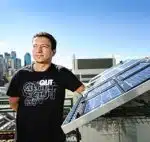
Using solar power means a reduction in pollution being pumped into the atmosphere in relation to electricity generation emissions, but at the Queensland University of Technology (QUT), solar power is also being used to measure concentration levels of the harmful chemicals in the air produced by humanity’s various activities.
A solar-powered monitoring station has been installed on the rooftop of a QUT campus building as part of an international study in the creation of a network of environmental nano-sensors, designed to test levels of air pollutants and greenhouse gases in real time.
According to systems master student Alexander Malaver from the QUT School of Engineering, the solar sensor monitors environmental concentration of three main pollutants: nitrogen dioxide from engines and combustion, nitrous oxide and ammonia from manure and fertilisers.
“These gases are not commonly studied because they are found in low concentrations in the environment but nitrous oxide and ammonia are more polluting than carbon dioxide, and we are developing new cheap sensors able to detect them,” Mr Malaver said.
The solar panels that power the sensor station are made using third-generation, dye-sensitised solar cell technology. These revolutionary solar cells work like plants, using artificial photosynthesis to convert sunlight to energy. For the purposes of these sorts of projects, they are cheaper to produce than traditional silicon-based solar panels – essential, says Malaver, if an effective international network of solar-powered pollution sensors is to be established.
“This form of solar power is ideal for this project because it costs less than conventional silicon-based technology and has less embodied energy in its manufacture. It also produces electricity more efficiently in low light conditions.”
Mr. Malaver says the aim his research is to let people know in real time the concentration of these gases around roads and farms in the hope they will change their behaviour.
Source/image source