


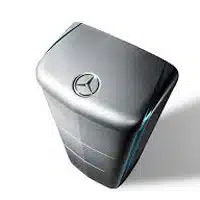
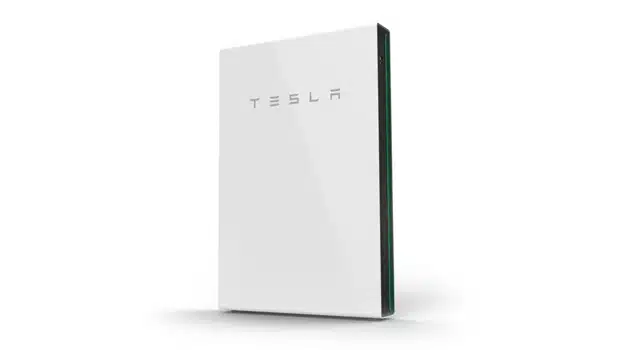
A major player in the home battery storage market has dropped out leaving Tesla residential battery technology dominant in the field.
Car giant Mercedes-Benz will no longer manufacture residential batteries. The announcement marks the end of the company’s short-lived challenge to the Tesla battery empire.
The move highlights the difficulty of adapting high-energy electric car (EV) batteries to suit the needs of the residential market. The development also stands as a wake-up call for car battery manufacturers looking for an easy side-step into home battery storage.
Challenges exist in terms of design, chemistry and price, according to Greentech Media. This then backs up what manufacturers of standalone energy storage have been saying for years.
It’s not the end for Mercedes-Benz with a long-range EV model set to start production next year. However, it will advise customers on alternative home storage products if they ask for options.
Why Mercedes failed to crack home battery storage market
There are several reasons for the subsequent pull-out of the long-established car company:
- Tesla still dominates the market with its powerwall battery options.
- ‘Over designed’ Mercedes-Benz car batteries were too expensive for the home market.
- Difficulty co-ordinating Silicon Valley activities with Daimler corporate HQ in Stuttgart, Germany.
- The US operation launched without a fully operational working model.
Mercedes-Benz appears to have relied too heavily on its global reputation, strong brand awareness and manufacturing supply chain to drive success in a new market.
Movement versus stationary in battle of the giants
The mismatch between the demands of car and residential batteries appears to have been underestimated by Mercedes-Benz.
Because its EV batteries are designed to withstand the stress of constant movement, they are ‘over designed’ for the stationary home market according to Mercedes-Benz spokesperson Madeleine Herdlitschka.
Car batteries require extremely high energy density capable of rapid-fire discharge. Lithium-ion chemistries like nickel-manganese-cobalt are then necessary for efficient functioning.
Companies like sonnen also excel in the home battery market by prioritising safety and life cycle. Lithium-ferrous-phosphate chemistries are used to build highly effective and long-running batteries.