



HSM-BD54-LA445~470
The Australian solar market is highly competitive, and the introduction of the TCL Solar Back Contact (BC) series, specifically the HSM-BD54-LA445~470 modules, marks a significant entry from a globally recognised brand. Leveraging advanced cell technology and backed by a strong commitment to quality, these panels are positioned as a high-efficiency, visually appealing option for homeowners and businesses alike.
Suppose your budget allows for a higher-quality product and you prioritise maximising power generation on a tight roof space while maintaining a sleek look. In that case, this solar panel is a strong contender.
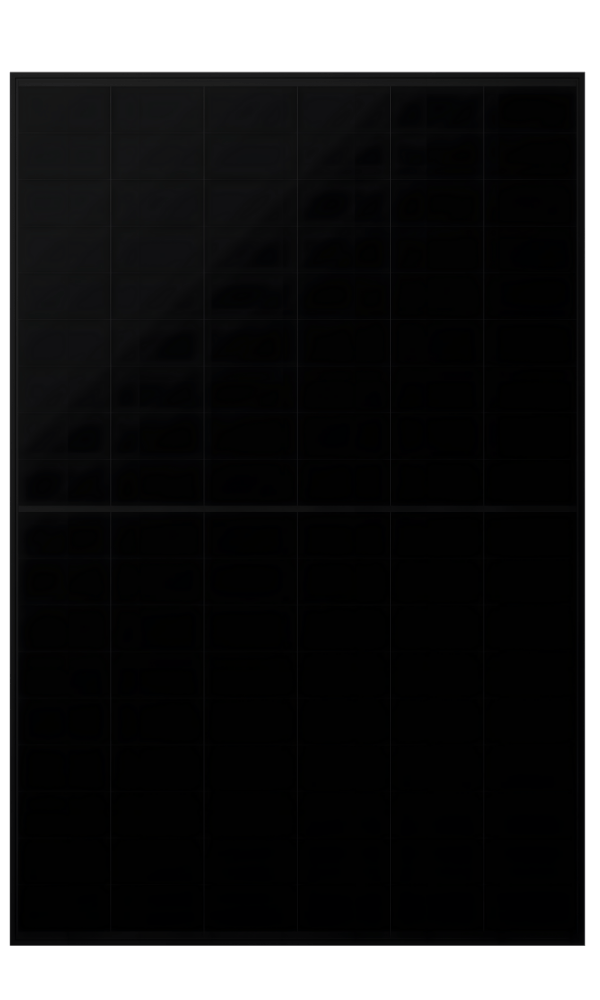
Key features of the TCL SunPower Solar Back Contact
The TCL Solar Back Contact series (HSM-BD54-LA445~470) distinguishes itself primarily through its use of Back Contact (BC) cell technology, a design pioneered by SunPower (in which TCL SunPower is a major stakeholder).
- Back-contact N-type cells: By moving positive and negative contacts to the rear of the cell, front-side shading from busbars is eliminated, and energy capture per cell area improves. That yields higher module efficiency and a cleaner all-black look.
- Power and efficiency: The family spans roughly 445 W–470 W per panel with module efficiencies typically reported around 22.3%–23.6% depending on the exact wattage bin (e.g., LA445 ~ 22.3% up to LA470 ~ 23.6%). These figures place the panels firmly in the premium tier for residential rooftop modules.
- Low degradation & thermal performance: TCL documentation and datasheets highlight low first-year degradation and a conservative linear degradation rate thereafter, along with improved temperature coefficients and hotspot resistance compared to some conventional designs. Those traits support a stronger long-term energy yield.
- Build & testing: Options include dual-glass (glass/glass) or framed glass/backsheet variants. TCL has published extended testing (salt spray, ammonia, mechanical load), and the modules are offered with product and long-term power warranties (typical commercial packaging lists a 25-year product warranty and up to 30 years of performance guarantee).
Specifications of the TCL SunPower Solar Back Contact
- Model family: HSM-BD54-LA (E-Class / Back Contact).
- Power range: nominal 445 W → 470 W (different bins within the family).
- Module efficiency: up to ~23.6% on top bins (varies by wattage).
- Cell technology: Back-contact N-type cells (busbar-free).
- Front glass: 3.2 mm AR-coated, heat-strengthened
- Frame: Black anodised aluminium
- Dimensions: 1757 × 1134 × 30 mm
- Weight: 21.0 kg (±3 %)
- Temperature Coefficient of Pmax: -0.26%/°C
- Operating Temperature: -40~+70°C
- Maximum static load: +5400Pa (front)/-2400Pa (back)
TCL SunPower Solar Back Contact warranty
TCL Solar backs this series with a comprehensive warranty package that provides Australian customers with strong long-term protection for their investment.
- 25-year product warranty: This is a long-term guarantee covering material and workmanship defects, far exceeding the industry standard of 12-15 years.
- 30-year linear performance warranty: TCL guarantees a minimum power output percentage over the entire 30-year period, ensuring that the panel will produce at least 88.85% of its original output at year 30.
Applications for the TCL SunPower Solar Back Contact
- Residential rooftop systems: The high efficiency and compact footprint make these modules attractive where roof space is limited, but owners want a premium appearance and output. They suit single-family homes seeking high yield and an all-black finish.
- Commercial & small industrial roofs: Elevated power per panel reduces rack count and can simplify large rooftop arrays on warehouses, retail centres or office blocks. The durable construction helps ensure a long asset life.
- Split-mount and carports: Bifacial or dual-glass versions can be used on elevated structures (carports, canopies) to harvest rear-side irradiance and increase total energy produced.
- Coastal and agricultural sites: Given TCL’s testing claims for salt-mist and ammonia resistance (and enhanced mechanical testing), the HSM-BD54 family is positioned for installations in coastal towns and farm/agribusiness settings where corrosive or high-ammonia conditions occur.
- Off-grid systems: The enhanced energy density can be beneficial for remote applications where every square meter of panel space is critical for reliable power generation.
Pros of the TCL SunPower Solar Back Contact
- High module efficiency: The N-type Back Contact technology allows for exceptional efficiency (up to 23.6%), maximising power generation from limited roof space, which is a major advantage for residential installations.
- Superior aesthetics: The busbar-free, full-black design is highly sought after by homeowners as it provides a premium, clean, and visually integrated look on modern rooftops.
- Lower operating temperature: Back-contact designs and cell materials typically run cooler under load, improving real-world performance and reducing long-term degradation rates.
- Robust warranties: TCL/SunPower-branded warranty documentation offers long product and performance terms — typically a 25-year product warranty and a 30-year performance commitment. This is competitive with premium panels on the market.
- Durability for Australian conditions: TCL markets panels built to resist salt mist, hail, and agricultural/ammonia environments—useful for coastal, rural, and commercial installs.
- Bifacial gains available: Models with dual-glass or bifacial capability can harvest reflected light from the rear surface, boosting annual yield when mounted on appropriate structures. (Actual bifacial benefit depends on tilt, height and ground albedo.)
Cons of the TCL SunPower Solar Back Contact
- Higher upfront cost: Premium back-contact/N-type modules usually carry a price premium versus standard p-type polycrystalline or lower-end mono PERC panels.
- Requires careful system design: To maximise bifacial or back-contact advantages (and to manage string voltages with higher-power modules), designers must check inverter compatibility and roof layout — not always a simple drop-in swap.
- Availability & local supply: Although TCL is expanding into Australia, specific model availability, lead times and certified local distributors vary by state; installers may need to confirm local stock or import timelines.
Is the TCL SunPower Solar Back Contact right for you?
Short answer: It depends on your priorities and project constraints. Below is a practical checklist to help decide.
Choose this TCL SunPower Solar Back Contact panel if you:
- Want a premium, full-black aesthetic and higher watts per module to maximise rooftop capacity.
- Have a limited roof area and need high energy density (fewer modules for the same system size).
- You are aiming for long-term reliability and a strong performance warranty backed by manufacturer documentation.
- Plan installations on carports, canopies or sites where bifacial gains are possible and can be engineered.
Think twice (or investigate further) TCL SunPower Solar Back Contact if you:
- You are working to a tight upfront budget — premium back-contact modules typically cost more per watt than commodity PERC panels; evaluate life-cycle value, not just purchase price.
- Need immediate local stock — availability and lead times can vary by distributor and state; confirm local supply with installers or suppliers before specifying.
- Have a very simple, low-cost project where module aesthetics or marginal long-term degradation improvements are not priorities.
Practical steps before you buy a TCL SunPower Solar Back Contact panel:
- Ask your installer to provide the exact datasheet (445 W or 470 W bin) and confirm the Voc /Isc string calculations for your intended inverter.
- Request local warranty paperwork and contact details for Australian warranty handling; ask whether the dealer provides additional workmanship coverage.
- If you plan bifacial mounting, request bifacial gain modelling based on your site tilt, height, and ground albedo to estimate the real yield uplift.