


Small-scale Technology Certificates (STC) are created upfront based on how much renewable energy a system is expected to generate over time. That time is known as the deeming period. For solar systems, this typically runs until 2030, depending on the year of installation. The earlier the install, the more STCs created.
To put it simply:
- STCs represent future clean energy generation
- They are created and sold at installation
- Their value is applied as an upfront discount (the ‘rebate’ that households receive)
- The system is expected to remain operational for the full deeming period
This last point is where things get interesting.
How is an STC used in Australia?
Small-scale Technology Certificates are created when eligible systems like solar, batteries, heat pumps, or small wind or hydro are installed. These certificates are typically assigned to the installer or trader in exchange for an upfront discount on the system cost. From there, STCs are sold on the open market to electricity retailers and other liable entities. These entities must surrender a set number of STCs each year under Australia’s Renewable Energy Target to offset their emissions. STCs act as a financial mechanism that shifts the cost of supporting renewable energy from households to energy retailers, which then flows through the broader energy market.




The assumption behind the scheme
The entire STC framework relies on one key assumption. The system will stay installed and operational for the duration it was credited. If that holds true, the scheme works as intended. Future clean energy offsets past emissions.
However, if the system is removed early, that assumption begins to unravel.
What happens to an STC when a system is removed early?
When panels, inverters, or eligible systems like heat pumps are removed before the end of their deeming period, the future generation they were credited for never occurs.
The STCs, however, have already been:
- Created
- Sold
- Used by liable entities to offset emissions
This creates a mismatch between what was promised and what is delivered. The certificates were based on energy that will no longer be produced.
Is this a compliance issue?
This is where things become murky.
There is currently limited public discussion or enforcement visibility around early system removal. The scheme is designed around installation compliance, not long-term verification.
In most cases:
- There is no active tracking of whether systems remain installed
- There is no mechanism to “return” STCs once created
- There is no widespread auditing of system lifespan post-install
That does not necessarily mean rules are being broken. It does, however, highlight a structural gap.

The rise of system churn
This issue is no longer theoretical. It is being driven by real market behaviour. Programs like the Cheaper Home Batteries Program are accelerating system upgrades. The Clean Energy Regulator reported1 that 18% of solar installations in 2024 were replacements, up from 14% the year before. Almost 1 in 5 solar installations are upgrades. 2025 installations of solar dropped to 254,000 systems2, bucking the decades-long upward trend. This suggests Australia has likely passed peak “first-time solar adoption”. Demand is now shifting toward batteries and system upgrades. In many cases, this involves replacing:
- Existing inverters with hybrid models
- Older panels with higher-efficiency modules
- Entire systems to accommodate battery storage
While this is positive for electrification, it introduces a new problem. Perfectly functional systems are being removed well before their expected lifespan.
Some are reinstalled elsewhere. Many are not.
When systems are not reused
If a removed system is reinstalled and continues generating energy, the intent of the STC scheme is broadly preserved.
But if it ends up:
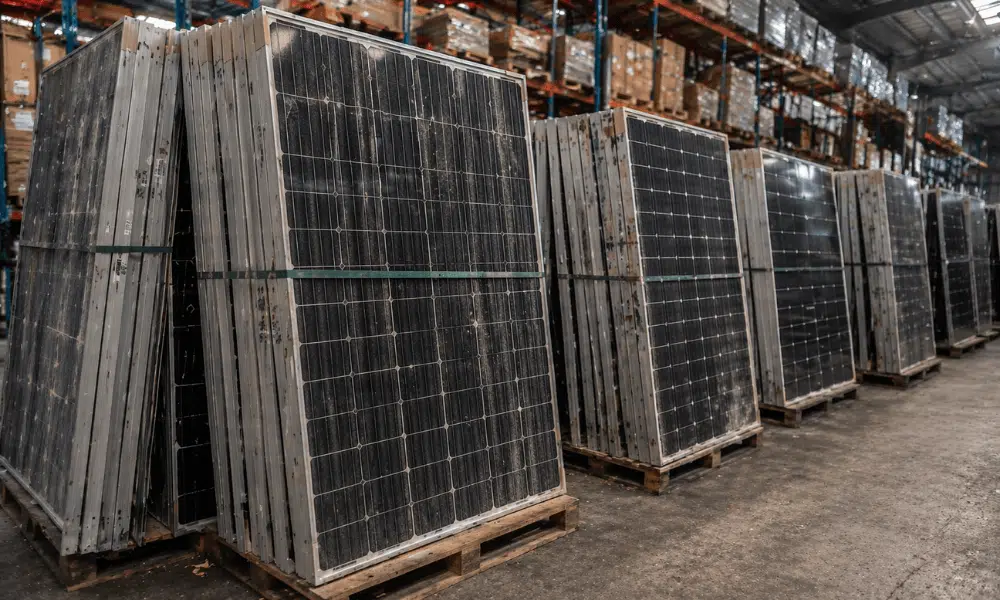
- Sitting in a warehouse
- Discarded or recycled prematurely
- Left unused indefinitely
Then the original STCs effectively overstate real-world emissions reduction. This is where the phrase “falsely created” starts to enter the conversation, even if unintentionally.

Why the STC issue matters for Australia’s energy transition
At scale, this issue could have broader implications. The STC scheme is a cornerstone of Australia’s renewable policy. It underpins:
- Emissions accounting
- Market confidence
- Investment signals
If a growing portion of systems do not deliver their full deemed output, it raises questions about:
- The accuracy of emissions reductions
- The integrity of certificate-based schemes
- The long-term design of incentives
Right now, this is a quiet issue. But it may not stay that way.
Is there a solution?
There is no easy fix, but there are a few potential directions:
- Encouraging reuse and secondary markets for removed systems
- Introducing tracking or reporting for system removal
- Adjusting incentive structures to better reflect the actual system lifespan
Each comes with trade-offs. More oversight could slow adoption. Less oversight risks inefficiency.
What you can do to mitigate the issue
If your existing solar system needs to be removed and STCs were claimed, speak with your installer about your options. You may be able to reuse the panels elsewhere, such as for camping setups or a backyard shed. Alternatively, you could sell or rehome the system so it continues generating energy for another property.
A conversation worth having
Australia has done an exceptional job driving rooftop solar uptake. The STC scheme has played a major role in that success. But as the market matures, new challenges emerge. Early system removal is one of them. It sits in a grey area between policy intent and real-world behaviour.
It is not yet a crisis. But it is certainly a conversation worth having. Because in a system built on future promises, what happens when those promises are cut short?
Looking to electrify your home? Energy Matters is here to help! Get FREE Quotes for Solar, Batteries, and much more from local and trusted installers.